
At the physio clinic at 6:45 p.m., the same scene plays out every week. People in sports leggings and work shirts rub their knees as they wait, scrolling through their phones, half-looking for “miracle” exercises that don’t hurt. One woman complains that swimming bores her to death. A guy in a polo shirt says Pilates made him feel ridiculous and sore for two days. They all say the same thing in different words: “I want to move. I’m just tired of hurting.”
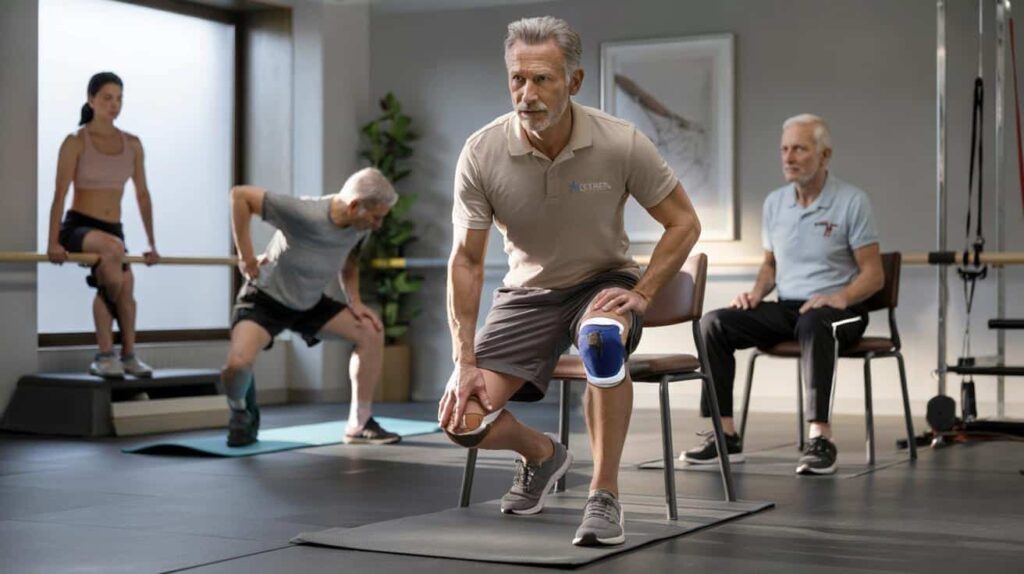
The physio nods, glances at the schedule, then points to the quietest corner of the room. There, a man in his 60s is doing something that looks almost too simple: slow, precise leg movements, half-squats, balance work. No mat, no pool, no reformer.

The best activity for painful knees is hiding in plain sight.

The low-key activity that quietly saves knees
When people hear “protect your knees”, they picture endless lengths in a cold pool or a Pilates studio scented with eucalyptus. Yet the most effective activity for knee pain is far more ordinary: **targeted strength training on land**. Not bodybuilding, not heavy squats for Instagram. Just controlled, regular work to strengthen the muscles around the joint.

Done right, it doesn’t look impressive from the outside. Small bends, leg raises, slow step-ups, hip work. No one claps. No one posts it. But the ones who keep at it are usually the ones who, a few months later, go back to climbing stairs without thinking.
Take Julie, 48, who limped into her first physio session last winter. She’d tried everything people recommend: breaststroke at the pool (her knees hated the frog kick), trendy Pilates classes on YouTube, even a “gentle” running program that lasted one painful week. Nothing stuck.
Her physio did something almost disappointingly simple. He gave her a list of 6 basic strength moves: wall squats, seated leg extensions with a resistance band, glute bridges, step-ups on a low step, calf raises, and hip abductions. Three times a week. Twenty minutes max.
The first sessions felt too easy. Three weeks later, she noticed she could stand up from her couch without pushing with her hands. Two months in, she was walking 30 minutes a day, no ice packs needed at night.
There’s a boring truth behind this. Knees don’t just “wear out”; they often give up because the muscles around them have given up first. When the quadriceps, hamstrings, glutes, and calves are weak, the joint takes the full impact of every step, every stair, every sudden twist.
Strength training helps distribute physical stress more evenly across your knee joint. When your muscles become stronger they take on more of the workload that would otherwise fall entirely on your ligaments and cartilage. This means your ligaments experience less strain & your cartilage no longer has to handle all the pressure by itself. Research consistently shows that people with knee osteoarthritis who follow a structured strength training program experience significant improvements. They report less pain and better knee function compared to those who only rest or do stretching exercises. The evidence keeps pointing in the same direction across multiple studies. Building muscle strength around the knee creates a protective effect that passive recovery methods simply cannot match. The mechanism is straightforward. Stronger muscles provide better support for the joint during movement and daily activities. This support reduces the direct impact forces that reach the cartilage and ligaments. Over time this protective effect allows people to move more comfortably and maintain better mobility despite having osteoarthritis.
➡️ After the February New Moon, this planetary alignment will ease the year-end for this zodiac sign
# The Best Way to Store Spices So They Keep Their Flavor Longer
Spices are essential ingredients that can transform ordinary meals into extraordinary culinary experiences. However many home cooks struggle with keeping their spices fresh & flavorful over time. Understanding proper storage methods can make a significant difference in how long your spices maintain their potency and taste.
## Why Proper Spice Storage Matters
Spices lose their flavor and aroma when exposed to certain environmental factors. Heat breaks down the essential oils that give spices their distinctive taste. Light causes chemical reactions that degrade flavor compounds. Moisture can lead to clumping and even mold growth. Air exposure accelerates oxidation which diminishes both flavor and color. When you store spices correctly you preserve these delicate compounds and extend their useful life considerably. Fresh spices mean better tasting food & less waste in your kitchen.
## The Ideal Storage Conditions
The best environment for spice storage is cool and dark with minimal humidity. A pantry or cupboard away from your stove works perfectly. Avoid storing spices above the oven or near windows where temperature fluctuations and light exposure are common. Room temperature is ideal for most spices. Refrigeration is generally unnecessary and can actually introduce moisture problems when you repeatedly open containers in different temperature zones.
## Choosing the Right Containers
Glass jars with tight-fitting lids are the gold standard for spice storage. Glass does not absorb odors or flavors and creates an effective barrier against air and moisture. Dark colored glass offers additional protection from light exposure. Metal tins with secure lids also work well as long as they have a protective coating inside. Avoid storing spices in plastic containers for long periods since plastic can absorb and transfer flavors between different spices. Whatever container you choose make sure it seals tightly. Even small gaps allow air to enter and accelerate flavor loss.
## Whole Versus Ground Spices
Whole spices retain their flavor much longer than ground versions. When spices are ground their surface area increases dramatically which speeds up the loss of volatile oils. Whole peppercorns or cinnamon sticks can stay fresh for years while their ground counterparts may lose potency within months. Consider buying whole spices and grinding them as needed. A simple spice grinder or mortar and pestle gives you maximum freshness and flavor in your cooking.
## Labeling and Organization
Always label your spice containers with both the name and purchase date. This simple habit helps you track freshness and use older spices first. Most ground spices maintain good flavor for about one to two years while whole spices can last three to four years when stored properly. Organize your spices in a way that makes them easy to access and rotate. Alphabetical arrangement works for some people while others prefer grouping by cuisine type or frequency of use.
## What to Avoid
Never store spices in their original packaging for extended periods. Paper & thin plastic bags do not provide adequate protection from air and moisture. Transfer spices to proper containers as soon as possible after purchase. Do not shake spices directly from the container over a steaming pot. The rising steam introduces moisture into the container which can cause clumping & reduce shelf life. Instead measure spices into your hand or a spoon first. Avoid buying spices in bulk unless you use them frequently. Large quantities may seem economical but they lose value if the spices go stale before you can use them.
## Testing Spice Freshness
If you are unsure whether a spice is still good perform a simple freshness test. Rub a small amount between your fingers and smell it. Fresh spices release a strong aroma immediately. If the scent is weak or barely noticeable the spice has likely lost most of its flavor and should be replaced. Visual inspection also helps. Spices that have faded significantly in color or developed an off smell should be discarded.
## Special Considerations for Specific Spices
Some spices have unique storage needs. Red spices like paprika and chili powder are particularly sensitive to light and benefit from refrigerator storage to maintain their vibrant color. Seeds like poppy & sesame contain oils that can go rancid and also do better in cool storage. Fresh herbs & spices like ginger & lemongrass require different handling altogether. These are best stored in the refrigerator with appropriate moisture control.
## The Bottom Line

Proper spice storage is straightforward but makes a real difference in your cooking results. Keep spices in airtight containers away from heat and light. Buy whole spices when practical and grind them fresh. Label everything with dates & check periodically for freshness. These simple practices ensure that your spices deliver maximum flavor every time you cook. Your taste buds and your dinner guests will notice the difference that truly fresh spices make in your finished dishes.
➡️ “I feel like I’m always bracing for something”: psychology explains anticipation mode
➡️ How boiling orange peels instantly freshens the whole house and leaves a long-lasting natural scent during winter
➡️ Why more and more homeowners are abandoning fiberglass and switching to this natural insulation instead
➡️ Crêpes without butter, milk or eggs: the chart of swap-in ingredients to keep in your kitchen (especially for Candlemas!)
➡️ Eclipse of the century : six full minutes of darkness when it will happen and the best places to watch the event
➡️ “You shouldn’t rub or spray on your wrists or neck”: the simple trick to make perfume last from morning to night
*The paradox is simple: to protect a sore knee, you have to make the whole leg stronger.*
How to turn strength training into your knee’s best friend
The hardest part is not the weight, it’s the start. The good news: a knee-friendly strength routine can fit into a corner of your living room. No barbell. No complicated gear. Just a chair, a wall, maybe a resistance band and a step or thick book.
# Getting Started with Your Exercise Routine
Start your fitness journey by choosing four or five basic exercises. Plan to do these movements two or three times each week. This simple approach helps your body adjust gradually to physical activity. You won’t feel overwhelmed by trying to do too much at once. Your muscles & joints need time to adapt to new movements and increased activity levels. Pick exercises that work different parts of your body. This ensures balanced development and reduces the risk of overusing any single muscle group. You might include a lower body exercise like squats along with an upper body movement such as push-ups. Add in some core work and perhaps a cardiovascular element to round out your routine. The frequency of two to three sessions per week gives your body adequate recovery time between workouts. Rest days are just as important as training days because your muscles repair and strengthen during these periods. This schedule also fits more easily into a busy lifestyle than daily workout requirements. As you become comfortable with these initial exercises you can gradually increase the difficulty. You might add more repetitions or include additional movements. Some people prefer to extend their workout duration while others choose to exercise more frequently throughout the week. Listen to your body during this beginning phase. Some muscle soreness is normal when starting a new program but sharp pain signals that something is wrong. If you experience discomfort beyond typical muscle fatigue take extra rest time or consult with a fitness professional. Consistency matters more than intensity when you are just starting out. Showing up regularly for your planned sessions builds a sustainable habit. This foundation supports long-term fitness success better than sporadic intense workouts that leave you exhausted or injured.
– Mini squats holding the back of a chair
– Glute bridges lying on the floor
– Straight-leg raises from lying or sitting
– Step-ups on a low step, holding the railing
– Calf raises holding the wall
Do 2 sets with 8 to 12 repetitions each. Move slowly and stay in control throughout the exercise. Here is an easy way to check if you are doing it right: your muscles should feel like they are working hard but you should not feel any sharp pain in your joints. If you experience stabbing sensations in the joint itself rather than muscle fatigue stop immediately. This indicates you may be using incorrect form or the exercise might not be suitable for you. The goal is to challenge your muscles while keeping your joints safe and protected.
The trap is wanting to go too fast. A lot of people hear “strength training” and think they need heavy dumbbells, gym memberships, or complicated plans downloaded from some shredded 23‑year‑old on Instagram. Then they overload the joint, flare it up, and decide “strength work isn’t for me”.
Start where your knees are today, not where your ego lives. Slight discomfort or pulling in the muscle is acceptable; sharp pain in the joint is your stop sign. Increase difficulty in tiny steps: one more rep, a slightly deeper bend, a thicker band.
Let’s be honest: nobody really does this every single day. The goal is not perfection, it’s consistency. Two or three decent sessions a week beat one “heroic” workout followed by three days of limping.
At the clinic, one elderly patient summed it up better than any textbook.
“I thought I needed a new knee,” he said. “Turns out my knee just needed new muscles.”
To keep your routine clear and motivating, it helps to put your basics in a little mental box:
- Pick 4–6 simple exercises that don’t increase your pain during or the day after.
- Train 2–3 times per week, never on back‑to‑back days at first.
- Use slow, controlled movements, especially on the way down.
- Stop 2–3 reps before your form breaks, even if your brain says “push”.
- Pair it with light daily walking to teach your new strength how to work in real life.
That does not sound exciting. But this simple daily habit is usually what makes the difference between people who struggle with stairs and people who no longer remember having knee pain.
Beyond exercises: changing your relationship with your knees
Strength training builds muscle but it also changes how you think about your body. When you start out every small pain feels dangerous. Any sharp feeling makes you stop & look up scary possibilities online. After a while those same movements turn into a conversation with what your body can handle.
You discover that your knees might feel stiff on certain days but you can still move them safely. Certain exercises work well in the morning but feel uncomfortable later in the evening. You start understanding what your body tells you. A warm ache that goes away after you start moving is typically fine. Sudden swelling or a knee that locks up means you should see a doctor. The important change is that you stop thinking of yourself as someone who simply suffers from bad knees. Instead you become someone who actively works on getting better.
This shift in thinking affects other parts of your life too. You might take the stairs instead of the elevator without trying to prove anything because you simply trust your legs more now. You might agree to go on a weekend walk with friends rather than coming up with an excuse. You might find yourself carrying groceries & realize halfway through that you didn’t even think about your knees. The changes happen quietly. You stop treating your body like something fragile that needs constant protection. Instead you start seeing it as something capable that can handle normal daily activities. This doesn’t mean you become reckless or ignore real pain. It means you stop letting fear make decisions for you. When you trust your body more you naturally move more throughout the day. You bend down to pick things up without hesitation. You reach for items on high shelves without worrying. You sit on the floor and get back up without planning your exit strategy first. These small moments add up over time and reinforce the idea that movement is safe and normal. This new confidence also changes how you approach challenges. Instead of automatically assuming something will hurt you start wondering if you can do it. You test your limits gradually and often discover they were further out than you thought. Each small success builds more trust and makes the next challenge feel less intimidating.
The activity that started as “rehab homework” quietly becomes a ritual: 15–20 minutes where you’re not scrolling or worrying, just counting breaths and reps. Some people put on a podcast, others use it as a fragment of calm in a noisy day. The muscles grow, but so does something less visible: confidence.
There’s no single routine that works for everyone, no magic number of sets, no universal rule that fits every injured runner, every tired office worker, every grandparent chasing toddlers. What there is, most of the time, is this simple axis: gentle but persistent strengthening, adapted to your body, held like a small promise you renew a few times a week.
You can keep doing Pilates if that is what you enjoy. You can continue swimming if the water feels natural to you. Just understand that simple strength training on land is usually what people are missing. It is the thing that helps you walk out of the clinic one day and forget your knee brace on the chair without even noticing until you are already down the street.
The moment you notice that you have not thought about your knees for several hours is when you will understand that this simple training was actually doing something remarkable the whole time.
| Key point | Detail | Value for the reader |
|---|---|---|
| Targeted strength beats “just resting” | Strengthening muscles around the knee reduces pain and improves daily function | Gives a concrete, actionable alternative to passive waiting or endless stretching |
| Simple home routine is enough | Chair, wall, step and maybe a band: no gym or complex equipment required | Removes barriers and excuses, makes starting today realistic |
| Progress slowly, not heroically | Low frequency, controlled movements, small increases in difficulty | Protects the joint, lowers risk of flare‑ups, supports long‑term consistency |
FAQ:
- What if my knees hurt during strength exercises?If the pain is sharp, makes you wince, or lingers strongly the next day, the exercise or depth is too much. Reduce range of motion, use support (like a chair or wall), or switch to a similar move that feels safer, and speak with a professional if pain persists.
- How quickly can strength training reduce knee pain?Some people feel a small improvement in 2–3 weeks, but noticeable changes in daily life often appear after 6–8 weeks of regular practice, two or three times per week.
- Can I still walk or cycle while doing knee strength work?Light walking or gentle cycling often pairs very well with strength training, as long as it doesn’t trigger big pain spikes or swelling afterwards.
- Isn’t swimming enough to protect my knees?Swimming is great for general fitness and pain relief, but it doesn’t always provide the specific loading your leg muscles need to properly support your knees in standing, walking, and climbing stairs.
- Do I need a physio or can I start alone?If your pain is severe, sudden, or linked to a recent injury, getting assessed is wise. For long‑standing, mild to moderate knee pain, many people can safely start with basic, gentle strength exercises at home and then refine with professional advice if needed.
