
The video opened with an unsteady phone recording showing grimy February snow in London before switching to a satellite map that glowed in bright red. The caption shouted about Arctic collapse and gathered two million views by midday. People in the comments were either frightened or skeptical or simply wanted to know if this was genuine information or just another attempt to create unnecessary fear. The question matters because climate content has become a strange mix of legitimate science and exaggerated warnings. Some creators present careful research while others chase engagement through dramatic predictions. The difference between these approaches affects how people understand environmental issues and whether they trust the information they receive. Social media algorithms favor content that triggers strong emotions. A measured explanation of ice sheet dynamics will reach fewer people than a video suggesting imminent catastrophe. This creates pressure for even honest communicators to amplify their message beyond what the data supports. The result is an information environment where accuracy often loses to urgency. Scientists face a difficult balance when discussing climate change. The actual risks are serious enough without embellishment yet explaining complex systems takes time and nuance that short videos cannot provide. When researchers try to translate their work for general audiences they must choose between precision & impact. Many find that choosing impact means sacrificing some accuracy. The consequences of this pattern extend beyond individual videos. When predictions fail to materialize on the suggested timeline people become skeptical of all climate information. The boy who cried wolf effect undermines genuine warnings and makes it harder to build support for necessary changes. Exaggeration intended to motivate action often produces the opposite result. Distinguishing reliable information from sensationalism requires looking at sources & checking whether claims align with scientific consensus. Reputable climate scientists rarely make absolute predictions about specific dates or events. They discuss probabilities and ranges rather than certainties. Content that presents complex issues as simple or inevitable should raise questions about its accuracy.
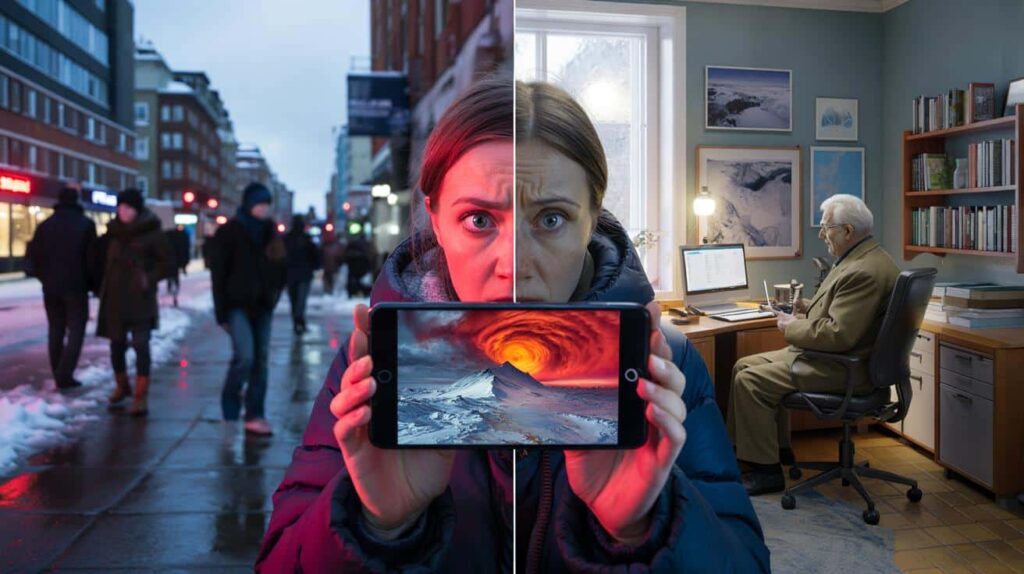
On the same morning a sea-ice specialist sat in a quiet university office in Tromsø and refreshed the latest Arctic data. Something made her frown. The numbers looked unusual and were definitely extreme but they did not quite match what the viral thread was claiming.

Between the polar graphs and the TikTok edits, between peer‑reviewed journals and doom-scrolling, a gap has opened.
 Goodbye to Old Licence Rules: Older Drivers Face New Driving Requirements From February 2026
That gap is where distrust grows.

When February feels broken: the month the Arctic went strange
February in the north used to be straightforward. It was dark & cold & you knew what to expect. This year was different. Researchers in Svalbard walked outside and found slush & rain instead of snow. The temperature felt more like April than February. People on social media started talking about a February heatwave and an Arctic meltdown. It seemed like the season had broken down completely. The change was impossible to ignore. What used to be the coldest month of the year now felt mild & wet. Scientists who work in the Arctic noticed the shift immediately. They had prepared for harsh winter conditions but instead dealt with weather that seemed out of place. The ground was soft where it should have been frozen solid. Rain fell when snow was expected. This unusual weather pattern raised concerns among climate researchers. The Arctic is warming faster than most other places on Earth. When February temperatures climb to levels normally seen in spring it signals that something significant is happening. The frozen north is becoming less frozen with each passing year.
For people who do not live anywhere near the pole, the whole thing arrived like climate clickbait. One week: “record lows.” The next: “record warmth.” The Arctic, long seen as frozen and distant, suddenly felt like a drama series with a fresh cliffhanger every few days.
One Danish meteorologist posted a graph showing temperatures near the North Pole spiking 20°C above the seasonal average for a brief window, a freakish red curve on a blue baseline. The screenshot went viral, stripped of nuances about altitude, duration, and data uncertainty.
At the same time, satellite sea‑ice maps showed February coverage among the lowest ever recorded, especially in the Barents and Kara seas. A leading climate scientist wrote a careful thread explaining that this did not mean “instant collapse” but *did* mean the system was shifting faster than earlier models guessed.
The subtle message was: this is serious, but not the apocalypse tomorrow morning. The viral message was: the Arctic has already died.
What scientists call an “extreme anomaly” sounds almost bureaucratic until you watch what it does to public debate. One side grabs the word “collapse” and runs with it, turning complex physical processes into a countdown clock. Another side seizes on every correction or nuance as proof that “they’re exaggerating again” or that climate models are fake.
➡️ Hanging bottles with water and vinegar on the balcony : why people recommend it and what it’s really for
➡️ Aluminium foil in the freezer: a foolproof trick more and more people are using
Bird enthusiasts have discovered an affordable February snack that consistently fills their feeders and brings birds to the garden each morning without fail. People who enjoy watching birds recommend this inexpensive treat available during February that reliably keeps feeders full and draws birds into the garden every single day when the sun comes up. Dedicated bird watchers have found that this budget-friendly February food option maintains busy feeders and successfully attracts various bird species to outdoor spaces throughout the early hours.
# Inheritance: The New Law Arriving in February Completely Reshapes Rules for All Heirs
A major reform of inheritance regulations is set to take effect in February. This legislative change will fundamentally alter how assets are transferred to heirs and beneficiaries across the board. The upcoming law introduces significant modifications to the existing framework that governs estate distribution. These changes will affect every person who stands to inherit property or assets from a deceased relative or beneficiary. Under the new regulations the process of transferring wealth from one generation to the next will operate under different principles than before. The government has designed these updates to modernize inheritance procedures & address gaps in current legislation. One of the primary objectives of this reform is to simplify certain aspects of estate management while also closing loopholes that previously allowed some individuals to avoid their fair share of obligations. The law aims to create a more equitable system for all parties involved in inheritance matters. Legal experts have been analyzing the implications of these changes since the draft legislation was first proposed. Many believe the new rules will require families to reconsider their estate planning strategies well in advance of any transfer of assets. The February implementation date gives affected individuals a limited window to understand how these changes will impact their specific situations. Financial advisors recommend that anyone expecting to receive an inheritance or planning to leave assets to heirs should consult with legal professionals soon. Several key provisions in the new law address tax treatment of inherited assets. The modifications to tax regulations could result in different financial outcomes for heirs depending on the size and nature of the estate they receive. Another important aspect of the reform concerns the rights of different categories of heirs. The law establishes updated priorities and entitlements for spouses and children as well as extended family members who may have claims to an estate. The legislation also introduces new documentation requirements for estate administrators. These procedural changes are intended to increase transparency and reduce disputes among potential heirs during the distribution process. Critics of the reform argue that some provisions may create unintended complications for families dealing with already difficult circumstances. They point out that the transition period between old and new rules could generate confusion and legal challenges. Supporters counter that the modernization is long overdue and will ultimately benefit most heirs by creating clearer guidelines and reducing ambiguity in inheritance matters. They emphasize that the current system has remained largely unchanged for decades despite significant shifts in family structures and asset types. The new law takes into account contemporary forms of wealth that were not common when previous inheritance regulations were established. Digital assets & certain types of investments will now be explicitly addressed in the legal framework. Estate planning professionals are preparing educational materials to help the public understand these changes before they take effect. Many law firms and financial institutions are offering seminars & consultations to guide clients through the transition. The government has stated that additional guidance documents will be released in the coming weeks to clarify specific aspects of the new regulations. These resources will help both legal professionals and ordinary citizens navigate the updated system. For individuals who have already created wills or estate plans under the old rules the new law may necessitate revisions to ensure their wishes are properly executed. Legal experts strongly advise reviewing existing documents to confirm they remain valid and effective under the new framework. The reform represents one of the most comprehensive overhauls of inheritance law in recent memory. Its impact will extend to virtually every family that experiences the transfer of assets from one generation to another. As February approaches attention is focusing on how smoothly the transition will proceed and whether the new system will achieve its stated goals of fairness and efficiency in inheritance matters.
➡️ A rare early-season polar vortex shift is developing, and experts say its intensity is nearly unprecedented for January

➡️ A rare polar vortex shift is taking shape and experts warn February could be extreme this winter ahead
➡️ Scientists warn we must prepare for what’s coming: two brain areas work together like an hourglass
➡️ What walking with your hands behind your back really means, according to psychology
The reality is that Arctic sea ice is shrinking, winter air masses are wobbling, and February patterns are warping in ways that would have been extraordinary just 30 years ago. Yet that same reality unfolds in messy, non-linear steps. That friction between slow physical change and fast emotional reaction is exactly where trust can crack.
Between panic and denial: how to read an “Arctic collapse” headline
There’s a small, practical gesture you can adopt before the next shocking climate headline hits your lock screen. Pause for 30 seconds and ask three blunt questions: Who is saying this? What are they showing? What are they not saying?
Tap through to the original source if you can. Many dramatic posts ultimately rely on a graph from a weather agency, a research center, or a single scientist on X. Scroll until you find the version with axes, legends, and dates. A lot of panic dissolves right there, once you see that the red line is a three‑day spike, not a permanent new normal.
We’ve all been there, that moment when you send a scary screenshot to a friend before fully reading it. This is exactly how climate stories mutate into something uglier than the data itself. The next time a February “Arctic collapse” alert pops up, try this: read the full caption, then check at least one trusted source – a national meteorological service, a university polar institute, or the IPCC summaries.
You will spot patterns. Some accounts always push the darkest framing, others always downplay, and a few are painfully cautious and slow. Let’s be honest: nobody really does this every single day. Yet building this tiny habit even once a week starts to recalibrate the way panic headlines land in your mind.
A climate psychologist I spoke with described the new situation in direct terms.
“People are trapped between fear fatigue and science fatigue,” she said. “They are tired of being scared and tired of being told to read 300-page reports. That’s a perfect recipe for distrust.”
There are a few plain-touchstones you can keep by your side when February anomalies hit your feed:
- **Look for multiple years, not one freak day** – single spikes are newsworthy, trends are reality.
- Check if scientists quoted are in the right field – an oceanographer and a random influencer do not weigh the same.
- **Watch the verbs** – “could,” “may,” and “on track to” signal probability, not certainty.
- Notice if uncertainty is acknowledged – real research always has caveats, grifters never do.
- Ask what happens next – is there a plan, or just an invitation to panic or shrug?
Why February’s Arctic shock matters beyond the doomscroll
Stepping back from the chaos of this particular February reveals something more important. We need to figure out who to believe when the planet starts acting differently than what we learned in our textbooks. Scientists have identified a clear pattern. Winter sea ice is getting thinner and Arctic air is getting warmer. This creates unstable jet streams that can suddenly push polar cold into places like Texas or Europe. Meanwhile ordinary people notice something simpler. The seasons just feel off. The disconnect between scientific data & personal experience creates confusion. Researchers track measurements & run computer models to understand these changes. They can explain the mechanisms behind unusual weather events. But for most people the technical explanations matter less than what they see outside their windows. When winter arrives three weeks late or spring temperatures swing wildly from day to day something feels broken. This gap between expert knowledge & everyday observation makes it harder to respond to climate shifts. People trust what they can see & feel. Scientists trust what they can measure and predict. Both perspectives hold truth but they often fail to connect in meaningful ways. The challenge is building understanding across this divide so communities can prepare for a future where unpredictable weather becomes the norm.
When experts describe February’s numbers as exceptional while others claim this has always happened people are not simply evaluating the data. They are deciding whose perspective matches their own daily experiences. That emotional assessment occurs well before anyone reads a PDF or a policy brief.
| Key point | Detail | Value for the reader |
|---|---|---|
| Extreme February anomalies are real | Arctic temperatures and sea‑ice levels are hitting records that would have stunned scientists a generation ago | Helps you separate genuine signals from doom‑laden exaggeration |
| “Collapse” is a loaded, often misused word | Most events are rapid shifts within a long-term decline, not an overnight tipping into sci‑fi disaster | Reduces panic and leaves room for clear-headed concern and action |
| Trust is built through habits, not hashtags | Checking sources, trends, and uncertainty beats relying on viral posts or hot takes | Gives you a simple method to navigate polar news without burning out |
FAQ:
- Question 1Is the Arctic really “collapsing” every February like headlines suggest?The Arctic is warming nearly four times faster than the global average, and winter sea ice is declining, but “collapse” is usually an exaggeration. Scientists talk about accelerating loss and extreme anomalies, not instant disappearance.
- Question 2Do these February anomalies prove that climate models were wrong?They show that some processes, especially related to sea ice and regional warming, are unfolding at the fast end of model projections. Models are not crystal balls, they are tools that keep being refined as new data arrives.
- Question 3Why do experts sometimes sound less alarmed than activists online?Researchers are trained to speak in probabilities and confidence levels. Activists often use stronger language to break through noise and motivate action. Both can describe the same trend but with very different emotional volume.
- Question 4How can I tell if a viral climate graph is trustworthy?Check if it cites a recognized source (NASA, NOAA, Copernicus, national weather services), shows clear axes and dates, and links back to a dataset or paper. If it is just a cropped image with no context, treat it as a starting point, not the final word.
- Question 5What should I actually do with this information in my daily life?Use it as fuel for grounded choices, not background anxiety. Vote with February in mind, support policies that cut emissions, follow a couple of solid science communicators, and talk about what you’re learning with people you trust. Small, steady steps beat paralyzing fear.
