
The other day I watched a teenager stare helplessly at a rotary phone in a vintage shop. He turned it over, poked the dial, looked for a charging port, then finally laughed and pulled out his smartphone to Google “how to use old phone.” The shop owner, a man in his seventies, shook his head with a kind of tender amusement.
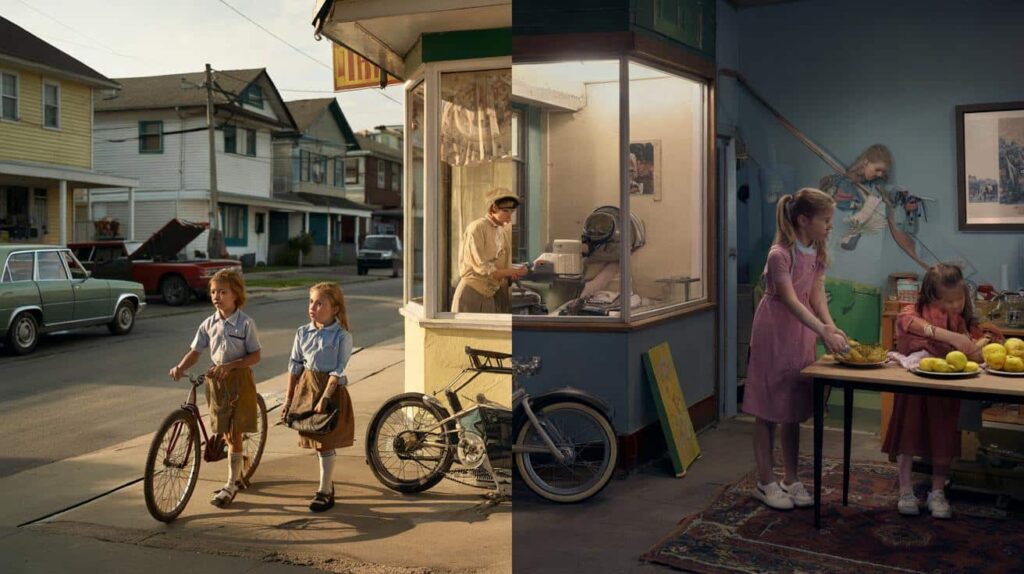
Walking home, I thought about how many things quietly disappeared like that. Skills nobody announced were leaving, lessons no one officially crossed off the curriculum. They just slipped away when we weren’t looking.

If you grew up in the 1960s or 1970s, you probably still carry those invisible classes around in your bones.

Some of them would shock a modern classroom.

The classroom without PowerPoint: learning to stand on your own feet
If you were a kid in the 60s or 70s, you were expected to cope. Not perfectly, not bravely every time, but you didn’t get a safety net for every wobble. You walked to school alone, you dealt with the strict teacher, you figured out what to do when your bike chain fell off halfway home.
Nobody called that emotional resilience back then. It was just “life.” But it trained a whole generation to scan a situation, decide fast, and live with the outcome. That quiet push into the deep end has mostly vanished from modern education. Today, many children are constantly supervised, tracked, and gently redirected. The intention is care. The side effect is fragility.
Ask a 70-year-old about their childhood, and you’ll hear stories that would trigger a dozen school reports today. Walking miles alone before the sun was up. Handling cash at the corner store. Babysitting as a young teen for neighbors’ kids until midnight, with no smartphone and nobody “checking in.”
One retired nurse told me she learned to read a bus timetable at ten because if she missed the right one, her mother’s shift at the factory might be delayed. No app. No reminder. Just consequence. Those small, constant exposures to mild risk built a tolerance the curriculum never mentioned, yet everybody understood.
Modern schools have gotten better at recognizing anxiety, neurodiversity and trauma in students. This represents genuine progress in education. However there is a downside when educators treat every uncomfortable feeling as a serious threat. Students miss out on learning that they can handle awkward moments, periods of boredom and minor fears. They do not get opportunities to practice being brave in ordinary daily situations. This approach prevents children from building resilience through normal challenges. When adults remove all sources of discomfort young people never develop the skills needed to cope with difficulty. The ability to manage uncomfortable feelings comes from experiencing them in safe environments and realizing that these feelings pass. Without these experiences students enter adulthood unprepared for the inevitable challenges they will face. Schools need to find a balance between protecting students who genuinely need support & allowing typical discomfort that builds character. Not every negative emotion requires intervention. Some degree of struggle helps children grow stronger and more capable. The goal should be creating environments where students feel safe enough to take small risks and learn from setbacks rather than avoiding all potential sources of stress.
The education model from the 1960s & 1970s was not romantic at all. It could be harsh and sometimes unfair. But it delivered one persistent message to students: you are more capable than you think you are. When that message vanishes from education something else takes its place without much notice. A quiet belief emerges that every difficult thing should have an adult or an app or a policy ready to fix it.
➡️ Bad news for homeowners: starting February 15, a new rule bans lawn mowing between noon and 4 p.m., with fines at stake
➡️ Goodbye microwave: here’s the appliance that will replace it, and it’s much better
# Signals are building: what’s brewing in the Pacific points to a new more extreme climate phase
Scientists are watching the Pacific Ocean closely right now. Something unusual appears to be happening beneath the surface & it could reshape weather patterns across the entire planet for years to come. The Pacific Ocean plays a massive role in determining global climate. Its vast expanse and deep waters act like a giant heat battery that stores & releases energy over time. When conditions in the Pacific shift even slightly the effects ripple outward to touch nearly every continent. Recent observations suggest we may be entering a new climate phase characterized by more frequent & intense extreme weather events. The evidence comes from multiple sources including ocean temperature measurements, atmospheric pressure readings and computer models that simulate future conditions. One key indicator involves sea surface temperatures in the tropical Pacific. These waters have been fluctuating in unusual patterns that don’t match historical records very well. The changes aren’t dramatic when you look at raw numbers but their timing and distribution across different regions raise questions about what might come next. Another signal comes from subsurface ocean temperatures. Warm water has been pooling at depths where it normally wouldn’t accumulate. This hidden heat reservoir could eventually rise to the surface and trigger significant atmospheric responses. When warm water meets cooler air above it the resulting temperature gradient drives wind patterns and storm formation. The Pacific Decadal Oscillation represents another piece of the puzzle. This long-term pattern involves temperature shifts that persist for twenty to thirty years at a time. Some researchers believe we’re transitioning into a new phase of this oscillation which would fundamentally alter baseline conditions for weather systems worldwide. Trade winds across the tropical Pacific have also behaved strangely in recent years. These winds normally blow from east to west pushing warm surface water toward Asia. When they weaken or reverse direction the consequences can be severe. El Niño events occur when this happens and they bring drought to some regions while causing floods in others. Climate models consistently project that extreme weather will become more common as global temperatures rise. What makes the current Pacific situation noteworthy is that observed changes seem to be happening faster than many models predicted. This suggests we might be underestimating how quickly the climate system can shift gears. Coral reefs provide another window into ocean conditions. These sensitive ecosystems respond quickly to temperature stress. Widespread bleaching events in recent years indicate that ocean heat content has reached levels that push biological systems past their tolerance thresholds. The frequency of these bleaching episodes has increased noticeably. Rainfall patterns offer additional evidence. Regions that typically receive steady precipitation have experienced unusual dry spells while areas that are normally arid have seen unexpected downpours. These disruptions to established patterns suggest that atmospheric circulation is reorganizing in response to changing ocean conditions. The jet stream has also exhibited unusual behavior. This high-altitude river of air normally flows in relatively smooth waves around the planet. Lately it has developed deeper meanders and more persistent blocking patterns. These configurations can lock weather systems in place leading to prolonged heat waves or extended rainy periods. Historical records show that the Pacific has shifted between different states before. The mid-1970s marked one such transition when ocean temperatures & atmospheric patterns changed relatively quickly. The decades that followed brought different weather norms compared to the previous period. We may be witnessing a similar transition now. What makes this potential shift concerning is that it’s occurring against a backdrop of rising global temperatures. Previous Pacific transitions happened when overall planetary temperatures were lower. The combination of a new Pacific phase plus continued warming could amplify extreme weather beyond what we’ve experienced before. Coastal communities face particular risks. Changes in Pacific conditions affect storm tracks and intensity. Hurricanes and typhoons draw their energy from warm ocean water so any increase in sea surface temperatures provides more fuel for these destructive systems. Storm surge & flooding could become more severe as a result. Agricultural regions also need to pay attention. Crop yields depend heavily on predictable seasonal patterns. When those patterns shift farmers must adapt quickly or face losses. Extended droughts or unexpected frosts can devastate harvests. Food security becomes a concern when multiple breadbasket regions experience problems simultaneously. Water resources management grows more challenging as well. Reservoirs and aquifers are designed based on historical precipitation patterns. If those patterns change significantly existing infrastructure may prove inadequate. Some areas might face water shortages while others deal with excess that overwhelms drainage systems. The economic implications extend far beyond agriculture and water. Supply chains depend on stable conditions for transportation and production. Extreme weather disrupts shipping routes, damages facilities & interrupts manufacturing. Insurance costs rise as claims increase. Governments face mounting expenses for disaster response & infrastructure repair. Scientists emphasize that no single weather event can be attributed solely to Pacific conditions or climate change. However the statistical likelihood of extreme events increases as background conditions shift. What used to be a once-in-a-century occurrence might become a once-in-a-decade event under new climate norms. Monitoring systems have improved dramatically in recent decades. Satellite observations provide continuous coverage of ocean temperatures & atmospheric conditions. Autonomous floats drift through the ocean depths collecting data that was previously impossible to obtain. This wealth of information allows researchers to detect changes earlier and with greater confidence. Despite better monitoring tools uncertainty remains. The climate system involves countless interacting components. Small changes in one area can cascade through the system in ways that are difficult to predict. Computer models continue to improve but they still struggle to capture all the relevant processes and feedbacks. Some researchers urge caution about declaring a new climate phase prematurely. Natural variability causes fluctuations that can look significant in the short term but prove temporary over longer periods. Distinguishing between temporary noise and genuine regime shifts requires patience & careful analysis. Others argue that waiting for absolute certainty means acting too late. If the Pacific is indeed entering a new phase that will persist for decades then societies need to begin adapting now. Infrastructure decisions made today will affect resilience for generations. Building codes water management systems & agricultural practices all need to account for changing conditions. The precautionary principle suggests taking reasonable steps even when uncertainty exists. This doesn’t mean panicking or making rash decisions. It means incorporating the best available science into planning processes and maintaining flexibility to adjust as new information emerges. International cooperation becomes increasingly important as climate impacts cross borders. Weather patterns don’t respect political boundaries. A drought in one country can trigger food price spikes globally. Floods in major manufacturing regions disrupt supply chains worldwide. Addressing these challenges requires coordination and shared resources. The Pacific situation reminds us that climate change isn’t just about gradually rising temperatures. It also involves shifts in variability and the frequency of extremes. A world with more volatile weather poses different challenges than one with steady warming alone. Adaptation strategies must account for both trends & fluctuations. Looking ahead the next few years will provide crucial information. If current patterns persist and intensify that would strengthen the case that a genuine phase shift is underway. If conditions revert to more typical patterns then recent anomalies might represent temporary fluctuations rather than a lasting change. Either way the signals emerging from the Pacific deserve serious attention. The ocean has always played a central role in shaping our climate. Understanding what’s happening beneath those waves and in the atmosphere above them gives us the best chance to prepare for whatever comes next.
# Up to 30 cm of Snow: Here is the List of States & Most Importantly When
A significant winter storm is approaching & several states should prepare for substantial snowfall in the coming days. Weather forecasters have issued warnings for multiple regions where snow accumulation could reach up to 30 centimeters. The affected states include areas across the northern and central United States. Residents in these regions need to stay informed about the timing & severity of the incoming weather system. The snowfall is expected to begin in the western states first before moving eastward throughout the week. The heaviest accumulations will likely occur in mountainous regions and higher elevations. However some lower-lying areas may also experience significant snow totals. Meteorologists predict that the storm will impact the northern Plains states starting early in the week. From there the system will progress toward the Great Lakes region by midweek. The northeastern states could see snowfall by the end of the week as the storm continues its path across the country. States in the Rocky Mountain region should expect the first wave of snow. Colorado & Wyoming are among the areas that could receive the highest totals. Montana and Idaho will also see considerable snowfall as the storm system develops. As the weather pattern shifts eastward the Dakotas and Minnesota will experience heavy snow. These states should prepare for travel disruptions and reduced visibility on roadways. The timing for these areas appears to be Tuesday through Wednesday. The Great Lakes states including Wisconsin & Michigan will likely see snow arriving by Wednesday evening. Accumulations in these regions could vary depending on the exact track of the storm system. Lake effect snow could enhance totals in areas downwind of the lakes. By Thursday and Friday parts of New York and Pennsylvania may receive snowfall from this system. The exact amounts will depend on how the storm develops as it moves across the country. Residents in all affected areas should monitor local weather forecasts closely. Road conditions may deteriorate quickly once snow begins falling. Authorities recommend preparing emergency kits for vehicles & ensuring homes have adequate supplies. The combination of heavy snow and strong winds could create blizzard conditions in some locations. This would result in dangerous travel conditions and possible power outages. People should avoid unnecessary travel during the height of the storm. Schools and businesses in the affected regions may need to close or delay operations. Local officials will make decisions based on conditions in their specific areas. Residents should stay tuned to official channels for updates and announcements. This winter storm serves as a reminder that severe weather can develop rapidly during the cold season. Being prepared & staying informed are the best ways to stay safe when significant snowfall is forecast.
➡️ Meteorologists warn early February may activate an Arctic pattern long considered unlikely
➡️ Eclipse of the century: 6 minutes of darkness: when it will happen and where to watch it
➡️ No vinegar, no wax: the simple home trick that makes hardwood floors shine like new
➡️ A solar belt around the Moon by 2035?

The chores curriculum: unpaid lessons that lasted a lifetime
One of the biggest “subjects” that dropped out of school and home life is ordinary responsibility. Not a colorful chart of “chores” with stickers. Actual, necessary work. In many 60s and 70s households, kids weren’t just helping; they were part of the machinery that kept the place running.
You never received applause for making your bed. You simply did it because that was what everyone in the household was expected to do. Doing the same tasks every day taught you how to manage your time and develop determination. It also taught you how to do things you disliked for the benefit of others. Students today learn about being global citizens and understanding climate change. However many of them have never prepared a simple meal without using premade ingredients or washed their own clothing.
Think of the Saturday morning ritual that so many boomers remember. Dad outside fixing the car or painting the fence. Mum planning meals, hanging laundry, maybe working a job on top of it. Kids were drafted in early. You peeled potatoes, swept floors, ran to the shop with a handwritten list and real money.
One woman who grew up in 1974 told me, laughing, that by the time she was 12 she could roast a chicken, clean the bathroom, and sew a missing button better than most adults she meets now. “We didn’t think of it as empowerment,” she said. “It was just: if we don’t do this, we don’t eat or we live in a mess.” That non-negotiable element is what’s gone.
Schools of that era reinforced the same logic. Home economics, shop class, basic repairs. You learned how to darn socks, not because it was charmingly vintage, but because things were expensive and you didn’t throw them away so fast.
Today, when a zipper breaks, many people toss the jacket. When a button falls off, the garment migrates permanently to the back of the wardrobe. Let’s be honest: nobody really learns needle and thread work from YouTube and then actually does it every single day. The ecosystem has shifted from repair to replace, and with it the quiet pride of being able to fix your own small problems. That pride was a life lesson, even if nobody called it that.
The lost art of respect, disagreement, and keeping your word
There was a method from the 60s and 70s that would seem almost extreme today. You were supposed to disagree without losing your temper. In many classrooms debates followed a formal structure. You stood up & made your point and then sat down and listened while someone tore apart your argument. You did not treat it as a personal attack.
At home adults did not center their lives around what children thought. You were allowed to speak but you had to wait your turn. That structure was rigid at times but it taught a generation how to keep feelings separate from actions. You could be angry at a teacher and still say “Yes sir” or “Yes ma’am” without rolling your eyes or walking out of the room.
The stories are everywhere if you ask. A man in his late sixties told me about failing a math test and marching up to complain. His teacher sat him down, let him talk, and then calmly spread his mistakes out on the desk. “Show me where I’m wrong,” she said.
He walked out with the same bad grade but a strange new respect for process. The lesson wasn’t “the customer is always right.” It was **you don’t negotiate with reality**. You deal with it, you improve, or you try again. That simple, hard line feels almost alien in a time when students and parents can appeal grades, email principals, and challenge everything at the speed of a tap.
“Our word was our currency,” one 72‑year‑old former carpenter told me. “If you said you’d be there at eight, you were there. If not, you walked into the room already in debt.”
- Respect was modeled, not explainedAdults rarely delivered long speeches on values. They just lived them: showing up on time, dressing properly for work, greeting neighbors by name.
- Commitments were seriousCancelling at the last minute was rare. There was no casual “Sorry, can’t make it” text. Breaking your word carried real social weight.
- Disagreement had boundariesYou could challenge someone, but there were lines you didn’t cross in tone or language, especially with elders and teachers.
- Silence was allowedNot every viewpoint had to be announced. Sometimes you swallowed your opinion in service of keeping the peace at the dinner table.
- Apologies were directNo notes from school portals, no email threads. You looked the person in the eye and said you were wrong.
What we lost, what we gained, and what we could quietly bring back
Looking back at the 60s and 70s through soft focus is a temptation, but it would be dishonest. That world had its blind spots, its injustices, its silences that cost people dearly. Many of today’s educational advances—on mental health, diversity, student voice—are hard-won and genuinely precious.
Yet it’s possible to say that and still admit something else: **we dropped some sturdy lessons along the way**. The calm expectation that a child can handle a setback. The assumption that practical skills belong to everyone, not just “handy” people. The quiet code that your promises matter even when nobody checks.
There’s no need for a grand cultural reset. Change often starts in much smaller, almost invisible ways. Letting a teenager navigate a tricky phone call instead of doing it for them. Teaching a child to sew on one button and then letting them be the “button fixer” of the house. Asking students to present an idea without slides, just their voice and their thoughts.
These moments don’t look heroic. They barely look educational. Yet they echo the old lessons that shaped so many adults who grew up in that era.
We all experienced that moment when we notice ourselves doing something exactly like our parents or grandparents used to do it. In that instant we suddenly understand them better than before. The most important life lessons from the 1960s and 1970s might not have been about that specific time period at all. Those lessons were really about trusting people to handle challenges when life does not go their way. This trust extended to children as well as adults. People back then believed that everyone could rise to meet difficult situations. They did not try to shield others from every possible hardship. Instead they prepared them to face obstacles with resilience and determination. Parents taught their children to solve problems independently rather than fixing everything for them. This approach created individuals who could adapt to changing circumstances. When something went wrong these people did not expect the world to accommodate their preferences. They adjusted their expectations and found ways to move forward. The emphasis was on personal responsibility and developing inner strength. The wisdom from those decades recognized that struggle often leads to growth. Children who faced age-appropriate challenges learned valuable skills. They discovered their own capabilities through trial and error. This built confidence that came from actual achievement rather than empty praise. Modern society sometimes forgets these principles. We often try to remove all difficulties from the path ahead. But the older generations understood something important. They knew that trusting people to handle adversity actually helps them become stronger and more capable individuals. They’ve
The question we face today is straightforward and somewhat troubling. By working so hard to shield and help young people are we silently suggesting they lack the ability to manage on their own?
| Key point | Detail | Value for the reader |
|---|---|---|
| Resilience through everyday challenges | Unsupervised play, walking alone, handling minor risks built emotional toughness | Helps readers rethink how much freedom and responsibility they give to children |
| Practical responsibility at home | Regular chores, cooking, repairs, and money handling were part of growing up | Inspires readers to reintroduce simple, useful tasks into family life or classrooms |
| Respect, commitment, and disagreement | Clear expectations around manners, promises, and debate shaped character | Offers a framework for teaching boundaries, communication, and integrity today |
FAQ:
- Question 1Were the 60s and 70s really better for raising kids?
- Answer 1
- Question 2Can we bring back old-fashioned discipline without the harshness?
- Answer 2
- Question 3How do I teach resilience to children who are used to constant supervision?
- Answer 3
- Question 4What are two or three concrete skills from that era worth teaching today?
- Answer 4
- Question 5Is modern education really missing these lessons, or are they just taught differently?
- Answer 5
