
The woman in front of the salon mirror looks tired, but not in the way she feared. It’s not the fine lines or the busy week. It’s the two sparkling streaks of gray framing her face, catching the neon light like tiny lightning bolts. Her stylist gently lifts a lock, squints, and shakes her head. “Balayage again?” the client sighs. She already knows what that means: two hours, a head full of foils, and that sharp regrowth line that returns every six weeks like an unwanted notification.
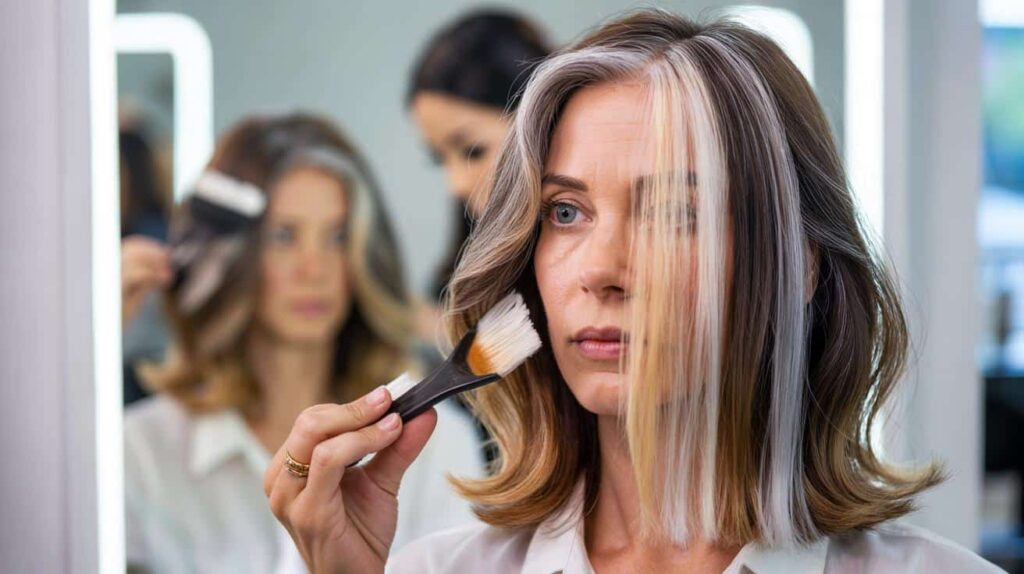
On the next chair, a younger client is trying something else. No classic balayage, no full coverage. The colorist speaks quietly about a “melting” technique, runs a brush one last time, and suddenly the gray strands disappear into a soft blur of tones. Not erased. Just… hard to find.

Something subtle is happening in hair salons right now.

From harsh lines to blurred edges: why “melting” is replacing balayage
Look closely next time you’re scrolling through Instagram or watching a red carpet replay. The big trend is no longer those strong balayage streaks that scream “I spent three hours at the salon.” It’s hair that looks almost untouched, where gray strands are there, but strangely discrete. Color seems to blend into itself, like watercolor in a glass of water. That’s the spirit of “melting”.

This new technique doesn’t fight gray hair. It softens it. The goal is not to cover, but to confuse the eye. You see light, shadow, reflection, and your brain stops tracking each silver strand one by one. It’s a bit like a filter, but in real life.
Ask any colorist: the most anxious clients right now are not teenagers, they’re 35–55-year-olds watching gray hair arrive in waves. Too young to go fully white. Too tired to touch up roots every four weeks. Balayage helped for a while, but many have hit a wall. The contrast is often too strong, the regrowth line too obvious, the maintenance too heavy.
One Parisian colorist told me about a client who came in holding her phone like a lifeline. On the screen: photos of her own head, zoomed in on the gray regrowth at the parting. “I feel like everyone only sees this,” she whispered. She walked out two hours later with a melting color in soft beige and pearl tones. The gray? Still there. But you had to really search for it.
Melting works by creating a soft blend between three or four different shades. The colorist avoids painting thick highlights and instead focuses on tiny transitions. The base color blends with the lighter pieces and any natural gray so smoothly that you cannot see where each shade begins or ends. Our eyes naturally notice contrast which is why regrowth lines look so harsh.
When contrast decreases the stress level goes down as well. The relationship is almost like a formula. This explains why many women experience an unexpected sense of relief following this kind of appointment. Their hair may not look flawless but it stops feeling like something they need to fight against.
How “melting” actually works on gray hair (and what you need to ask for)
The key to melting is where you place the color. Your colorist will first look at where your gray hair shows up the most. This is usually around your temples or along your part or near your face. Then they will gently lighten the hair right next to those gray strands by just one or two shades. They don’t put the color directly on the gray hair itself. The goal is to make different shades that blend together naturally.
➡️ Short haircut for fine hair debate explodes over these 4 so called volume hairstyles that some experts say only expose your thinning hair more
# Boiling Rosemary is the Best Home Tip I Learned from My Grandmother and It Completely Transforms the Atmosphere of Your Home
My grandmother had countless tricks for keeping her home fresh and welcoming. Among all the advice she shared with me over the years one simple practice stands out above the rest. She would boil fresh rosemary on her stove and the results were nothing short of amazing. This traditional method requires almost no effort and costs very little. You only need a handful of rosemary sprigs and a pot of water. The process takes just a few minutes to set up but the benefits last for hours. When you boil rosemary the essential oils release into the air. These natural compounds spread throughout your living space & create a pleasant herbal scent. The aroma is clean and refreshing without being overwhelming like some artificial air fresheners can be. The fragrance does more than just smell good. Rosemary has natural properties that can help purify the air in your home. It may reduce unwanted odors from cooking or pets. Many people find the scent calming and say it helps them feel more relaxed after a long day. My grandmother used this technique regularly during the colder months when opening windows was not practical. She would place a pot on the back burner & let it simmer gently. The warm steam carried the rosemary scent into every room of her house. I started using this method in my own home several years ago. Guests often comment on how inviting my space feels when they walk through the door. They ask about the pleasant smell and seem surprised when I explain such a simple solution. You can find fresh rosemary at most grocery stores year round. If you grow herbs at home even better. Just cut a few stems and rinse them before adding them to boiling water. Let the mixture simmer on low heat & add more water as needed. This practice connects me to my grandmother and her practical wisdom. It reminds me that the best solutions are often the simplest ones. A pot of boiling rosemary can change the entire feeling of your home without any harsh chemicals or expensive products.
➡️ Forget swimming and skip Pilates the controversial activity that relieves knee pain better and why physiotherapists cannot agree
➡️ No one is putting cushions on their sofa anymore: in 2026, everyone is replacing them with this luxury-inspired accessory
 Goodbye hair dyes : the new trend that covers grey hair and helps you look younger emerging
➡️ Only 7 cm… yet most gardeners still refuse to admit it
➡️ Cheap February feeders under fire after placing low cost treats to guarantee daily bird visits with skeptics calling it emotional manipulation of wildlife for entertainment
# The Specific Question to Ask Yourself Before Sharing Personal News to Assess Emotional Readiness
Before you share important personal news with others you need to pause and evaluate whether you are truly ready for their reactions. The question you should ask yourself is simple but powerful: Can I handle any response this person might give me right now? This question matters because when you share personal news you open yourself up to a wide range of reactions. Some people will respond with genuine excitement and support. Others might offer criticism or express disappointment. Some may react with indifference or change the subject entirely. A few might even make the conversation about themselves instead of acknowledging what you just shared. When you ask yourself if you can handle any response you force yourself to consider your current emotional state honestly. If you are feeling vulnerable or uncertain about your news you might not be in the right headspace to receive negative or lukewarm reactions. Sharing before you are ready can leave you feeling hurt or regretful. Think about what emotional resources you have available right now. Are you feeling confident about your decision or news? Do you have a support system in place if someone reacts poorly? Can you maintain your sense of self-worth if someone questions your choices? These considerations help you determine if this is the right moment to share. The timing of when you share personal news can be just as important as what you share. Sometimes waiting a few days or weeks allows you to process your own feelings first. This processing time helps you build confidence in your decision and strengthens your ability to handle whatever reactions come your way. Consider also who you are planning to tell. Different people in your life will have different reactions based on their own experiences & perspectives. Your best friend might celebrate news that your parent questions. A colleague might be supportive while a family member expresses concern. Knowing your audience helps you prepare mentally for likely responses. If you realize you cannot handle negative reactions right now that does not mean your news is wrong or that you should feel ashamed. It simply means you need more time to build your emotional foundation before opening up to others. There is wisdom in recognizing your limits and respecting them. Some people find it helpful to share news in stages. You might tell one trusted person first to test the waters & gain confidence. After receiving support from that person you may feel more prepared to share with others who might be less enthusiastic. This gradual approach allows you to build resilience as you go. Remember that you have no obligation to share personal news with everyone immediately. Some information can remain private until you feel completely secure in your choices. Your emotional wellbeing should take priority over social expectations about when and how to announce things. When you do feel ready to share you will likely notice a difference in how you communicate. Your voice will sound more confident. You will feel less defensive when answering questions. Criticism will roll off more easily because you have already worked through your own doubts and concerns. The question of whether you can handle any response serves as a protective measure. It prevents you from sharing prematurely and experiencing unnecessary emotional pain. It also ensures that when you do share you can fully enjoy the positive reactions without being derailed by the negative ones. Taking time to assess your readiness shows self-awareness and emotional intelligence. It demonstrates that you value your mental health and understand the importance of timing in communication. This approach leads to better outcomes & helps you maintain stronger relationships with the people in your life. So before you send that text or make that phone call or post that announcement take a moment to check in with yourself. Ask if you can truly handle whatever response might come back to you. Your answer will guide you toward the right decision about when & how to share your personal news.
➡️ Greenland’s orca boom: scientists warn collapsing ice is triggering a climate emergency as fishermen hail a once?in?a?lifetime windfall and activists insist only a total fishing ban can save the Arctic
Then a toner or gloss enters the scene. Semi-permanent, sheer, just enough to tint both the natural hair and the lightened pieces. This is where the “melting” happens: with a brush or sponge, the color is stretched and blurred from roots to mid-lengths. No hard demarcation, no obvious starting point. *If the technique is well done, you can pull up a section of hair and still struggle to see where the gray begins.*
There is a catch of course. Many clients sit down and say they saw this melting thing on TikTok and want the same result while also expecting full coverage of every single white hair. That does not work that way. Melting is a game of illusion & not total erasure. It trades perfection for peace of mind. Let’s be honest because nobody really checks every strand in the bathroom mirror every single day.
The biggest mistake is asking for a very dark base to hide everything. Deep flat color next to bright gray regrowth will always create strong contrast even with melting. The more extreme the base shade is the faster you will see the roots. A softer and slightly lighter base with warm or cool reflects adapted to your skin tone is usually much more forgiving. Your mirror becomes kinder on day 30 and not just on day 1.
“Melting is for women who are done fighting their gray, but not ready to surrender,” laughs Clara, a colorist in Lyon. “I tell them: we’re going to negotiate a truce. Your hair gets to age, but in a flattering way.”
To talk clearly with your colorist, it helps to have simple, concrete words. Here’s what many pros listen for:
- “I want my gray to blend, not disappear.”
- “I’d like fewer touch-ups, every 8–12 weeks if possible.”
- “Soft transitions, no thick stripes or very clear root line.”
- “A shade that works with my natural color when it grows out.”
- “I prefer a natural effect, like sun and time did the work.”
These instructions work much better than copying a random picture from a young influencer who has never dealt with gray hair.
Living with gray in the era of melting
Something deeper exists behind this new coloring trend. It goes beyond just another trick to outsmart nature. This approach represents a statement that says yes my hair is changing but I reject the old choice between fully dyed or fully gray. Many women today seek a third option. They want to age according to their own preferences with reduced maintenance and less guilt and fewer stressful moments under harsh bathroom lighting. This method acknowledges the natural aging process while maintaining personal control over appearance. Women no longer feel pressured to choose between two extremes. The traditional binary system forced people into categories that felt restrictive and demanding. This alternative path offers freedom from constant salon visits and the anxiety that comes with visible roots. The shift reflects broader changes in how society views aging. Women increasingly reject outdated standards that dictate how they should look at different life stages. They want authenticity without completely abandoning enhancement. This balance allows them to embrace gray hair gradually while still feeling polished & intentional about their appearance. The practical benefits matter too. Less frequent coloring means healthier hair and more time for other priorities. The financial savings add up over months and years. Most importantly this approach removes the pressure of maintaining an illusion. It creates space for a more relaxed relationship with personal appearance where change becomes acceptable rather than something to hide or fix immediately.
Melting fits that quiet revolution. It accepts gray as part of the palette instead of a problem to be deleted. Some days the silver will catch the sun and shine more. Some days it will hide in the mix of beige, honey, ash, or cocoa tones. Your hair stops being a project to manage and goes back to being just… your hair.
| Key point | Detail | Value for the reader |
|---|---|---|
| Soft transitions | Melting blends several close shades, including gray, with no harsh root line | Gray hair becomes less noticeable day to day, with a more natural look |
| Less maintenance | Subtle gradients and lighter bases stretch out time between appointments | Fewer salon visits, less stress about regrowth, savings over the year |
| Personalized result | Technique adapts to gray density, face shape, and skin tone | A custom effect that suits real life, not just Instagram photos |
FAQ:
- Is melting suitable if I’m more than 50% gray?Yes, but the approach changes slightly. Instead of trying to hide all the gray, the colorist will often work with translucent tones and subtle lights to turn the white strands into highlights. The more gray you have, the softer and more luminous the result can actually be.
- How long does a melting color usually last?The effect can stay pretty for 8–12 weeks on average, depending on how fast your hair grows and how dark your natural color is. The gloss/toner itself slowly fades, often in a flattering way rather than a drastic line.
- Can melting be done at home with a box dye?Not really. Box dyes are too opaque and not precise enough. Melting relies on placement and gentle gradients that require a trained hand and a good understanding of your starting color.
- Is melting less damaging than traditional balayage?Often yes, because the lightening is usually softer and more targeted, and the glosses used are more conditioning. The goal is not extreme lift, but harmony, which means less aggressive formulas most of the time.
- Can I transition from full coverage dye to melting?Absolutely. Many women use melting as a transition technique when they’re tired of constant root touch-ups. Your colorist will likely need one or two sessions to soften the old solid color and reintroduce gentle dimension.
