
The cold didn’t arrive suddenly this winter. It simply never showed up on time. New York felt like autumn during Christmas. Paris kept its outdoor café seating open without the typical winter chill. Alpine ski resorts posted webcam images that resembled spring rather than the middle of winter. Social media filled with jokes about the unusual weather. But meteorologists were tracking something else entirely. High in the Arctic atmosphere something unusual was developing. Something significant. And this week those same experts started sounding different alarms.
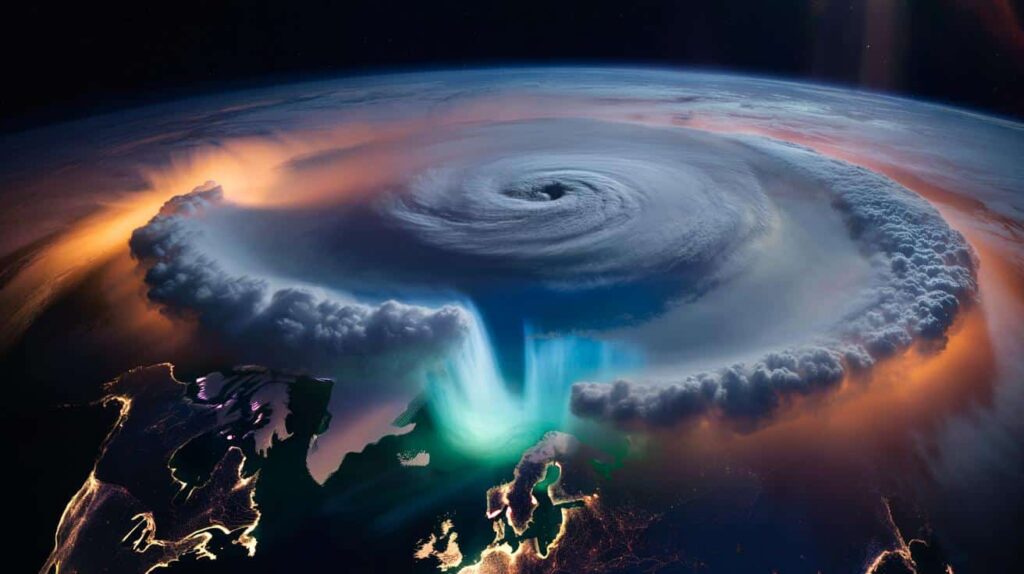
A polar vortex disruption is unfolding, and its magnitude for February is almost off the charts.

A massive shake-up 30 km above our heads
If you went outside tonight you would not notice anything different. The air at ground level still moves at its own pace & remains trapped in this mild unusual winter. But around 30 kilometers above your head the atmosphere is changing dramatically. Temperatures in the stratosphere over the Arctic have jumped by dozens of degrees in only a few days. This sudden warming is breaking apart the normally strong & cold polar vortex. Imagine a spinning top that gets hit hard from one side. It does not simply slow down. Instead it starts to wobble and break into pieces that scatter outward.
That is precisely what is beginning to occur above the North Pole. February represents an exceptionally rare period for this type of atmospheric disruption to take place.

To grasp how unusual this is, you have to look at the data. Stratospheric warming events do happen, but big ones are rare. Meteorological agencies are already ranking this disruption among the strongest seen this century at this time of year. A “major Sudden Stratospheric Warming” is now confirmed by several independent forecast centers, with temperature jumps of 40 to 50°C at high altitude recorded over a tiny window of days. Of course, that doesn’t mean your city will suddenly see a 50°C jump or drop. Weather doesn’t work like a simple thermostat.
Forecasters are now looking back at familiar charts from 2009, 2013 2018, and 2021. Those were years when the polar vortex broke apart. A few weeks after that happened winter arrived with unusual force in unexpected locations.
So what’s really going on? The polar vortex is a giant ring of westerly winds circling the Arctic in winter, trapping very cold air up north. When waves from lower latitudes push up into the stratosphere, they can weaken or even reverse those winds. This is what’s happening now, and the winds are expected to flip from strong westerlies to easterlies – the official meteorological sign that the vortex has been disrupted. Once that happens, cold air up north is no longer locked in. It starts spilling, meandering, pooling where it usually doesn’t. *That’s when the headlines start shouting about “Arctic blasts” and “weather chaos”.*
What this means for your next few weeks
There’s a simple rule with polar vortex disruptions: the stratosphere moves first, your daily weather reacts later. The lag is usually 1 to 3 weeks. So if you’re reading this in early or mid-February, the key window to watch is the second half of the month and the first part of March. Forecast models already hint at more blocking patterns over the North Atlantic and Eurasia, a classic sign that the disrupted vortex is starting to tug at the weather below. That type of pattern often favors colder spells in parts of Europe and North America, and stormy, wetter conditions in other regions.
This doesn’t guarantee a “Beast from the East” everywhere. It does mean the odds of wild swings just went up.
Let’s ground this in something we’ve already lived through. In February 2018, a powerful stratospheric warming event knocked the polar vortex off balance. About two weeks later, Europe was hit by the so‑called “Beast from the East.” Temperatures plummeted by more than 10°C below normal in some areas, snow buried cities not used to it, and transport networks crumbled. In 2021, another disruption helped set the stage for the Texas deep freeze, where pipes burst in homes never built for that kind of cold, and millions lost power.
# Meteorologists warn early February could signal a critical moment for Arctic stability
Weather experts are raising concerns that the beginning of February might mark an important turning point for the stability of the Arctic region. Scientists who study atmospheric patterns have been monitoring unusual developments in the polar areas. They suggest that conditions forming during the first weeks of February could have significant implications for the Arctic environment. The Arctic has been experiencing notable changes in recent years. Temperature fluctuations and shifting weather systems have become more common. These alterations affect not only the immediate polar region but also weather patterns across the Northern Hemisphere. Meteorologists point to several factors that make early February particularly significant. Seasonal transitions during this period can amplify existing trends. When combined with current atmospheric conditions the results could accelerate changes already underway in the Arctic. The stability of Arctic ice and weather systems plays a crucial role in global climate regulation. Disruptions in this delicate balance can trigger cascading effects. These effects may influence weather patterns far beyond the polar circle. Researchers emphasize the need for continued observation during this critical window. Data collected in early February will help scientists better understand the trajectory of Arctic changes. This information proves essential for improving long-term climate predictions. The potential implications extend beyond scientific interest. Changes in Arctic stability can affect shipping routes and wildlife populations. They also influence weather conditions that impact agriculture and water resources in populated regions. While scientists remain cautious about making definitive predictions they agree that early February deserves close attention. The coming weeks may provide valuable insights into the future state of one of Earth’s most important climate regulators.
➡️ For the first time, a major Southern Ocean current reverses direction, signaling a serious risk to the global climate system
➡️ Experts analyse Nivea cream and what they find may surprise you
➡️ Marine authorities accused of hiding data as angry orca pods flip boats environmentalists and fishermen clash over who is to blame
➡️ Moist and tender: the yogurt cake recipe, reinvented by a famous French chef
➡️ Few people realize it, but France has become the only European nation able to build fighter jet engines with such extreme precision, raising questions about innovation and military escalation

➡️ How your brain reacts differently to handwritten lists vs digital ones
➡️ Half a glass and a toilet bowl like new: smart ways to restore old sanitary ware
No, the current event is not a carbon copy of those years. But its magnitude in February is ringing that same internal alarm bell among forecasters: patterns are about to shift, and they may do it sharply.
This is where science meets everyday reality. When the polar vortex breaks down it does more than create interesting patterns on weather forecasts. It affects how much money seasonal workers can earn and drives up heating costs for families who are already struggling financially. It determines whether school trips get cancelled and causes more car crashes when ice appears without warning. Scientists are finding stronger connections between these events and climate change through complicated interactions with melting Arctic ice and changes in the jet stream. The simple fact is that winter no longer follows the patterns we used to know. February still arrives on schedule but the weather has stopped following the old rules.
How to prepare without panicking
So what should you do with the phrase “major polar vortex disruption” when you need to fill up your car and get your kids dressed and figure out your weekend plans? Start small & focus on your local area. For the next two weeks pay closer attention to your regional weather forecast than you normally would. Don’t just check the daily high and low temperatures but look at the overall patterns. Is your area expected to get colder weather or heavier rain or possible snow as late February approaches? Take a screenshot of the 10-day forecast and then do it again three days later. Watching how the forecast changes will help you understand what’s coming better than any sensational news headline.
Then, quietly, adjust: a spare bag of salt, an extra layer for the kids, a flexible mindset about plans.
We’ve all been there, that moment when you open the door in the morning and the weather has completely betrayed what your phone promised last night. With a disrupted vortex, those surprises can get sharper. That doesn’t mean you need to hoard or spiral. It means you give yourself a bit more margin. If you work outdoors, talk with your team about backup days or safer schedules in case of sudden ice or gale‑force winds. If you rely on public transport, think through an alternative route on days flagged for freezing rain or heavy snow. Let’s be honest: nobody really does this every single day.
Yet in winters like this, that small bit of foresight can turn a miserable week into just a slightly annoying one.
Weather experts are being cautious about what they say at the moment but a lot of them are obviously worried by the data they are seeing.
“From a stratospheric point of view, this is absolutely a major event,” one European forecaster told local media. “We are entering a period where the atmosphere is primed for extremes, especially across the mid-latitudes, even if we can’t pinpoint each city’s outcome yet.”
# Practical Steps for Managing Uncertainty
That uncertainty is exactly why taking a few practical steps matters. Here is a compact checklist you can adapt to your own life:
When facing uncertain situations you need a clear approach that works in real life. The key is to break down overwhelming feelings into manageable actions that you can control. Start by identifying what you actually know versus what you are assuming. Many people confuse the two & this creates unnecessary stress. Write down the facts of your situation on one side of a page and your assumptions on the other side. This simple exercise often reveals that you have more solid ground than you initially thought. Next focus on the elements within your control. You cannot change external circumstances but you can always control your response to them. Make a list of three specific actions you can take this week that move you forward regardless of how the uncertain situation resolves itself. Building a support network is another essential step. Talk to people who have faced similar uncertainties before. Their experiences can provide valuable perspective & remind you that others have navigated comparable challenges successfully. You do not need to figure everything out alone. Create a basic contingency plan for different outcomes. This does not mean obsessing over every possibility but rather having a rough framework for your main concerns. Knowing you have thought through potential scenarios reduces anxiety because your brain stops spinning in circles trying to solve the same problem repeatedly. Finally maintain your regular routines as much as possible. When everything feels unstable your daily habits provide anchors. Exercise regularly even if just for short walks. Keep your sleep schedule consistent. These basics protect your mental clarity when you need it most. Taking these practical steps transforms vague worry into concrete action and that shift alone makes uncertainty far more manageable.
- Check your local 7–14 day forecast twice a week, not once.
- Have a basic winter kit ready: flashlight, batteries, warm blankets, and a way to keep your phone charged.
- Review home heating: bleed radiators, check vents, and close obvious drafts.
- Plan flexible commute options on days marked for ice, snow, or storms.
- Keep an eye on vulnerable neighbors, relatives, or colleagues who might struggle with a sudden cold snap.
A winter that doesn’t play by the old rules
This winter the real story is happening high above us rather than at ground level. While many people enjoyed unusually mild weather major changes were taking place in the stratosphere that will shape what comes next. A polar vortex disruption this large and this late in the season shows that the familiar weather patterns from our past are changing. The effects will vary dramatically depending on where you live. Some areas will barely notice anything beyond a cold week with some frost and extra wind. Other places might experience a sudden return of harsh winter conditions just when everyone thought spring had arrived. This is a worldwide phenomenon but its consequences will be felt very differently from place to place through cold homes and dangerous road conditions and disrupted work schedules and flight cancellations.
If anything, this moment invites a new habit: to look up a little more often, to listen not just to the daily forecast but to the bigger atmospheric story behind it. Because what unfolds above the Arctic in the next days will quietly write how millions of us remember the end of this winter.
| Key point | Detail | Value for the reader |
|---|---|---|
| Unusually strong February vortex disruption | Rapid stratospheric warming of 40–50°C and wind reversal over the Arctic | Signals a higher chance of late‑season weather extremes where you live |
| Delay between cause and effect | Surface impacts typically show up 1–3 weeks after the disruption | Gives you a short window to prepare, watch forecasts, and adapt plans |
| Practical, non‑panic preparation | Simple actions: follow local outlooks, winterize basics, plan flexible routines | Reduces stress and risk if your region ends up in the cold or stormy zone |
FAQ:
- Will this polar vortex disruption automatically bring extreme cold to my city?
No. It increases the odds of colder or more chaotic patterns in some regions, but the exact impact depends on where the displaced cold air and high‑pressure “blocks” end up. Local forecasts remain your best guide.- When could we start to feel the effects at ground level?
Typically between 10 and 21 days after the disruption is confirmed. For this event, that points to the second half of February and possibly early March as the key window.- Is this linked to climate change?
Scientists are still debating the exact mechanisms. Several studies suggest that a warming Arctic and changing jet stream may be influencing how often and how strongly the vortex is disrupted, but the relationship isn’t fully settled.- Should I expect power cuts or major disruptions?
Not automatically. Those kinds of problems usually happen when intense cold collides with fragile infrastructure or unprepared systems. Taking simple steps now – like having a small emergency kit and checking local advisories – lowers your personal risk.- What’s the best way to stay informed without getting overwhelmed?
Follow one or two trusted national or regional meteorological services, plus a reliable local news outlet. Check them briefly a couple of times a week, and a bit more often if they start flagging weather alerts linked to late‑season cold or storms.
