
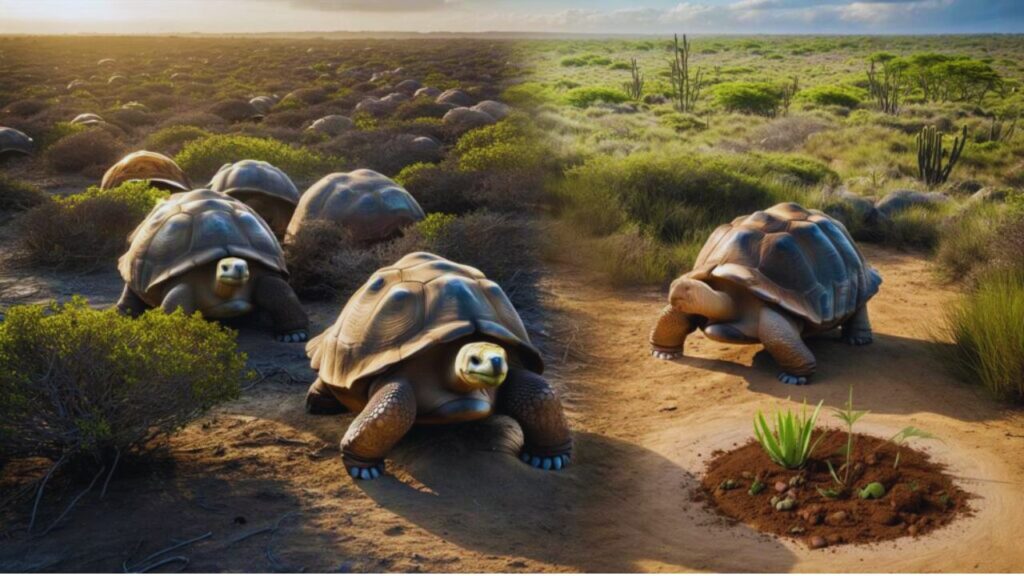
The Galápagos Islands are famous for their unique wildlife & their connection to Charles Darwin’s theory of evolution. Now these islands are experiencing an amazing ecological change. Over the past few years more than 1500 giant tortoises have been returned to their natural homes. Their impact is being felt throughout the entire island chain. These ancient reptiles were once nearly extinct but now they are playing a crucial role in restoring the delicate ecosystems of the islands. The tortoises are helping to rebuild the environment by tearing down shrubs and spreading seeds. They are also bringing back important ecological processes that had been lost. Their work is making a real difference in these remarkable islands.
A Landmark Success in Species Reintroduction
The Galápagos Islands have experienced major shifts in their wildlife over hundreds of years because of human influence. Non-native animals brought to the islands along with destroyed habitats & excessive hunting caused native species populations to drop significantly. The famous giant tortoises were among the hardest hit by these problems. Conservation teams have worked hard in recent decades to reverse this damage. They have successfully returned more than 1500 giant tortoises to the islands. These tortoises belong to multiple species that scientists once believed had disappeared forever. Organizations like the Galápagos National Park and the Charles Darwin Foundation have led these restoration projects. Their work aims to rebuild the natural balance in island ecosystems. Returning the tortoises to where they originally lived does more than just save these animals from extinction. It also restarts natural processes that stopped working properly centuries ago when the tortoise populations first declined.

How Tortoises Help Restore Fragile Ecosystems
Giant tortoises play an essential role in restoring the Galápagos ecosystems. Their main contribution comes from grazing on shrubs & plants that would otherwise dominate the landscape. When tortoises eat these plants they help keep different plant species in balance & make sure grasslands stay open for other animals to use. The tortoises also help spread seeds across the islands. They eat fruits and plants as they travel and then deposit seeds through their droppings in new locations. This natural method helps plants grow back & keeps the ecosystem diverse by allowing new vegetation to sprout in places that were empty or filled with invasive species. When tortoises tear down shrubs & scatter seeds they actively shape the environment around them. This behavior is vital for the island’s ecological balance. The process creates habitats that other species need because those animals rely on certain plants for food and protection.

Rebuilding Ecological Balance and Biodiversity
Before giant tortoises were brought back to the islands there was a serious ecological problem. Invasive species such as rats goats and pigs had changed the natural environment & caused native plants and animals to decline. The tortoises now help restore balance to the island habitats by eating shrubs and controlling the spread of invasive plants. This ecological restoration benefits biodiversity in many ways. Since the tortoises returned many plant & animal species that were struggling have begun to thrive. The increase in native plants has led to more native bird species because these birds depend on the plants for food and nesting sites. The tortoises have also helped reduce soil erosion which had become a major problem because of invasive shrubs growing everywhere. When the tortoises eat these plants they clear the landscape and allow native vegetation to grow. This native vegetation is stronger and helps hold the soil in place.
 Psychologist Says Life Gets Better When You Stop Chasing Happiness And Start Finding Meaning
A Blueprint for Conservation Efforts Worldwide
The successful return of giant tortoises to the Galápagos Islands provides a valuable example for conservation projects around the world. This achievement demonstrates why protecting and restoring native species matters & shows how keystone species like giant tortoises contribute to ecosystem recovery. Scientists view the Galápagos Islands as a natural laboratory for studying evolution & conservation. Research conducted there helps experts learn about ecosystem functions and understand how human activities affect biodiversity. The project proves that restoring ecosystems on a large scale can work. This success brings optimism to other areas facing similar challenges with declining biodiversity and environmental damage.

Challenges Ahead and the Path Forward
The return of the tortoises to their natural habitat has been successful so far. However the Galápagos Islands still face serious problems that need attention. Invasive species continue to threaten the local environment. Climate change poses risks to the delicate ecosystem. Human activities also create ongoing concerns for the islands. Conservation teams must keep working to protect these unique habitats. They need to develop sustainable methods that will help the tortoises & other native animals survive for generations to come. Scientists are carefully watching how the tortoises are doing in their restored environment. They study how these animals move around and how they affect the plants & other wildlife around them. Research teams want to understand if the tortoises are truly helping to bring the ecosystem back into balance. The results so far show promise but there is still much work ahead. Conservation programs need continued funding and support to succeed. The future of the Galápagos Islands depends on this ongoing commitment to protection & restoration.
