
The visitor rang the doorbell just as you spotted it. That greyish film on the TV stand. The dusty line along the baseboard. The streaks on the glass table that somehow appeared overnight. You did the usual panic scan of the living room, wondering where to start in the 90 seconds you had before they stepped inside. Toys on the sofa, cushions crooked, coffee cups on the table. Everything screamed “busy life” more than “total disaster,” yet the space felt dull and tired. You grabbed a cloth, swiped one surface, then another, and suddenly the whole room looked… different. Brighter. Sharper. Almost like you’d cleaned for an hour.
Sometimes, one tiny task flips the whole scene.
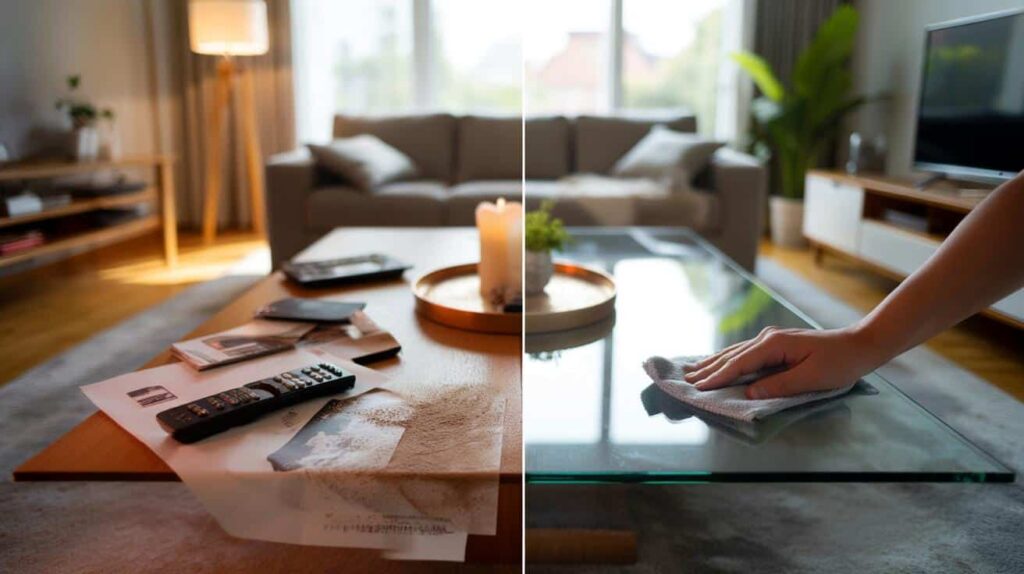
The tiny cleaning move that changes everything
Walk into any messy-looking room and your eyes don’t land on the floor first. They land on the big flat surfaces catching the light. The coffee table. The kitchen counters. The TV unit. When those are dusty, streaky, or cluttered, the entire space feels heavier, even if the rest is relatively under control.
That’s why the single cleaning task that makes the biggest visual difference in minutes is this: clearing and wiping the main horizontal surfaces that sit at eye level or just below.

Think about the last time you walked into a hotel room. The bed might be basic, the decor forgettable, but the desk and bedside tables are usually empty and spotless. No crumbs, no glass rings, no tangled chargers. Your brain instantly registers “clean” and “calm.” At home the opposite tends to happen. Kitchen counters catch mail, keys, lunch boxes, school forms. Coffee tables collect remotes, mugs, and that mysterious single sock. Dining tables become laptop stations.
The clutter spreads, then the dust arrives, and suddenly the room looks two degrees darker.

There’s a simple visual trick at play. Our brains scan big, flat, central surfaces to judge how clean a space is. When those are clear and shining, we perceive order and freshness, even if a laundry basket lurks just out of frame. When they’re covered or grimy, we assume the whole place is dirty. This means you can spend 40 minutes vacuuming and still feel like nothing changed, or spend 7 minutes on surfaces and feel like you reset the entire home. That’s the quiet superpower of this task.

The 10-minute surface reset that fools the eye (in a good way)
Here’s the basic move. Pick one living zone that people actually see: living room, kitchen, or entry. Then, in this order, hit every main surface your eyes naturally rest on. First, scoop everything off into a temporary “holding basket” – don’t sort yet, just clear. Second, grab a microfiber cloth and a spray (even plain diluted dish soap works) and wipe from back to front, side to side. Third, only put back what truly belongs and looks intentional: a lamp, a plant, a couple of books, a tray.
You’ve just done a surface reset, and the room will suddenly look 30% cleaner.

The biggest trap is thinking, “If I start, I have to do the whole house.” No. This trick works precisely because you don’t. One coffee table, one kitchen counter zone, one sideboard. Set a 7–10 minute timer, move fast, and stop when it rings. You’ll be tempted to start reorganizing drawers or deep-cleaning the stove. Resist. That’s a different day.
Let’s be honest: nobody really does this every single day. The goal is a quick visual win, not a new full-time job.
“When my place feels out of control, I don’t clean everything,” says Léa, 34, who juggles two kids and remote work. “I clean the stuff I see in photos. The table, the counters, the TV stand. It tricks my brain into believing the house is under control, and then I actually feel like doing more.”
- Start with the “hero” surface in the room – the one your eye lands on first.
- Use one medium-sized basket to grab clutter fast, sort it later in a calmer corner.
- Stick to one spray and one cloth so you don’t lose time gathering products.
- Keep décor simple: a tray, a candle, a plant. Not twelve tiny objects to dust.
- *Stop after 10 minutes, even if you’re “in the zone”. That limit keeps the habit sustainable.
When surfaces shine, everything else follows
Once you’ve tried this a few times, you start noticing something else. A wiped dining table quietly invites dinner instead of more piles of mail. A clean counter almost dares you to cook something. A clear coffee table suddenly makes the sofa feel like a better place to sit, not a dumping ground for half-folded laundry. That one small task doesn’t just change what you see. It changes what you feel like doing next.
You might still have dust bunnies under the armchair, but the room feels usable again.
| Key point | Detail | Value for the reader |
|---|---|---|
| Focus on key surfaces | Coffee table, kitchen counters, TV stand, dining table | Instant visual impact without full-house cleaning |
| Use a fast “basket and wipe” method | Clear into one basket, wipe, then put back only essentials | Saves time and reduces decision fatigue |
| Create a repeatable 10-minute ritual | Timer-based, one zone at a time, limited products | Turns chaos into a manageable habit |
FAQ:
- Which surface should I start with if my whole place feels overwhelming?Pick the surface you’d photograph if you had to list your home on a rental site tomorrow. That’s usually the one that changes the vibe the fastest.
- What if my counters are permanently cluttered with appliances?Group them. Create one “appliance zone” and leave another zone visibly clear. Even a single clean strip of counter makes a big visual difference.
- How often should I do this quick surface clean?Once or twice a week is plenty for most people. Before guests, before a work call, or whenever the room starts to feel “heavy.”
- Do I need special products for shiny results?No. A slightly damp microfiber cloth with a drop of dish soap handles most surfaces. Dry with a second cloth for glass and glossy tables.
- What about the stuff I dump into the basket?Give yourself a second, shorter timer later in the day to sort it. Five minutes is often enough for keys, mail, chargers, and random objects.
