
At 7:12 a.m., the bathroom tiles felt like ice. Léa shuffled in, wrapped in her robe, checking the little number glowing on the thermostat: 19 °C. “That’s what they say is ideal,” she muttered, teeth slightly chattering as she turned on the kettle. A few minutes later, her 5-year-old came out, socks already in his hand, complaining that he was cold. The official recommendation said 19 °C was the magic threshold, the responsible choice. Yet the whole family was starting the day tense and stiff.
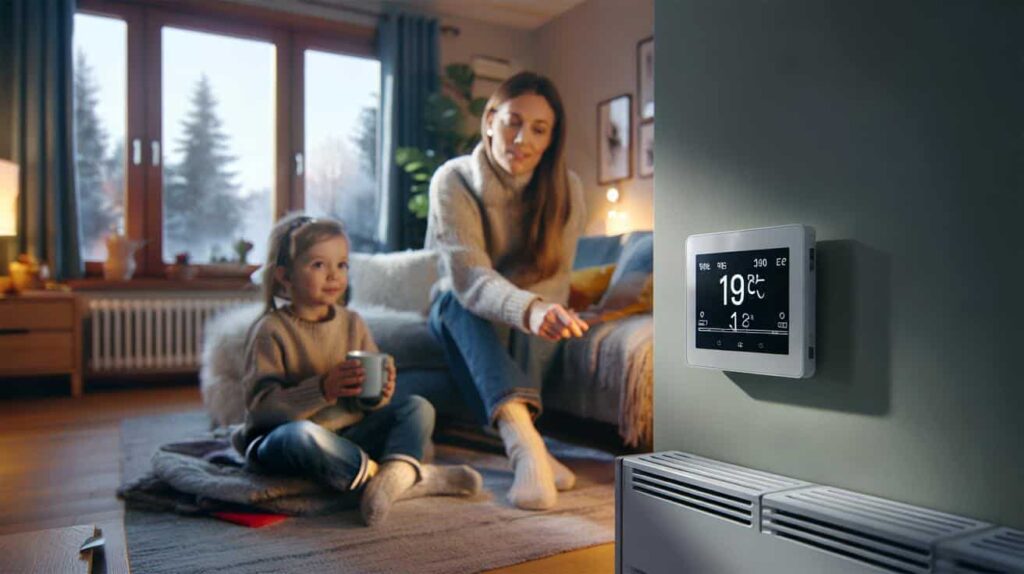
Outside, the world had changed: energy prices soaring, climate anxiety buzzing in the background, and houses far from the thick stone walls of our grandparents. Inside, that sacred 19 °C suddenly seemed like a relic from another era.
 A €95 Billion Future Market Looms For The French Jet Engine Giant With Its New Singapore Plant
So experts are quietly rewriting the rulebook.
 Unusual Early Arctic Breakdown Expected In February: Meteorologists Spot Rare Atmospheric Signals
The 19 °C myth meets real life
For years, 19 °C has been held up like a moral benchmark. Not just a temperature, almost a virtue signal. You’re eco-conscious, you’re serious, you’re in control. This number appeared in public campaigns, on energy bills, in government leaflets. It slipped into conversations like a piece of common sense you weren’t supposed to question.

Only, bodies don’t read guidelines. They react to humidity, to age, to how well you sleep, to stress. A young adult in a well-insulated flat doesn’t feel the same as an 80-year-old in a drafty living room. One number for everyone sounds neat. Life isn’t.
Take the winter of 2022 in France, when fear of power cuts was everywhere. Public messaging pushed hard on 19 °C, almost as a patriotic duty. In Lyon, a GP started noting something in her files: more patients complaining of poor sleep, joint pain, lingering colds. Many had turned down the thermostat, sometimes below 18 °C, convinced they had to “hold on”.
She began advising some of them to raise the temperature slightly in the rooms where they spent the most time, especially at the end of the day. A simple shift of 1 to 1.5 degrees. Within weeks, some reported fewer headaches and less fatigue. No miracle cure, no magic pill. Just bodies no longer fighting the room they lived in.
Behind the scenes, experts in thermal comfort had been saying it for years. 19 °C came from a context of older buildings, cheaper energy, and a strong political message about sobriety. Today, insulation has improved in many homes, sedentary lifestyles are more common, and we spend hours sitting in front of screens, barely moving.
When you barely move, your perception of cold changes. Metabolism, activity level, and clothing all shift the “right” temperature. That’s why specialists now talk less about a magic number and more about a **comfort range**, adjusted to each situation. The rule hasn’t disappeared. It’s just become less rigid, more nuanced, more human.
The new recommended temperature: a flexible comfort range
What are experts suggesting now? A flexible band instead of a fixed target. For living rooms and spaces where you’re awake and not very active, many thermal and public health specialists converge around 19–21 °C. That’s the new realistic range. The thermostat becomes a dial, not a verdict.
The idea is simple: start at around 19 °C, then adjust by 0.5 to 1 degree depending on three criteria. Your age. Your activity level. Your home’s insulation. If you’re older, very sedentary, or in a badly insulated house with drafts, 20–21 °C is no longer a crime against the planet. It can be a health measure.
The same logic now applies room by room. Bedrooms remain lower: around 17–18 °C for adults, slightly warmer for babies and elderly people. The bathroom can safely climb to 21–22 °C during shower times, since you’re naked and wet, the perfect combo for getting chilled. Kitchens, where you move more and cook, can stay closer to 18–19 °C.
A family in Nantes tested this approach last winter. They kept the living room at 20 °C in the morning and evening, 19 °C during the day, 17.5 °C the rest of the night, with a separate setting for bedrooms. Their energy bills didn’t explode. Why? Because the real saving came from not heating empty rooms and not pushing the thermostat up and down wildly, rather than from clinging to a single rigid number.
What specialists insist on now is the balance between comfort, health, and sobriety. *You don’t need to choose between your joints and the planet.* A slightly warmer but stable temperature often consumes less than constant big ups and downs that force the boiler to work harder. The plain truth: nobody really lives in a permanent 19 °C bubble, all day, in every room, every month of winter.
 Goodbye Traditional Hair Dyes: New Natural Trend Covers Grey Hair And Makes You Look Younger
They open the door for deliveries. They cook. They work out in the living room. They receive friends. Temperature moves. Instead of fighting that reality, experts aim to channel it. **A well-managed comfort range is often more efficient than a fixed “moral” temperature**. Less guilt, more observation. Less slogan, more daily routine.
How to find your personal “right” temperature at home
So what do you do, concretely, when you stand in front of the thermostat? First step: stop jumping from 18 to 23 °C just because you feel a chill. Work in small steps. Raise or lower by 0.5 to 1 degree, then wait 30 to 45 minutes before judging the result. Your body needs time to adapt.
Second step: separate your spaces. Living room and office around 19–21 °C. Bedroom closer to 17–18 °C. Bathroom warmer when in use, cooler the rest of the time. A programmable thermostat, even a basic one, becomes your best ally to avoid fiddling nonstop and overshooting every time you feel a shiver.
There’s also what specialists call “behavioral insulation”. Those small habits that change everything. Closing shutters at night. Drawing curtains as soon as it gets dark. Sliding a draft stopper under that one door you know is a weak point. None of this is glamorous. All of it adds up.
We’ve all been there, that moment when you turn up the heating instead of simply putting on socks or a thicker jumper. Sometimes you genuinely need that extra degree. Other times you just need to move a bit, drink something hot, or get away from the window where cold air seeps through. The new recommendation is less about strict numbers and more about listening to your body without panicking at the first chill.
Experts themselves have started talking differently. Less dogma, more nuance.
“The 19 °C rule had a strong symbolic impact,” explains an energy-efficiency consultant I spoke to. “But in practice, what matters is a reasonable comfort range. For many households, 20 °C in the main room is a good compromise. The key is to limit overheated spaces and empty rooms kept warm for no reason.”
Boxed into that idea of range, a few simple benchmarks emerge:
- 19–21 °C in living areas when you’re awake and mostly sitting
- 17–18 °C in bedrooms for adults, a bit more for fragile people
- 21–22 °C in the bathroom at shower time, then lower again
- 18–19 °C in the kitchen or when you move around a lot
- A maximum 2–3 °C gap between rooms to avoid thermal shocks
This is where the energy savings hide: not in suffering through a strict 19 °C, but in refusing to heat unused spaces and in stabilising your chosen comfort point. **A small, well-managed comfort range beats a heroic, unrealistic rule every single winter.**
A new way to think about warmth at home
As the 19 °C rule slowly loosens its grip, a more personal relationship with warmth is emerging. People compare less with their neighbour’s thermostat and more with their own sleep, their mood when they wake up, the way their back feels after a day at the desk. The question shifts from “Am I being responsible?” to “Am I living decently without wasting energy?”.
You might find that your sweet spot is 20 °C in the living room, 18 °C in the bedroom, 21 °C in the bathroom for 30 minutes in the morning. Someone else, in a better insulated flat, will feel fine at 19 °C with wool socks. Another, older and more fragile, will need 21 °C to keep their hands from going numb. The rule hasn’t vanished, it’s become plural.
The next time you glance at your thermostat, you may still think of that famous 19 °C. Maybe you’ll smile, remembering the old posters. Then you’ll ask yourself a question that matters more: what’s the narrow comfort range that lets me breathe, sleep, and live, without pushing my heating system into overdrive? That’s where the new recommendation really lies, quietly, in the gap between your needs and your energy bill.
| Key point | Detail | Value for the reader |
|---|---|---|
| New comfort range | Experts now advise 19–21 °C in living spaces, adjusted by age, activity, and insulation | Gives a realistic target that balances comfort, health, and energy use |
| Room-by-room strategy | Lower bedrooms (17–18 °C), warmer bathrooms at shower time, stable living room temperature | Reduces bills without sacrificing daily comfort |
| Small behavioural changes | Gradual thermostat changes, closing shutters, limiting heating of empty rooms | Simple actions that cut consumption without major investments |
FAQ:
- Is 19 °C still the official recommended temperature?Many public guidelines still mention 19 °C, but experts now talk more about a comfort range between 19 and 21 °C for living areas, depending on your situation.
- What temperature do doctors suggest for elderly people?For older or fragile people, specialists often recommend 20–21 °C in living spaces, with attention to avoiding drafts and big temperature differences between rooms.
- Is sleeping at 16 °C too cold?For most adults, 17–18 °C is the sweet spot for sleep. 16 °C can be acceptable with warm bedding and pyjamas, but it may be too cold for some, especially children and elderly people.
- Does 1 °C less really change my bill?Yes. On average, lowering the heating by 1 °C can reduce consumption by around 7%, especially if the reduction is stable and not offset by frequent large temperature swings.
- Should I turn off the heating when I’m out during the day?For short absences, it’s usually better to lower the temperature by a couple of degrees rather than turning it off completely, so the system doesn’t have to work too hard to reheat the space.
