
Tuesday morning, 9:15 a.m., in a small-town café. At one table, a group of silver-haired regulars is laughing so loudly the spoons rattle in their cups. No phones on the table. No notifications. Just hands wrapped around warm mugs and stories told for the third time that somehow get funnier each round.
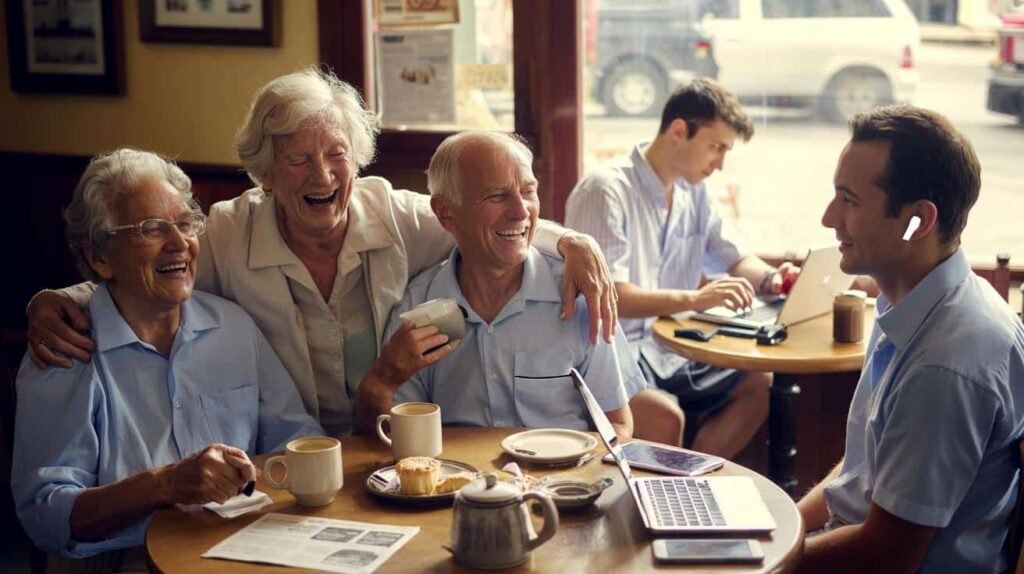
At the next table, a young guy in his twenties scrolls in silence. Wireless earbuds in, laptop open, three apps fighting for his attention. Every few seconds his eyes flick to a new screen, a new tab, a new distraction. He looks… busy. Not necessarily happy.

The older group stays for almost two hours. The young guy leaves after 20 minutes, shoulders tense.

The strange part is: only one of them has “all the time in the world.”

Nine small habits that quietly protect their joy
Spend a day with people in their 60s and 70s and something stands out quickly. Their lives move at a different speed. Not lazy. Just deliberate.
They repeat tiny rituals that, at first glance, look ordinary. The same walk around the block. The same grocery clerk they chat with. The same weekly call with a sibling who lives two time zones away. Patterns, not noise.
Where younger people chase viral trends and new tech hacks, many older adults cling to what actually works. These nine habits don’t trend on TikTok. They don’t look glamorous on Instagram. But they create something tech-driven youth keep trying to download: deep, steady happiness.
Take morning routines. A 27-year-old might cycle through “miracle mornings”, productivity tools, and five different journaling apps in a year. People in their 60s? They often have one simple pattern they’ve kept for decades.
A cup of tea before anyone else wakes up. Watering the plants. Ten minutes with a worn-out newspaper instead of a glowing screen. These aren’t “life hacks”, just rooted habits.
One retired nurse I spoke with has walked the same river path almost every morning for 35 years. No smartwatch. No tracking. Yet she can tell you how the light changes by season, which neighbor’s dog is getting slower, which trees didn’t come back this spring. Her routine doesn’t rack up steps on an app. It builds a relationship with her own life.
There’s a reason these patterns work so well. The human nervous system loves predictability. Routines lower background stress, because the brain isn’t constantly guessing what comes next. For a generation that lived through economic crises, analog childhoods, and the first personal computers, stability is not boring. It’s relief.
Younger people, fed by infinite scrolling, often crave novelty. New apps, new aesthetics, new “systems”. The result is mental fragmentation. Nothing has time to become familiar enough to feel safe.
That’s where older adults win. They’re not cycling through 12 wellness trends a year. They’re doubling down on the two or three things that actually leave them calmer after decades of testing life the hard way. One habit at a time, they quietly trade FOMO for peace.

The old-school gestures that beat any wellness app
Ask people in their 60s and 70s about happiness and they rarely mention “self-optimization”. They talk about small, repeatable gestures. Calling a friend every Sunday. Writing birthdays in a paper calendar and sending real cards. Cooking the same recipe someone once cooked for them.
One powerful habit: planned face-to-face time. Not group chats, not endless DMs. Actual chairs, actual voices, actual pauses. Many older adults still have standing dates: Thursday lunch with a neighbor, monthly book club, a choir rehearsal that has survived three conductors and two recessions.
These habits create a social safety net that doesn’t crash when Wi-Fi does. That quiet, reliable rhythm of seeing the same faces again and again is one of the biggest protectors against loneliness and depression in older age. It just doesn’t look “innovative”.
The biggest mistake younger people make when they try to copy this? They over-engineer it. Everything becomes a “project”. A Notion dashboard for friendships. Color-coded calendars. Efforts so big they collapse under their own weight.
Older adults rarely do that. They lean on simple, low-friction commitments. One friend for coffee, same day, same place. A weekly volunteer shift that doubles as social time. A hobby group where the rule is: if you can’t come, you just come next time. No guilt.
There’s kindness in how they design their lives. They know energy fluctuates. They’ve lost people. Plans fall through. So they create gentle structures instead of demanding ones. We’ve all been there, that moment when you realize your “perfect routine” was so rigid it broke at the first real-life emergency.
“I don’t try to be happy every day,” a 71-year-old widower told me. “I just try not to be alone with my thoughts every day. The rest follows.”
- They keep one or two meaningful routines instead of chasing every new wellness trend.
- They protect analog contact: shared meals, walks, regular phone calls that don’t need a group chat to exist.
- They let things be imperfect: missed days, late arrivals, long stories that go nowhere but still feel good.
- They repeat what works shamelessly, even if it looks “boring” from the outside.
- They quietly limit tech during key moments: no phones at the table, no screens in the bedroom, no doomscrolling before bed.
Why these “old ways” might be the future of happiness
The more you look at the daily lives of people aging well, the more you notice the same nine timeless habits appearing in different outfits. Slow mornings. Consistent movement. Real conversations. Simple food. Deliberate rest. Modest spending. Acts of service. Curiosity. And a stubborn refusal to live through a screen.
These aren’t romantic clichés. They show up in study after study: strong social ties, purpose, and physical activity beat almost every flashy biohack on long-term wellbeing. The elders who embody them don’t quote research. They just go for a walk, show up for others, and keep learning how to live with what hurts.
Let’s be honest: nobody really does this every single day. They skip walks. They get glued to TV. They argue and withdraw. Still, their default setting pulls them back toward connection and rhythm more often than not. That’s what counts.
| Key point | Detail | Value for the reader |
|---|---|---|
| Slow, repeated routines | Simple morning rituals, regular walks, fixed social dates | Reduces anxiety, stabilizes mood, anchors your day without apps |
| Prioritizing real contact | Face-to-face time, calls, shared activities over constant messaging | Builds deeper bonds and a reliable support system when life hits hard |
| Low-tech happiness | Intentional screen limits, analog pleasures, realistic expectations | Less comparison, more presence, a clearer sense of what actually matters |
FAQ:
- Question 1What are some concrete habits I can borrow from older generations starting this week?
- Answer 1Pick one: a fixed weekly coffee with the same person, a 15-minute walk without your phone, or a “no screens at the table” rule for dinner. Keep it small, boring, and repeatable. That’s the sweet spot.
- Question 2Do people in their 60s and 70s really use less technology, or is that a myth?
- Answer 2Many use smartphones and social media, but they often use them more intentionally. They might scroll less, text more, and shut things off earlier at night. The key difference is not zero tech, it’s selective tech.
- Question 3What if I don’t have a big social circle like older people seem to?
- Answer 3You don’t need a crowd. Start with one recurring human contact: a neighbor, a colleague, a relative. Consistency beats quantity. Over time, that one connection often leads to others naturally.
- Question 4How do these habits help with anxiety compared to modern mental health apps?
- Answer 4Apps can support you, but your nervous system calms down fastest with predictability, movement, and safe people. These habits give you all three: a basic rhythm, a body that’s not stuck in a chair, and human warmth.
- Question 5Isn’t it too late to build these routines if I’m already in my 40s or 50s?
- Answer 5*No age is “too late” to make your days a little kinder to live in.* People reinvent themselves in their 60s and beyond all the time. Starting now just means you get more years to enjoy the compound interest.
