
You thought you were bringing home a cute companion. Somewhere between the first purr and the latest 5am wake-up, the regime changed.
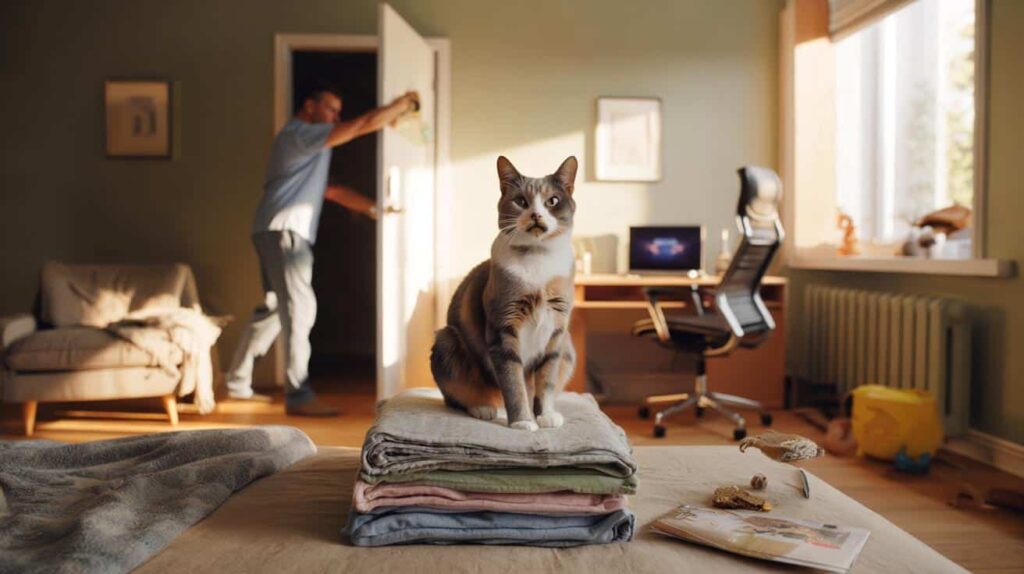
You may still be paying the rent and the energy bills, but watch closely and the balance of power at home looks suspiciously furry. From the sofa you’re not allowed to sit on to the laptop that’s now a heated throne, many owners are realising their cat never signed up for equal cohabitation. It signed up for sovereignty.

The silent takeover starts with your furniture
Power at home rarely changes hands with a grand speech. It happens in centimetres, fur, and scratch marks. One day your armchair is yours; the next, you are politely informed that it is “occupied indefinitely”.

Behaviourists say this isn’t random cuteness. When your cat spreads itself across the sofa, the laundry pile or, pointedly, your keyboard, it is claiming strategic ground. In cat logic, high, warm or central spots function like prime real estate.

Your cat isn’t just relaxing on your stuff. It is re-drawing the floor plan of who controls what.
Territory in feline life is mapped by scent. Those little cheek rubs on the door frame, the laptop edge or even your legs are not simply affection. They’re chemical post-it notes saying, “mine, mine, also mine”. Gland secretions on the cheeks leave pheromones that create a personal safety bubble.
Winter makes the pattern obvious. Radiators, sunny patches, wool blankets, the exact spot where the warm air vents hit the carpet – your cat gets them first. You move, they don’t. That’s not an accident. Warm zones, and especially vantage points like bookshelves or the top of the wardrobe, are perfect lookout posts. From up there, your cat isn’t just watching birds. It’s overseeing its estate.
Key signs your cat has annexed the living room
- You sit down and automatically check where the cat is before choosing a spot.
- Throw blankets and clean laundry “belong” to the cat until further notice.
- Your gaming chair or office chair is mysteriously occupied every time you stand up for 30 seconds.
- Closing a room door feels like you’re trespassing on royal land.
Once you start stepping around the cat’s favourite zones instead of shifting the cat, the power transfer is already complete.
From flatmate to staff: the portier and private chef contract
The next stage of the feline coup takes place at the doors and the food bowl. You may think you decide when rooms are open or closed. Your cat thinks differently.
The classic scene: insistent meowing at a door, a paw tapping the wood, you get up, open it… and the cat sits in the doorway, doing nothing. From a human perspective, it looks absurd. From a cat’s perspective, this is a perimeter check. The path must be available on demand, and you must prove you will provide it.
Every time you jump up to open a door, you confirm your role as trusted gatekeeper of royal borders.
Food takes this dynamic even further. Domestic cats are natural nibblers, wired to eat many small meals rather than two big ones. Left to their own devices, some will snack more than a dozen times a day. So the pet parent becomes a live-in caterer, operating on a flexible, meow-based rota.
| Cat behaviour | Human reaction | Effect on power balance |
|---|---|---|
| Stares at bowl with 10 kibbles left | Refills “nearly empty” dish | Cat learns it can adjust food supply on request |
| Yowls near the fridge at 3am | Sleepy feeding to restore peace | Night schedule quietly shifts for the cat’s comfort |
| Ignores expensive food, begs for yours | Offers “just a taste” | Cat dictates menu and mealtime rules |
This isn’t your cat being “spoiled for no reason”. In learning theory, each time the cat meows and you respond with food, the behaviour is reinforced. The pattern is simple: signal, response, reward. You’re effectively being trained by a 4kg predator in a fur coat.
The real ruler sets the schedule
Sleep patterns also reveal who is running the show. Cats are naturally most active around dawn and dusk. So just when you want to sleep in, your home ruler is ready for “morning operations”. That might be sprints across the hallway, precision pounces on your toes, or a gentle but persistent paw to the face.
Once your alarm is set around the cat’s needs, not your own, the timetable has been seized.

Owners who work from home feel this acutely. Online meeting in progress? That’s the exact moment your cat decides to stroll across the keyboard, block the webcam, or launch a surprise tail cameo for your colleagues.
There’s a biological logic behind this. When your cat orchestrates shared nap times or play sessions, it is synchronising the household to its rhythm. In groups of animals, shared routines support bonding and collective safety. At home, that group is you, your family, and the creature currently lying on your tax documents.
How cats reset household routines
- Early-morning demands turn occasional weekend wake-ups into a daily pattern.
- Evening “zoomies” influence when you watch TV, close doors, or put breakables away.
- Regular play before bed can reduce night-time chaos, but also locks you into a new ritual.
- Work breaks become structured around petting sessions and snack top-ups.
Many owners who think, “I’ve trained my cat to eat at 7am,” slowly realise the opposite: the cat has trained them to wake at 7am, every day, including holidays.
A soft coup with hard science behind it
All this may sound like lighthearted comedy, yet research shows the emotional payoff is very real. Stroking a cat can trigger a release of oxytocin in humans, a hormone associated with bonding and stress relief. The purring vibration itself is linked in early studies to lower heart rate and feelings of calm.
The cat’s rulebook is strict, but the trade-off is lower stress levels and a constant, purring presence.
There is another side, though. When the cat’s control over routines becomes intense – constant demands, destructive behaviour if ignored, night-time harassment – both animal and human may be signalling unmet needs. Boredom, hunger, pain or anxiety can all sit behind that “clingy dictator” persona.
Vets and behaviourists increasingly encourage owners to ask: is my cat ruling the house because it’s thriving, or because it’s trying to fix something that feels wrong? A medical check, richer play environment, or more predictable feeding pattern can turn frantic control attempts into a calmer, still gently bossy companionship.
Living with a benevolent little monarch
So how do you share a home with a creature that treats your bed as its throne and your diary as a suggestion? The answer sits somewhere between boundaries and acceptance.
Some strategies that keep both parties sane:
- Set feeding times and stick to them, using puzzle feeders so the cat “works” for food.
- Offer several sleeping and lookout spots so your cat has options beyond your laptop.
- Schedule two or three short, intense play sessions daily to match hunting bursts.
- Use quiet, consistent cues for doors and access, rather than reacting to every meow.
These small adjustments don’t overthrow your furry monarch. They simply create a more functional kingdom. The cat still feels in charge of key resources, while you regain some control over sleep and sanity.
Many owners also find it helpful to name what is happening. Calling yourself “the staff” is a joke, but it also nudges you to reflect on the dynamic. Are you jumping up at the first sound or making thoughtful choices that support both your needs and the cat’s welfare?
Behind the memes about feline tyranny lies a deeper story: thousands of years after we first invited cats near our grain stores, they are still quietly shaping our homes, schedules and moods. You sign the tenancy agreement, pay the landlord and manage the broadband. Your cat, without paperwork or passwords, runs everything that truly matters inside those walls: comfort, routine, and that strange sense that the place only feels like home when you hear a purr from the next room.
