
In reality, it behaves more like a shrunken family van crossed with camping gear.
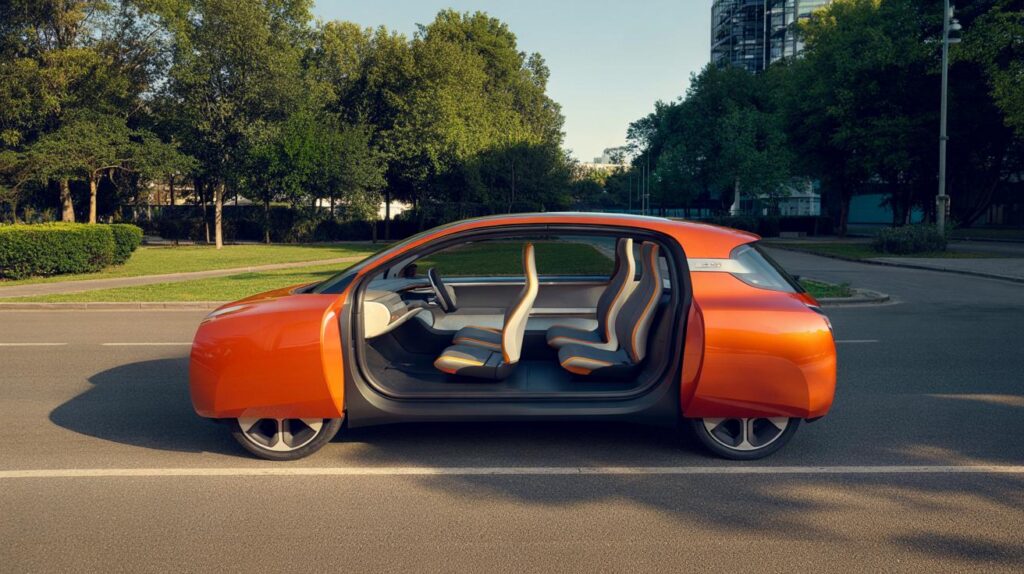
Citroën has revealed the ELO Concept, a super-compact electric study developed with French sports giant Decathlon. Its footprint is no bigger than a Renault Clio, yet the interior offers six usable seats, a flat floor and a cabin that can morph from commuter shuttle to mobile living room or tiny office in minutes.

A tiny footprint with the space of a small van
The ELO Concept measures just 4.10 metres in length, right in the middle of Europe’s small hatchback segment. That makes it shorter than many compact SUVs currently clogging up city streets.

Inside, though, the layout is radically different. The motor sits at the rear, the wheels are pushed out to the corners and the floor is completely flat. This layout frees up the cabin from front to back.

The ELO manages six real seats in a body the size of a supermini, thanks to a rear-mounted motor and a totally flat floor.
Citroën has revived an architecture that carmakers abandoned years ago: the one-box, or monovolume, silhouette. The windscreen, roof and tailgate form one continuous volume, maximising headroom and legroom.
The side doors come without a central pillar, creating a giant 1.92‑metre opening. Passengers can climb in without contorting themselves, and loading bulky items becomes much easier than in a conventional hatchback.
At the back, three removable seats can be clicked into place, folded, or taken out entirely and used outside the car. Citroën openly nods to the legendary 2CV here: the seat cushions have that “chocolate bar” style, with simple padded segments rather than thick, heavy armchairs.
- Length: 4.10 m (similar to Renault Clio)
- Seating: up to six individual seats
- Floor: completely flat
- Doors: giant opening with no central pillar
- Motor: mounted at the rear
Decathlon’s outdoor mindset inside a city car
This is not just a Citroën styling exercise with a sports logo slapped on the tailgate. Decathlon was deeply involved in the ELO project, and its influence is obvious the moment you look inside.
Many surfaces are washable and robust rather than plush and delicate. The rear seats are designed to be removed quickly and used as stools or loungers outside the vehicle. Some elements use Dropstitch technology, best known from inflatable stand-up paddleboards, reimagined as lightweight beds or clever storage units.
The cabin can shift from six-seater people carrier to camping pod to mobile teleworking space in a few minutes.
The concept treats the car as equipment, not a precious object. It is a tool for active weekends, spontaneous trips or remote working sessions away from the kitchen table.
The roof offers one of the quirkiest touches. It features a “giraffe” opening section that lets long objects – surfboards, skis, planks – poke upward. The same opening can serve as an impromptu observatory for watching the night sky from the rear bench.
Even the tyres are drafted into this clever, practical mindset. Developed with Goodyear, they feature external LED indicators that show tyre pressure at a glance. That removes one more small chore from the driver’s mental load and encourages correct inflation, which directly affects range and safety.
A design that chooses simplicity over gadget overload
Rather than chasing an aggressive or hyper-futuristic look, Citroën leans into a straightforward, almost industrial style. The orange bodywork changes hue slightly depending on the light, but the general shape remains simple and boxy.
Glazed surfaces are generous, with around 4.5 square metres of glass. That floods the interior with daylight and makes the cabin feel much larger than the exterior suggests. The feeling is closer to a small lounge than a conventional hatchback cockpit.
Citroën deliberately chose flat or only slightly curved windows. These are easier and cheaper to manufacture and can reduce weight. The bumpers and wheel arches are identical front and rear and made from expanded polymer, a light, strong and recyclable material. If one end is damaged, the same part fits both sides, simplifying repairs and production.
Repeated, interchangeable parts and flat glass show a clear push for easier manufacturing and lower running costs.

Inside, the driver’s position breaks completely with today’s norms. The main seat is centrally mounted. That frees up space on each side and gives all occupants a similar view forward, a bit like in some classic microvans or race prototypes.
The driver’s seat can rotate a full 360 degrees, turning into a chair for meetings, work or meals when the car is parked. The steering wheel uses a single spoke, a Citroën signature, and several key functions are controlled through joystick-like elements rather than a forest of buttons.
There is no conventional dashboard screen. Instead, a transparent band serves as a projection surface for speed, navigation and basic data. The idea is to strip down both components and distractions while still giving the driver the information they need.
Six seats and a nod to the 2CV
The 2CV spirit does not stop at those chocolate-bar seat cushions. Citroën borrows the earlier car’s logic of doing more with less. The seating is light and pared back, but well thought out for real traffic, not just motor show stages.
Because the floor is flat and the seats are individual, occupants can re-arrange themselves easily. Families can place children nearer the centre, or turn the layout into two facing benches for a picnic when parked.
| Feature | 2CV | ELO Concept |
|---|---|---|
| Seat philosophy | Simple, lightweight pads | Modular, tablet-style cushions |
| Ease of repair | Basic, low-cost parts | Identical bumpers and panels |
| Everyday usability | Rural workhorse | Urban family and leisure tool |
This approach helps keep weight down, which is crucial for electric vehicles, and hints at a future where not every seat needs motors, heating and complex electronics to feel pleasant.
A rolling lab for future Citroëns, not a showroom model
Citroën is clear that ELO will not turn up at dealerships in this exact form. Like the earlier OLI concept, it serves as a mobile testbed for ideas. The aim is to feed the most promising ones into upcoming models.
The new C3 Aircross, already launched in some markets with electric, mild hybrid and petrol variants, shows how some of this thinking might trickle down. It focuses on space, affordability and modular interiors too, even if it does not go as far as a six-seat, central-driving-position layout.
ELO points towards a new type of car: part leisure van, part city runabout, part compact living space.
The project arrives at a time when carmakers are under pressure from several directions at once. Regulations are nudging them towards electrification, while customers complain about rising prices, digital overload and shrinking practicality.
ELO offers a different route: instead of adding more screens and software, it uses packaging, modular furniture and shared components to add value. The concept suggests that clever design can offset some of the cost and weight burdens created by batteries.
What this kind of concept means for everyday drivers
For households in dense cities, a car the size of a Clio that can seat six or turn into a basic camper could reduce the need for a second vehicle. A typical week might see it do school runs in a six-seat setup, then shift to a four-seat plus mobile office layout for midweek telework, before becoming a minimalist camper for a short weekend trip.
That flexibility also ties into the idea of car sharing. A fleet of vehicles like ELO could serve different users in different configurations through the same app-based scheme, from families with young kids to cyclists needing to haul gear.
There are trade-offs. A simple, washable interior will not please buyers chasing luxury. Removable seats raise security and storage questions. And the central driving position may feel alien or unnecessary for some users, especially in right- or left-hand-drive markets with strong habits.
Yet the benefits are clear: lower material use, potentially cheaper repairs, and a car that can adapt as life circumstances change. For young urban buyers with limited space and budgets, that kind of flexibility might matter more than a stitched leather dashboard or massage seats.
ELO also reminds people what “monovolume” really means: a single, open interior volume that can be rearranged at will. The trend towards SUVs has pushed this format aside in recent years, even though it remains one of the best ways to get real space out of compact dimensions. If concepts like this gain traction, carmakers might once again look at boxier, more honest shapes instead of ever-taller pseudo-off-roaders.
