
As soon as winter tightens its grip, our homes turn warm and steamy, and the battle moves to the windowpanes, where moisture, mold and heating bills all collide.
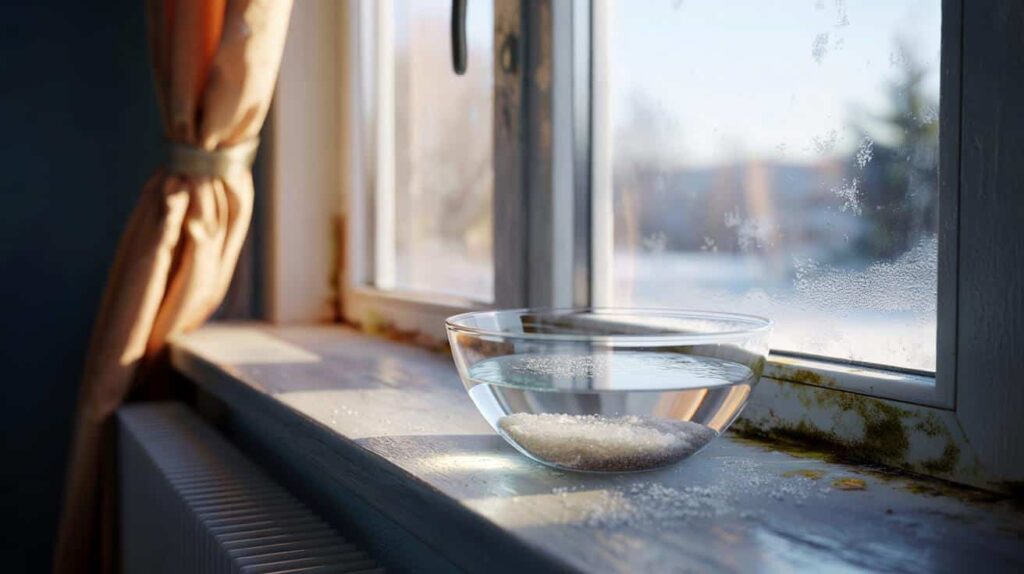
Why a simple salt bowl suddenly matters in winter
Cold months push us to seal everything. We close windows, crank up the heating, layer curtains and shut doors. The air inside doesn’t escape; it just circulates, collecting moisture as it goes.

Every shower, boiling pot of pasta, or rack of drying laundry releases water vapour. At night, a sleeping adult can breathe out up to half a litre of moisture. In a small bedroom with closed windows, that water has to land somewhere.
 It’s confirmed Up to 30 cm of snow : here is the list of states and, most importantly, when
Usually, it lands on the coldest surface in the room: the glass. That’s why you wake up to misted panes, droplets streaming down frames, and damp sills that never quite feel dry.

That constant film of water is more than a nuisance. It slowly feeds mold spores lurking in paintwork, silicone seals and corners. Dark specks spread, the air feels heavier, and people sensitive to allergies start coughing more.
On a winter window, every drop of condensation is a sign your room is holding more moisture than it can comfortably handle.
This is where the humble bowl of salt water comes in. Salt is naturally hygroscopic, which means it attracts and binds water molecules. Placed near a cold window, a salty solution acts like a small, passive sponge for air humidity in that area.
It doesn’t replace good ventilation, and it won’t “fix” a badly damp house. Yet it can ease the worst of that clammy microclimate right where you see the problem starting: on and around the glass.
How the bowl actually works
The science behind it is straightforward. Salt dissolved in water creates a concentrated solution. Because of the difference in vapour pressure between that salty mix and the surrounding air, water vapour tends to migrate towards the solution and get trapped there.
Placed close to a cold pane, the bowl sits at the frontline between warm indoor air and chilled outdoor glass. As air near the window cools, it can hold less moisture, so it sheds it. Instead of letting that water settle only on the surface of the window, you give it an extra target: the salty liquid.
The effect is local and limited. You won’t walk into your living room and feel a sudden desert dryness. But you may notice fewer droplets on the lower edge of the pane, drier frames, and less musty smell in the corners when you keep at it.
How to set up your “winter foil” salt bowl
Setting up the bowl takes less than two minutes and costs pennies.
Step-by-step method
- Pick a wide, shallow glass or ceramic bowl. The larger the surface of the water, the more air it can work with.
- Fill it halfway with tap water.
- Add a thick layer of coarse or rock salt. Stir gently, but leave some grains undissolved at the bottom.
- Place the bowl on the windowsill, as close to the pane as possible while staying stable.
- Check it every few days and refresh when the salt has fully dissolved or a crust forms around the edges.
The visible grains of salt are not just cosmetic. They signal that the solution is saturated enough to keep pulling in moisture as it becomes available. Once everything dissolves and the water looks tired and cloudy, the mixture has basically done its job.
A wide, salty pool near a cold window can quietly act as a local dehumidifier, trimming the worst of the condensation over time.
Common mistakes that kill the effect
People often try this trick once and decide it “does nothing.” In many cases, the setup is the problem, not the principle.
- Using a tiny cup: A narrow espresso cup offers very little surface area, so the effect is barely noticeable.
- Hiding it behind heavy curtains: If air cannot circulate around the bowl, moisture has little reason to move towards it.
- Placing it far from the window: The point is to work on that cold, damp zone. A bowl in the middle of the room has less impact on condensation.
- Never refreshing the salt: A saturated solution stops absorbing. Neglect the bowl for weeks and it simply becomes cloudy water decor.
From foil in summer to salt in winter: same window, same logic
In heatwaves, social media fills with photos of aluminium foil taped to panes. It’s not glamorous, but it reflects sunlight and keeps rooms cooler. The idea is simple: tackle the problem at the glass, right where the outside climate meets your living space.
Winter flips the script. Instead of fierce sunlight and heat pouring in, you’re facing trapped moisture pushing out towards the cold pane. The weapon changes—from shiny foil to a bowl of saline water—but the strategy stays similar.

| Season | Problem at the window | Low-tech trick | Main benefit |
|---|---|---|---|
| Summer | Incoming heat and glare | Aluminum foil or reflective blinds | Cooler rooms, less overheating |
| Winter | Condensation and rising humidity | Bowl of salty water on the sill | Drier panes, slower mold growth |
Both tricks share one strength: they are cheap, reversible and practical for renters who can’t tear out windows or install complex systems.
Where this trick helps the most
Not every room behaves the same in winter. Some spaces are natural moisture magnets.
- Small bedrooms: Two people sleeping with the door shut generate a lot of water vapour in a confined volume of air.
- Bathrooms without windows: After hot showers, moisture lingers and hunts for any cold surface nearby, including small fans or tiles.
- Kitchens: Boiling, simmering and slow cookers all add steam, which often heads for the nearest pane.
- Rooms used for drying laundry: Indoor drying racks can release litres of water into the air in one evening.
If you only have enough salt and bowls to start small, target the window that looks worst each morning: the one with streaming droplets, blackening silicone or peeling paint. That is the place where a local moisture sink can make the clearest difference.
How salt bowls fit with better winter habits
A bowl of salty water works best when it supports a few straightforward habits rather than replaces them.
Think of the bowl as backup, not a magic bullet: it helps most when paired with quick airing and small changes in routine.
Short bursts of ventilation, even on cold days, are still the most effective way to push humid air outside. Opening opposite windows for five minutes morning and evening can refresh a room without losing all the heat stored in walls and furniture.
Limiting indoor drying where possible, using pan lids while cooking and switching on extractor fans actually reduces the amount of water the bowl needs to handle. The less moisture in the room, the more noticeable the bowl’s local effect on the window will be.
What this trick can and cannot do
There’s a risk in treating any home hack as a miracle fix. Salt bowls have clear limits.
- They work slowly and in a very local area.
- They cannot compensate for serious structural damp, roof leaks or rising damp in walls.
- They do not control humidity in large, open-plan spaces on their own.
- They won’t fully replace an electric dehumidifier in badly affected flats.
An electric dehumidifier pulls large volumes of air through cold coils, condensing out significant amounts of water each hour. A bowl of salt water just sits and waits for moisture to drift towards it. The energy cost is zero, but so is the mechanical pull.
On the plus side, the bowl is silent, cheap, and quick to set up. For renters in old buildings, student rooms or shared housing where budgets are tight, that low entry barrier matters.
Extra notes: safety, costs and realistic expectations
From a safety standpoint, the salt solution itself is not dangerous, but placement matters. Pets should not drink from it, and young children are curious about anything at their eye level. A sturdy position on a deep sill, away from beds or desks, reduces spills.
Cost-wise, the method is extremely modest. A 1 kg bag of basic table or rock salt often costs less than a coffee and can last weeks if you only treat a couple of windows. For people watching both heating bills and mold stains, that trade-off is attractive.
If you want to test the impact, pick one problem window and take a few quick photos each morning for a week: three days without the bowl, four days with it. Check how far up the condensation climbs, whether droplets are thicker, and how damp the frame feels. That simple comparison gives a more honest picture than vague impressions.
Used thoughtfully, this small trick can turn a permanently misted window into one that only lightly fogs at the edges, and can slow the spread of mold around frames. It will not make winter disappear, but it can make the season at least a little easier to live with, one salty bowl at a time.
