
Gardeners in colder regions know the frustration: dazzling catalog photos, followed by plants that sulk or die at the first real frost. Yet there is one small shrub, still relatively underused in British and American gardens, that offers colour, perfume and wildlife appeal even when temperatures plunge well below freezing.
A modest shrub with an unexpected winter trick
The star of this story is Callicarpa, sometimes dubbed Japanese beautyberry. At first glance it looks like a pleasant, modest deciduous shrub. Through spring and summer, it wears neat green leaves and stays relatively discreet at the back or middle of a border.
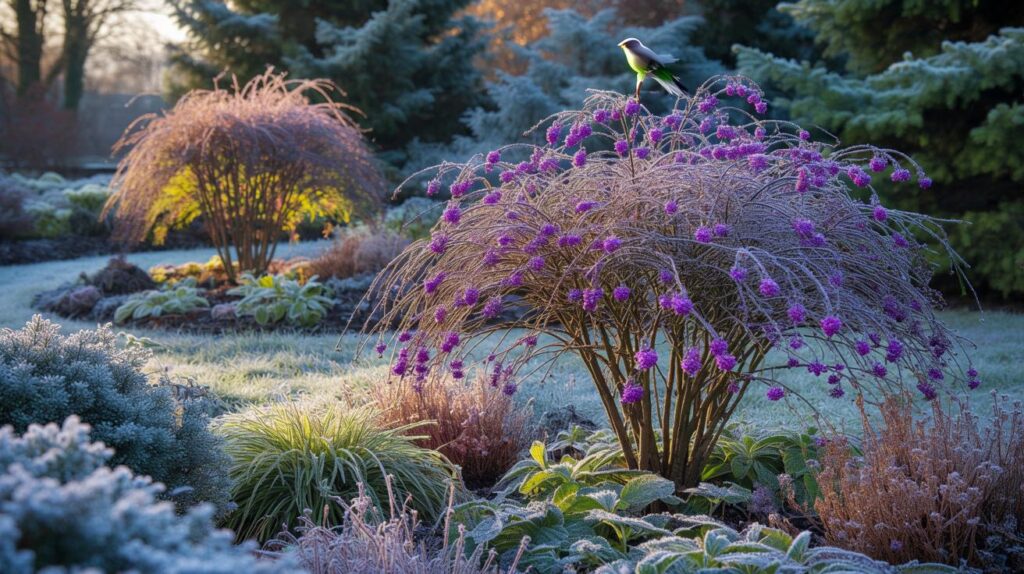
Then autumn arrives and Callicarpa completely changes character. The foliage turns warm shades of yellow and bronze, while along the stems appear tight clusters of berries in an almost surreal shade of violet. These berries cling to the bare branches long after the leaves have dropped, turning a dull corner into a striking winter focal point.
Callicarpa combines serious cold resistance with vivid winter colour, giving structure and interest at precisely the time most gardens have given up.
Many gardeners first plant it for those jewel-like berries. Later, they realise it brings more than looks: it feeds birds, shrugs off frost and slides quietly through the seasons with very little fuss.
How it copes with frost and tricky climates
Callicarpa copes happily with minimum temperatures around -15°C (5°F), and established plants often manage short spells even colder if the soil drains well. That puts it in reach for much of the UK, northern US states and higher elevations where less hardy shrubs simply fail.
The plant’s woody framework and natural dormancy help it ride out winter. New growth hardens in late summer and early autumn, then the shrub effectively “shuts down”, leaving the berries as the visible reminder that it’s still very much alive beneath the bark.
Where many flowering shrubs become a gamble once frost hits, Callicarpa behaves more like a reliable backbone plant – tough first, pretty second.
Light and soil: not as fussy as you’d think
Callicarpa enjoys a spot in full sun or light partial shade. Sunlight thickens the berry clusters and deepens their colour. In dense shade it will survive, but fruiting drops noticeably.
On soil, it is flexible:
- Prefers: free-draining loam or sandy soil
- Tolerates: heavier clay if not waterlogged
- Struggles: in low-lying, boggy areas where water sits around the roots
Before planting, gardeners usually mix in garden compost or well-rotted manure. This improves drainage on clay and boosts moisture retention on sandy plots, giving the young shrub a smooth start.
Planting and basic care for year-round impact
The best seasons for planting are autumn and spring. In autumn, the soil is still warm and moist, so roots spread before winter. Spring planting works just as well if you can water consistently during the first summer.
| Task | When | Why it matters |
|---|---|---|
| Planting | Autumn or spring | Helps quick root establishment and better berry production |
| Watering | First 1–2 years, especially summer | Prevents stress and premature leaf drop |
| Light pruning | Late winter or early spring | Encourages fresh growth and heavier fruiting |
| Mulching | Spring | Retains moisture and stabilises soil temperature |
In the early years, a simple check with a finger in the soil is enough. If the top few centimetres feel dry, a deep soak is due. Short, frequent sprinkles on the surface are less helpful than an occasional thorough watering that reaches the root zone.
Pruning without the fear factor
Callicarpa responds well to gentle pruning. There’s no need for intricate shaping: gardeners generally remove dead, crossing or damaged branches at the end of winter, just before growth restarts.
Light, regular pruning keeps the shrub airy and productive, without turning maintenance into a technical exercise.
Older plants that have become bare at the base can be refreshed by cutting one or two of the oldest stems back to near ground level each year. This gradual renewal nudges the shrub into sending up vigorous new shoots that carry berries closer to eye level.
Does it really scent the garden all year?
The Italian headline that inspired this piece talks about a shrub that “perfumes all year”. In reality, the strongest fragrance window is summer, when Callicarpa carries small clusters of pale flowers, usually white to soft pink depending on variety.
The scent is gentle rather than overpowering, with a light, sweet note that hangs in the air during still, warm evenings. What makes the shrub feel present for much of the year is the sequence of effects: foliage and flowers, then shining berries and winter structure. The garden never quite loses its focal point.
Think of Callicarpa as a four-act performer: fresh spring foliage, summer perfume, autumn colour, and winter berries.
Some gardeners underplant it with low-growing herbs such as thyme or lavender. While Callicarpa handles the cold season, these aromatic companions take over on warm days, keeping fragrance levels surprisingly high across the months.
Wildlife magnet in the colder months
Those violet berries are not just for show. Many bird species peck at them once other food runs low. Depending on location, blackbirds, thrushes and various finches may visit the shrub repeatedly through late autumn and early winter.
The berries are technically edible for humans, though raw they are tart and not very tempting. Some keen home preservers experiment with them in jellies or mixed-fruit jams, using sugar and citrus to balance the sharpness. As with any unusual fruit, small test batches make sense before lining the cupboard with jars.
Fitting Callicarpa into a real garden plan
Callicarpa normally reaches around 1.5 metres (5 ft) in height, sometimes more on ideal soil. That makes it a solid choice for the middle of a mixed border, where it can sit behind perennials and in front of taller shrubs or small trees.
For maximum impact, gardeners often plant it in groups of two or three, spaced about 1–1.5 metres apart. This clumping approach intensifies the colour of the berries and creates a stronger line of structure in winter.
Callicarpa pairs well with:
- Silver foliage plants such as Russian sage or artemisia
- Late-flowering perennials like asters and rudbeckias
- Other berry bearers, including cotoneaster or pyracantha
- Evergreens (box, yew, holly) that frame the purple fruits
Set against dark evergreens, the violet berries seem to glow, especially on clear, cold mornings.
Risks, myths and small print
Like most garden shrubs, Callicarpa is not completely risk-free. Poor drainage around the roots can trigger root rot, especially in heavy clay. In areas with persistent winter wet, raising the planting spot on a low mound or ridge can make the difference between a thriving shrub and a struggling one.
Pest issues are usually limited, although young shoots may attract aphids in spring. A firm jet of water or a watchful eye often keeps them under control without chemicals. Because berry load increases when the plant is healthy, stress from drought or compacted soil shows quite clearly in the following year’s display.
Two practical scenarios for cold-climate gardeners
Picture a small urban garden in northern England, shaded by houses for much of the day. The owner thinks winter interest is impossible. Planting a single Callicarpa against a south-facing fence, with a mulch of composted bark around the base, suddenly gives that space a focal point from October to February. Paired with fairy lights and a simple bench, it turns a once-ignored corner into a place to sit with a coat and a hot drink.
On a larger US plot in the Midwest, a gardener might line a path with three or four Callicarpa shrubs on one side and evergreen hollies on the other. In summer, the path feels green and cool. In late autumn, it becomes a tunnel of high colour and bird activity, with berries glowing opposite glossy holly leaves. Neither planting scheme demands daily attention, yet both shift the mood of the garden through the coldest months.
For anyone tired of gardens that shut down at the first frost, this quiet shrub offers a different rhythm: modest in summer, then unexpectedly dramatic when the rest of the planting steps back. That quality – reliability paired with surprise – is exactly what many cold-climate gardeners have been missing.
