The first time I saw bay leaves hanging on a door, it was in a quiet cul-de-sac on the edge of town. A neat row of family houses, trimmed hedges, plastic scooters left on the sidewalk. And right there, above one freshly painted front door, a bunch of dried bay leaves tied with a red ribbon, swaying slightly in the wind.
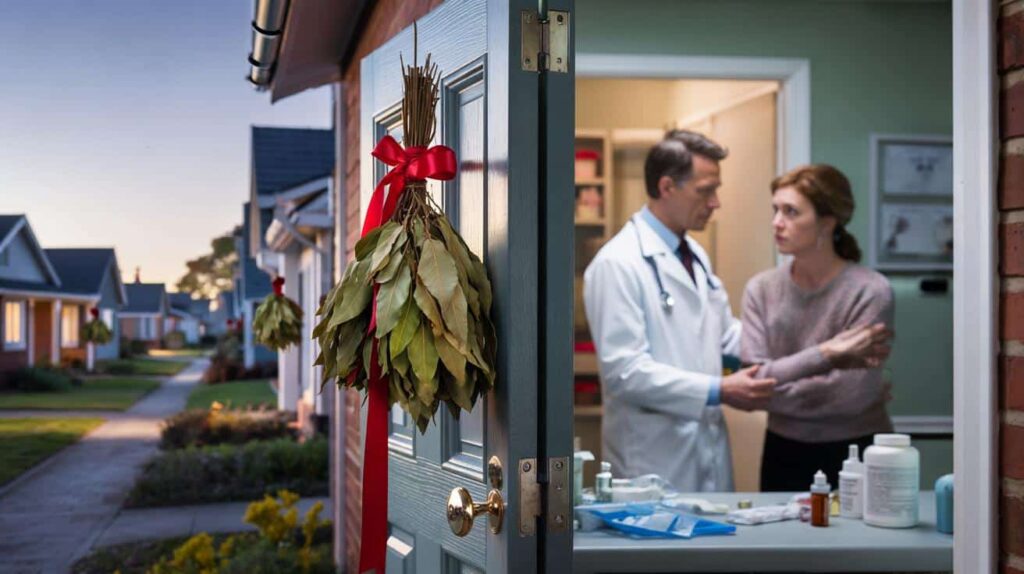
The owner, a young mother, told me she’d hung them “to keep illness away” because she’d read about it in a viral Facebook group. Her son has asthma. Her GP lives three streets away.
Inside, medicine. On the door, a symbol of mistrust.
Why bay leaves on doors are suddenly everywhere
Spend five minutes scrolling on TikTok or in certain wellness Facebook groups and you’ll spot it. A thousand near-identical videos: hands tying bay leaves with twine, captions about “protection”, “healing energy”, or “ancient remedies doctors don’t want you to know about”.
The aesthetic is soothing. Warm lighting, wooden bowls, soft music. And in the comments, people saying they feel safer, more “aligned”, less scared of getting sick… because of a herb you’d usually throw into a stew.
The story that keeps coming up is the grandmother story. Someone remembers a nonna or tía hanging bay leaves to “ward off bad spirits”, then that gets blended with half-understood snippets of herbal medicine and a deep fatigue with anything that sounds like clinical advice.
One woman I spoke to in a pharmacy parking lot proudly showed me a photo of her own door. Her father died from COVID complications and she still doesn’t trust hospitals. “This feels kinder,” she said. “Hospitals feel like they take.”
On social media, that kind of emotion is gold. It spreads faster than any medical explainer.
Doctors watching this trend describe a quiet panic. Not because of the plant itself – bay leaves are relatively harmless on a door – but because of what it stands for. When someone believes a ribbon of dried leaves “protects” their family, they are more likely to skip a flu shot, delay a check-up, or ignore chest pain.
What’s really hanging on those doors is a choice. A small, everyday decision to trust the promise of a comforting ritual over the hard, often uncomfortable clarity of modern medicine.
What doctors are actually angry about (hint: it’s not your door)
Ask a GP about bay leaves and they’ll usually sigh before they answer. One told me she’s less angry about the superstition than about the avalanche of content telling people that doctors are either clueless or corrupt. The bay leaves are just the decorative tip of a much deeper iceberg.
Behind that harmless herb lies a messaging war: short, emotionally charged videos versus long, grey, jargon-heavy leaflets no one reads. Guess which wins.
There’s a case pediatricians still talk about in a French hospital: a toddler with persistent fever. The parents, influenced by online “natural healing” groups, had hung bay leaves, burned them as incense, rubbed essential oils on his chest. They didn’t want antibiotics; they wanted “detox”.
By the time they finally came in, the child had pneumonia. The doctors saved him, barely. In the break room later, one nurse punched a locker door and shouted, “We’re losing to herbs on the internet.”
You feel the exhaustion in that sentence.
The logic behind the anger is simple. Medicine is far from perfect, but it has rules: evidence, trials, peer review, data. Rituals don’t. A bay leaf on a door can promise anything, with no obligation to prove a thing.
That asymmetry is brutal. A vaccine with a one-in-a-million side effect gets headlines; an herbal trend with zero data gets praise for being “natural”. And yet when infection rates drop or a heart attack is prevented, there’s no dramatic before/after image to go viral. Just a normal day that could have gone very differently.
How to live with rituals without abandoning real care
Here’s the part most viral posts skip: you don’t have to choose between a small comforting ritual and actual medical care. You can tie a bay leaf on your front door if it reminds you of your grandmother or makes your hallway feel calmer. Then still book your blood tests, vaccines, and follow-ups like an adult.
Think of bay leaves as scented décor, not health insurance. Light the candle, hang the plant, say the quiet word to yourself. Then call your doctor when something feels off. Both can exist in the same life.
Doctors say the real danger starts when people give symbolic objects very practical jobs. A door charm doesn’t lower blood pressure. A crystal doesn’t reverse diabetes. A herb doesn’t stop a virus at your doorstep like a security guard.
The honest, messy truth is that medical routines are boring. Pills every day, physio exercises, check-ups you’d rather skip. Let’s be honest: nobody really does this every single day. That gap between recommendation and reality is exactly where magical thinking slides in and whispers, “What if this leaf could do it for you?”
One infectious disease specialist put it this way:
“We’re not at war with bay leaves. We’re at war with the idea that good vibes can replace antibiotics.”
So what do health professionals actually wish people would do? Their list is brutally simple:
- Use rituals for comfort, not as a substitute for treatment.
- Ask your doctor honest questions about side effects instead of turning to anonymous threads.
- Check if a claim has at least one serious source: a hospital, a university, a public health agency.
- Keep one GP you trust and see them before any serious self-experimenting.
- Teach kids early that plants are wonderful, but science is what saves lives in emergencies.
*That mix of softness and rigor is what most households are quietly trying to invent right now.*
Between fear, tradition, and Google: where we actually stand
The bay leaves on the door are not just about plants. They’re about fear of losing control, bad experiences in clinics, cultural traditions that feel safer than waiting rooms that smell of disinfectant. They’re also about people who are tired of feeling like numbers on lab results instead of full humans with stories and memories and grief.
Some doctors understand this and are slowly changing the way they talk. Shorter explanations. Fewer acronyms. More listening. Some are even asking about those herbs on the door, not to mock them, but to understand what patients are really asking for under all that talk of “energy” and “toxins”.
The plain-truth sentence is this: **no plant on your wall will ever replace an emergency room when your chest tightens or your child struggles to breathe**.
What it can do is remind you to breathe, to slow down for a moment before you head out, to remember where you come from. That might be worth something – as long as we don’t confuse emotional value with medical protection.
Somewhere between the hospital corridor and the dangling bay leaf is a space where trust could be rebuilt. Maybe the real work starts on both sides of that door.
| Key point | Detail | Value for the reader |
|---|---|---|
| Bay leaves are symbolic, not protective | No scientific evidence they prevent illness at the doorstep | Helps avoid dangerous overconfidence and delayed care |
| Rituals can coexist with treatment | You can keep traditions while still following medical advice | Reduces guilt and makes healthy habits feel more human |
| Talk to professionals, not just algorithms | Clarify fears with a trusted doctor before believing viral posts | Improves decisions and cuts through online misinformation |
FAQ:
- Do bay leaves on the door really protect against viruses or “bad energy”?There is no scientific evidence that bay leaves on a door block viruses, bacteria, or any physical illness. Any sense of “protection” is emotional or spiritual, not medical.
- Can hanging bay leaves be dangerous for my health?The leaves themselves are usually harmless on a door. The risk comes if you start relying on them instead of seeing a doctor, getting vaccinated, or following prescribed treatment.
- Are doctors against all natural or traditional remedies?Most doctors are not against plants or traditions. They get worried when untested remedies claim to cure serious diseases or when they replace proven care.
- How can I check if a health tip I saw online is legit?Look for at least one credible source such as a hospital, university, or official health agency. Be cautious of posts that promise miracle cures, use fear, or tell you to distrust all doctors.
- What should I do if a family member refuses treatment and trusts rituals instead?Start by listening, not attacking their beliefs. Then gently suggest speaking with a doctor together, asking questions, and combining comfort rituals with real medical follow-up.