
The gas light had been on for a good 20 minutes when the temperature on the dashboard dipped to -9°C. Emma gripped the steering wheel a little tighter, knuckles pale against the glow of the radio. She told herself she’d fill up “tomorrow”. She always did. The road was quiet, the kind of winter silence where sound gets swallowed by the cold. Then, just as she slowed for a red light, her engine coughed. Once. Twice. Then went dead.
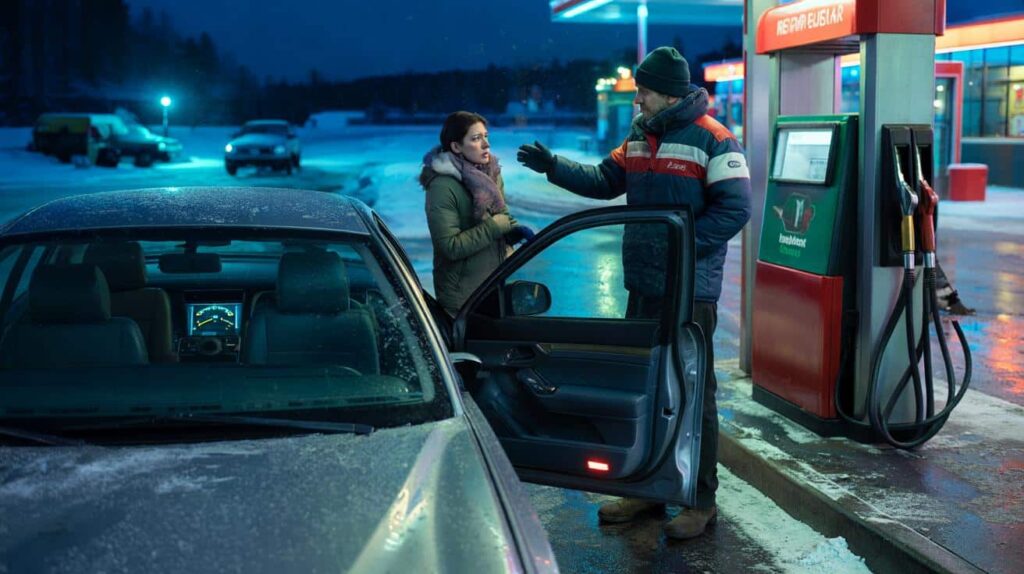
She had enough fuel. But the car didn’t care.
Why auto technicians beg you not to drive on empty
Ask any seasoned mechanic what drivers do in winter that quietly ruins their car, and they’ll often give the same answer: running the tank close to empty. It’s not just about being stranded on the side of the road with the hazard lights on. It’s about what you don’t see, hidden in the fuel lines under the floor of your car.
Cold air, water vapor, and metal lines are a bad cocktail. And your gas level is right in the middle of that mix.
At Mike’s small-town garage in Minnesota, they keep a mental scoreboard every winter. “Fuel line freeze” is scribbled on the whiteboard more times than you’d guess. One January week, he counted seven cars towed in with the same complaint: “It just died, like someone turned the key off.”
Every car told the same quiet story. Outside temps below -10°C. Tank hovering near the quarter mark. Drivers swearing they had “plenty of gas.” One young dad had been late picking up his kids from daycare because his sedan stalled in a grocery store parking lot. A 5-minute fill-up had suddenly turned into a $180 tow and repair bill.
Technicians explain it in simple language. Gas itself doesn’t freeze in normal winter temperatures. The problem is the tiny amount of water that always finds its way into the system. Air gets into the tank, condensation forms on the cool metal walls, water droplets slide down into the fuel, and that water can freeze in narrow fuel lines or at the fuel pump inlet.
When your tank is low, there’s more empty space for humid air to sit and condense. More air, more moisture, more ice risk. **A fuller tank means less air and less room for that damaging condensation to form.** That’s the quiet physics behind the advice your grandparents already gave you: “Never let the tank go below half in winter.”
The simple habit that quietly protects your engine
Auto technicians keep repeating the same basic method: try to refuel when the needle hits half a tank, not when the warning light flashes. It sounds fussy. It’s actually a small protective ritual. When you top up early, you reduce the amount of air sitting inside the tank, which lowers the chance of condensation turning into water droplets.
That means less water to reach your fuel lines, and far fewer chances for that water to freeze into a tiny, invisible blockage that shuts your engine down.
We’ve all been there, that moment when you glance at the dash and think, “I can stretch this another 40 kilometers.” Then life piles on: late at work, kids to pick up, one more errand. The gas station falls to the bottom of the mental list. Let’s be honest: nobody really does this every single day.
Mechanics say that pattern is exactly how problems start. One or two low-tank drives in the cold, nothing happens. You feel safe. Then the temperature drops a bit more, or you park outside overnight, and the tiny bit of moisture that crept in over weeks suddenly matters. Your car doesn’t care that you “meant” to refuel yesterday.
Some techs offer a simple winter checklist for their regulars. They know most people will never read a physics paper on condensation, but they’ll remember a straight-talking warning.
“Keeping it above half is like putting a warm coat on your fuel system,” explains Luis, an auto technician in Toronto. “You don’t see the difference day to day, but on the coldest mornings, it’s the reason your car actually starts.”
To make it easier, many drivers follow three low-effort habits:
- Refuel on the way home, not “sometime tomorrow morning”
- Use the first morning of a cold snap as a trigger to top up
- Pair refueling with a regular errand, like the weekly supermarket run
These tiny anchors keep the “above half” rule from slipping into wishful thinking.
Behind the myth: what really happens inside your tank
The image most drivers have of their fuel tank is wrong. It’s not a sealed lake of gasoline sitting peacefully at the back of the car. It’s a living, breathing space, especially when outside temperatures swing from mild to brutally cold after dark. As the air inside cools, moisture condenses on the walls of the tank, just like droplets forming on a cold drink in summer.
Those droplets don’t stay on the walls forever. They slide down. Straight into the fuel.
When the tank is low, there’s more exposed internal surface for condensation to form, and more air volume for humidity to occupy. Now imagine that moist air settling overnight when the car is parked. Each freeze–thaw cycle can build up tiny amounts of water in the tank.
On a warm day, that water just rides along with the fuel. On a day well below zero, that same water can turn into ice crystals that clog filters, sit in low spots of fuel lines, or disturb the fine spray pattern inside fuel injectors. Suddenly your “healthy” car feels like an old tractor on a frozen field.
Technicians describe fuel lines as the capillaries of your engine. Small diameter, long runs, sometimes routed along cold parts of the chassis. They’re not forgiving when ice gets involved. *A blockage there doesn’t have to be big; it just has to be at the wrong spot at the wrong time.*
Keeping the tank above half does one simple job quietly: it keeps more of the system surrounded by fuel instead of cold air pockets. **Gasoline acts as a thermal buffer**, slowing down how fast parts cool and reducing how deep the cold “bites” into the lines. That can be the difference between a car that sputters, coughs, and gives up, and a car that just wakes up reluctantly and gets you to work.
A winter driving ritual worth sharing
Once drivers understand what’s truly happening under the car, the half-tank habit starts to feel less like nagging and more like a small act of self-respect. Nobody likes the feeling of being stuck at the roadside, breath fogging up in the cold, waiting for a tow that’s already two hours behind because every other unlucky driver had the same problem that morning.
Switching your mindset from “How low can I go?” to “When do I top up next?” is a surprisingly calming shift in winter.
There’s also a quiet ripple effect. Parents pass this rule down to new drivers. Colleagues mention it in the office when the first real freeze hits. Some people even treat their first winter fuel-up above half as the unofficial start of the cold season, right alongside digging out scarves and gloves.
It’s not a high-tech fix. It won’t make your car smarter or more glamorous. **It just tips the odds a little more in your favor on the very days when everything else already feels harder.** And that alone can change your whole experience of winter roads.
If you’ve had a fuel line freeze or a mysterious winter stall, you probably remember the exact corner where it happened. Maybe this year, your story shifts a bit. You might still glance nervously at the fuel gauge on bitter mornings, but the needle will sit a bit higher, your shoulders a bit lower.
And when someone you care about mentions driving on fumes “just this once” as the temperature plunges, you’ll have a simple, lived truth to share: keeping the tank above half isn’t superstition. It’s how cars survive the cold without complaining.
| Key point | Detail | Value for the reader |
|---|---|---|
| Keep tank above half | Reduces air volume and condensation inside the tank | Lowers risk of fuel line freeze and unexpected stalling |
| Cold amplifies small problems | Water droplets can freeze in narrow lines and filters | Helps readers understand why their car fails only on the coldest days |
| Create simple habits | Refuel on routine trips and before cold snaps | Makes winter driving safer without complex maintenance |
FAQ:
- Does gasoline itself actually freeze in winter?Under normal winter temperatures, gasoline doesn’t freeze solid; the real issue is water in the system freezing in lines, filters, or at the pump inlet.
- Is keeping the tank above half really necessary if my car is new?Yes, modern cars still have metal and plastic lines exposed to the cold, and condensation doesn’t care how new your vehicle is.
- Will fuel additives alone prevent fuel line freeze?Additives that disperse water can help, but technicians see the best results when they’re combined with the half-tank habit.
- Does this apply to both gasoline and diesel vehicles?Yes, though diesel has its own cold-flow issues, both fuel types benefit from reduced condensation and fuller tanks in winter.
- Is this only a concern in very cold climates?Fuel line freeze is most common below freezing, but rapid temperature swings around 0°C can also create condensation problems over time.