
Across Instagram, Pinterest and TikTok, users are saving the same fringe-heavy hairstyle and walking into salons with one goal: “Make me look like this.” The reference? Dakota Johnson and her now-iconic, soft, slightly shaggy fringe that has become the unofficial template for the 2026 haircut trend.
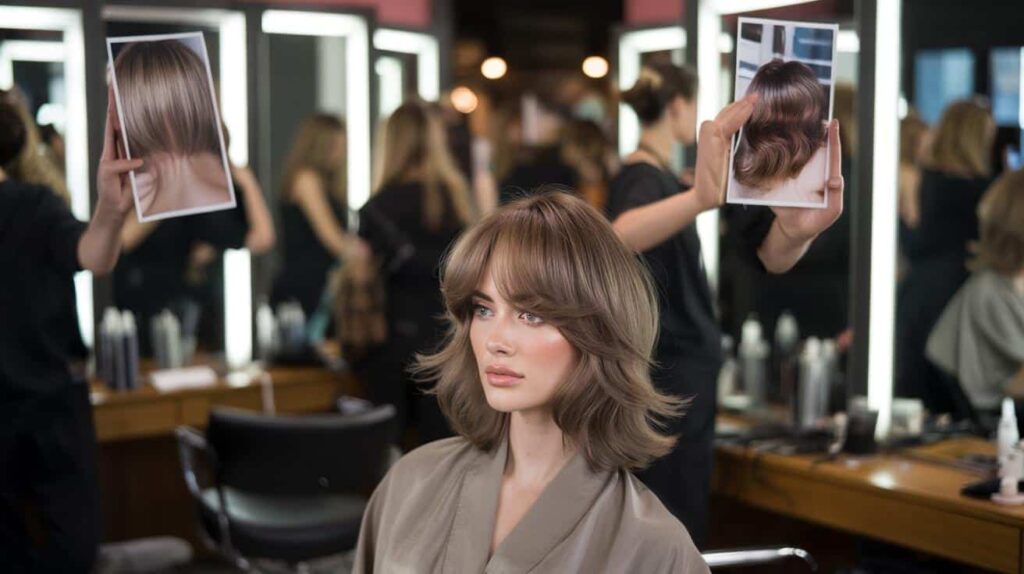
The photo that launched a thousand fringes
Before a big chop, many people no longer rely on vague descriptions. They come armed with receipts: carefully curated screenshots and mood boards. Hairstylists say that, this year, one image lands in their chair more than almost any other – Dakota Johnson with her effortless, brow-grazing fringe.
Dakota Johnson’s soft, wispy fringe has become the go-to screenshot for anyone wanting a cool, low-effort haircut in 2026.
The look is deceptively simple. Her fringe skims the eyebrows, falls in delicate, slightly feathered tips and melts into the rest of the hair. It frames the face without swallowing it. The style signals polish without looking overdone, and that balance is exactly why people are rushing to copy it.
What makes the “Dakota fringe” different
There are thousands of fringe styles, from blunt micro-bangs to full curtain bangs. The Dakota Johnson version sits neatly in between these extremes. It feels light and modern, without screaming “I just got a haircut.”
Soft, precise and a bit French
The shape combines clean cutting with a soft finish. The fringe lies loosely across the forehead, with ends that look slightly frayed in the best way. Those wispy tips keep the eyes visible, so the fringe opens the gaze rather than closing it off.
The length is key. It just meets, or barely brushes, the brows. Any shorter and it risks looking severe; any longer and it behaves like full curtain bangs instead. The sides taper into the rest of the hair, so there is no harsh line between fringe and lengths.
The cut is designed to look undone on purpose – a little movement, a little texture, and nothing too sculpted.
Paired with straight or slightly wavy hair, this fringe delivers that quietly chic, almost French-girl cool: you look styled, but you still seem like you simply woke up that way.
Who this fringe really suits
No single haircut flatters everyone, but this one comes close. Hairstylists point out that the Dakota-inspired fringe works particularly well with certain face shapes and hair types.
Face shapes that benefit most
- Oval faces: the fringe adds structure without shortening the face too much.
- Heart-shaped faces: it softens a wider forehead and balances a narrower chin.
- Slightly square faces: the feathery edge blurs harder angles around the jaw.
People with a higher or broader forehead often find this style especially flattering, as it visually lowers the hairline and brings focus back to the eyes.
Best hair types for the cut
The look relies on the natural fall of the hair, so certain textures showcase it better:
| Hair type | How the fringe behaves |
|---|---|
| Fine, straight | Looks light and airy, adds interest without weighing the face down. |
| Medium, straight or slightly wavy | Delivers that “effortless” texture with minimal styling. |
| Thick, straight | Needs careful thinning so the fringe doesn’t sit like a heavy block. |
| Curly or very wavy | Possible, but requires a curl-trained stylist and typically a longer, looser fringe. |
If your hair is extremely curly or prone to strong cowlicks at the front, a classic Dakota-style fringe may need adjustments, such as extra length or a more curtain-like split, to sit comfortably.
How to ask your stylist for “the Dakota Johnson fringe”
Stylists welcome reference photos, and with this trend they almost expect them. Still, a clear description helps ensure you walk out happy.
Ask for a soft, lightly layered fringe that finishes just above the eyebrows and blends fluidly into the sides.
Key phrases that professionals say are useful:
- “I’d like a wispy, textured fringe, not a blunt one.”
- “Please keep it airy, not too thick or heavy.”
- “I want the ends to be slightly feathered, with a gentle connection into the side lengths.”
- “Think modern fringe with a hint of curtain-bangs movement.”
Ask your stylist to check how the fringe sits when you move, raise your eyebrows and turn your head. That small step helps avoid a cut that looks perfect while you are staring straight into the mirror, but awkward the moment you live your actual life.
Styling tricks that keep the look effortless
One of the big attractions of the Dakota fringe is that it works in many situations: red carpet waves, a casual cardigan, a white shirt on a coffee run. It adapts without much fuss.
Daily routine without a full-blown blowout
On most hair types, styling can stay simple:
- After washing, rough-dry the fringe first so it doesn’t set in a strange direction.
- Use a small round brush or your fingers to sweep it slightly to either side, keeping the centre soft.
- Finish with a tiny amount of lightweight styling cream or texturising spray on the ends for separation.
For updos or braids, the fringe becomes the focal point. You can pin everything else back and still look styled, because the face-framing layers create interest around the eyes and cheekbones.
Common risks – and how to avoid fringe regret
Fringes carry a reputation: great when fresh, frustrating when wrong. With a celebrity reference, expectations can climb even higher.
The biggest risk is not the cut itself, but choosing a fringe that fights against your hair’s natural behaviour.
If your hairline strongly separates in the middle, a very short, compact fringe may split open constantly. In that case, a slightly longer, more curtain-like adaptation of the Dakota look will be easier to handle. People with very oily skin at the forehead might need to wash the fringe more often or use dry shampoo to stop it from clumping.
Maintenance also matters. This style usually needs a trim every four to six weeks to stay at that perfect brow-grazing length. Many salons offer quick fringe trims at a lower price, so asking about that at your first appointment can save both money and effort later on.
Why celebrity hair photos work so well at the salon
Turning up at the hairdresser with Dakota Johnson’s photo is not only about fandom. Visual examples remove guesswork. Terms like “soft fringe” or “not too short” mean different things to different people. A clear image sets a shared target.
That said, a stylist will usually adjust the look to your reality: your face shape, your lifestyle, how much time you give styling on a weekday morning. The photo acts as a starting point, not a strict contract.
If you are considering this trend but still feel nervous, a useful approach is a “test fringe”: longer, grazing the eyelashes at first, with softer sides. If you love it, the stylist can nudge it shorter next visit, closer to Dakota’s signature length. If you do not, it grows out faster and slips easily into face-framing layers.
Trends will shift again, but the current rush to the hairdresser shows something broader: people want hair that feels polished, yet lives easily in real life. Dakota Johnson’s much-saved fringe hits that sweet spot – and for many, that single star photo is all the convincing they need to book the next appointment.