
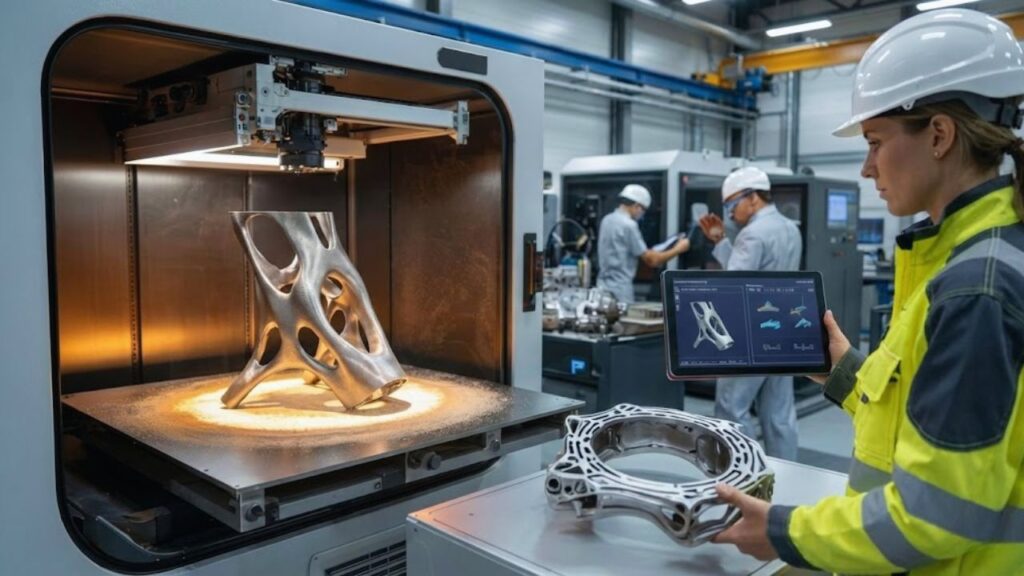
Additive manufacturing has moved beyond theory in aerospace & is now changing how aircraft are designed, built and maintained. Major aviation companies, defense contractors and startups across the United States are working quickly to add advanced 3D printing to their production processes. The technology offers benefits ranging from lighter parts to quicker prototyping that traditional manufacturing methods cannot provide. As competition increases worldwide additive manufacturing is turning into a strategic advantage that marks a significant change in aviation’s future & has already progressed past the experimental stage.
The Impact of Additive Manufacturing on Aviation Design
One of the biggest impacts of additive manufacturing in aviation is how aircraft components are designed. Engineers are no longer limited by conventional molds or machining constraints. This allows for complex internal structures and lighter component weight along with enhanced aerodynamic efficiency. This design freedom enables parts to be optimized for performance rather than manufacturability. In the United States aerospace firms are using digital simulations alongside printing to test ideas quickly & refine them without excessive cost. The result is faster design iteration cycles that reduce development timelines while improving overall aircraft efficiency.

How Additive Methods Are Transforming Aviation Manufacturing
Additive manufacturing is changing the way aviation parts are made in large quantities. Companies no longer need to depend on many suppliers or wait through extended delivery periods. They can now produce parts whenever needed by using digital files. This method strengthens supply chains & lowers the burden of maintaining large inventories. Aviation manufacturers in the United States are setting up local production centers that reduce shipping distances & lower carbon emissions. When paired with less material waste these advantages make additive manufacturing appealing for both commercial airlines and military aviation operations.

The Role of Additive Manufacturing in Advancing Aviation Innovation
Innovation in aviation is moving faster because additive manufacturing creates new opportunities. Parts that used to need assembly from many pieces can now be printed as one unit. This makes them more reliable because there are fewer connections that can fail. The change helps create stronger structures & makes maintenance easier. Airlines and manufacturers in the United States are testing quick repair methods using approved printed parts to reduce the time aircraft spend out of service. As scientists keep working on this technology better materials will increase what additive manufacturing can do for aviation.

How This Technological Shift May Shape the Future of Aviation
The increasing use of additive manufacturing represents a permanent shift in aviation rather than a temporary phase. As certification standards continue to develop printed components will appear more frequently in aircraft fleets. This change enables more affordable fleet improvements while promoting environmentally responsible aviation and boosting global competitiveness for nations such as the United States. Although regulatory and scaling obstacles still exist, the direction forward is evident. Additive manufacturing is preparing aviation for a future characterized by flexibility, improved efficiency and better resource management.
| Application Area | Conventional Approach | Advantage of Additive Manufacturing |
|---|---|---|
| Component Design | Precision machining | Enhanced design freedom and complexity |
| Production Speed | Extended manufacturing lead times | Quicker production and faster delivery |
| Supply Chain | Dependence on multiple vendors | Localized and simplified manufacturing |
| Maintenance | Delays due to spare part availability | On-demand part fabrication and repair |
| Material Usage | Excess material waste | Optimized material use with minimal waste |