
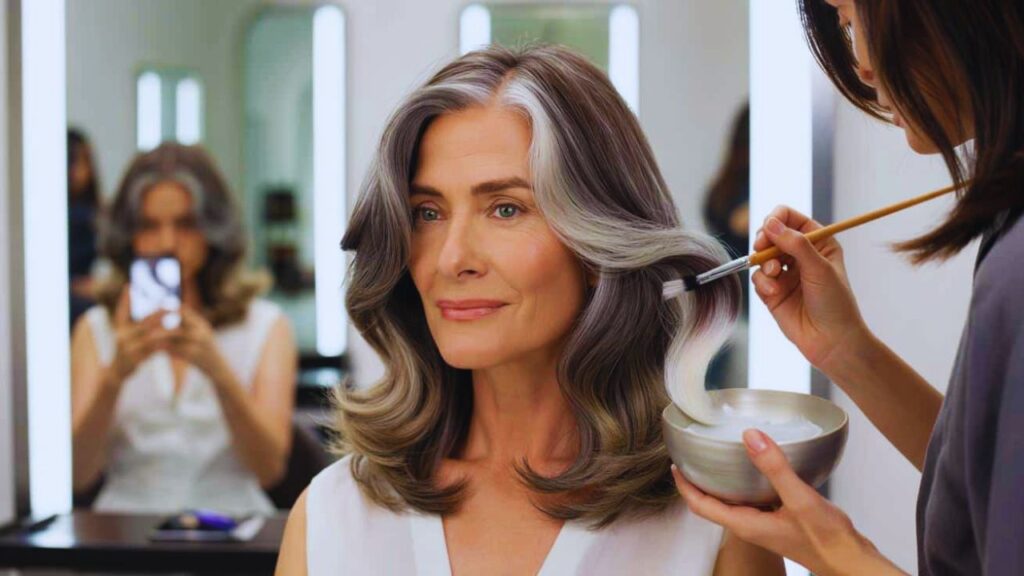
There is no sharp chemical smell, no crinkling foils, no urgency to erase anything. A woman in her late forties watches quietly as a colorist works around her silver strands with soft, smoky tones. The grey isn’t being hidden or chased away. It’s being shaped, framed, and respected. Around the salon, the mood feels different — less like a battle against time and more like a calm collaboration with it. Something has clearly changed in the way hair, age, and beauty are being approached.
From Covering Grey to Blending It
In modern salons, the language has shifted. Clients no longer ask for “full coverage” as a default. Instead, they talk about blending, soft transitions, and low contrast. Colorists now work with terms like diffused highlights, smoky depth, and gentle halos. The goal is no longer to erase silver strands, but to integrate them so they feel intentional. This approach creates hair that looks natural, relaxed, and lived-in — not freshly painted and anxious about regrowth.

Why Grey Blending Feels Different Emotionally
Traditional permanent dye creates a stark divide between colored hair and new growth. That harsh line is often what makes people feel suddenly older when roots appear. Grey blending softens this contrast. By working with sheer tones and fine highlights, the grow-out becomes gradual and forgiving. Psychologically, this removes the pressure of constant upkeep. Instead of racing against time, people settle into a color that evolves with them.

How Modern Grey Blending Techniques Work
The process usually begins by observing where grey appears most naturally often around the temples, parting, and hairline. Colorists then mirror that lightness through micro-highlights across the rest of the hair. Subtle lowlights are added to give shape and depth. A translucent gloss finishes the look, muting harsh warmth and creating a soft, pearly or smoky tone. The result is movement, not perfection — hair that shifts naturally in different light.
 France Set to Triple Renewable Capacity as It Races to Become a Top European Energy Performer
Transitioning From Full Dye to Blended Grey
For those with years of dark dye, the transition is often gradual. Instead of stripping color aggressively, professionals soften the base shade over time, adding lighter ribbons where grey is strongest. This method protects hair health and patience. The transformation happens in stages, allowing silver to emerge naturally without sharp lines or damage. The end result feels cohesive rather than corrective.

What to Ask for at the Salon
Grey blending starts with a clear conversation. Bringing realistic photos with visible texture helps set expectations. It’s important to discuss how often you want salon visits and how much maintenance fits your lifestyle. Asking for low-contrast grow-out or soft blending — rather than full coverage — helps guide the process. A skilled colorist will usually suggest starting near the face and expanding slowly, allowing both hair and mindset to adjust.
The Bigger Shift Behind the Trend
At its core, grey blending reflects a deeper cultural change. People are less interested in hiding age and more focused on recognizing themselves in the mirror. This technique doesn’t promise youth; it offers continuity. Instead of freezing time, it rearranges it gently. The result often feels lighter — not just visually, but emotionally. It’s less about denial and more about design.
Key Grey Blending Insights
| Aspect | Description | Why It Matters |
|---|---|---|
| Grey Blending vs Coverage | Uses highlights, lowlights, and glosses instead of opaque dye | Creates a softer, more natural look |
| Maintenance Style | Longer gaps between appointments, fewer root emergencies | Reduces stress, time, and cost |
| Color Technique | Sheer, translucent tones rather than flat pigment | Allows gentle grow-out without harsh lines |
| Personalization | Adapted to natural grey pattern and lifestyle | Feels individual, not age-driven |
| Emotional Impact | Shifts mindset from hiding age to accepting change | Promotes confidence and ease |
