
If you live in the UK with a dog, you’ve almost certainly said Off the sofa more times than you can remember. And yet, the second you step away, your dog is back curled up on the cushions as if they’ve earned a premium seat. The hard truth is this: the sofa isn’t the real issue. The training approach usually is. Lasting behaviour change happens when the right choice is made easy and rewarding, while the wrong choice quietly loses its appeal. Below, we explain why dogs keep choosing the couch and the calm, behaviourist-backed training shift that actually works—without shouting, scolding, or constant power struggles.
Why Dogs Are Drawn to the Sofa
A dog’s love for the sofa isn’t rebellion; it’s simple learning history. Sofas are warm, soft, and soaked with your scent—three strong signals of comfort and security. Sitting at human height also increases closeness, which many dogs find deeply rewarding. Raised spots allow alert breeds to watch doors and windows, fulfilling natural monitoring instincts. In homes with more than one dog, the sofa becomes a prized resource: the best bed with the best view. Each peaceful nap there reinforces the habit. There’s also a quieter feedback loop. Any attention you give—talking, eye contact, even gently pushing your dog off—can unintentionally reward the behaviour. Many so-called “sofa stealers” are responding to boredom or low-level separation stress. When the sofa reliably equals comfort and connection, it keeps winning. UK context matters too: millions of dogs live in smaller homes and flats where warmth and proximity are limited, making the sofa the most appealing resting place in winter.

The Training Shift Behaviourists Support
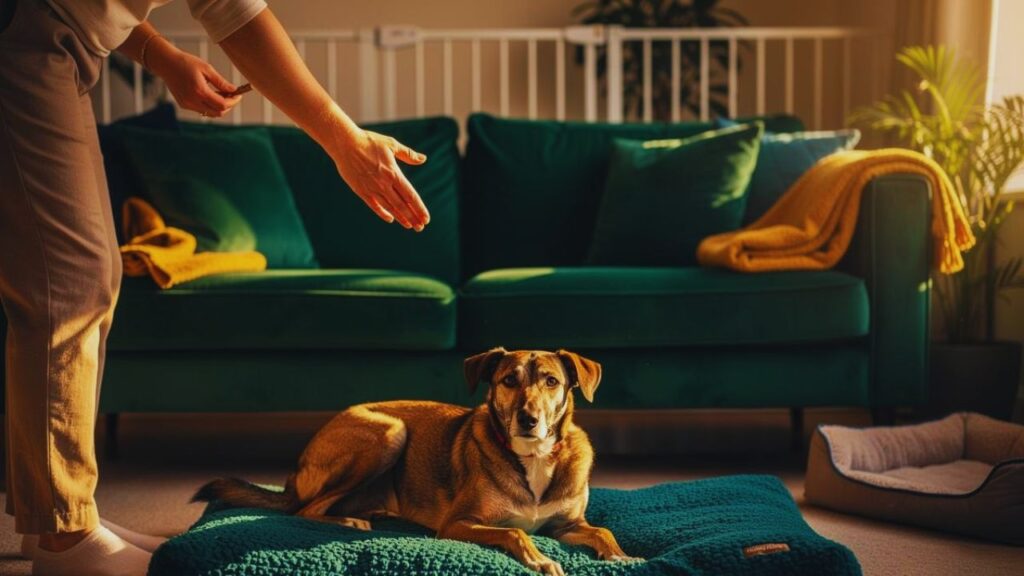
Repeatedly saying “Off!” interrupts the behaviour but doesn’t teach an alternative. Behaviourists instead recommend replacing the sofa habit with a competing, reinforced behaviour—usually a designated calm spot like a mat or dog bed. This approach, known as Differential Reinforcement of Incompatible Behaviour (DRI), focuses on rewarding what you want to see. Rather than punishing sofa jumps, you generously reinforce calm settling on the mat with food, praise, and gentle contact until it becomes the default choice. Set the environment up for success. For the first couple of weeks, limit access by using throws, temporary barriers, or keeping a lead on indoors for easy redirection. Make the mat valuable by hiding treats on it and pairing it with everyday rewards—your return from the kitchen, sitting down with a book, or greeting visitors. Clear rules matter: invited sofa time can exist alongside a strong mat cue. Consistent “by invitation only” boundaries prevent confusion, especially in busy family homes.

Step-by-Step Guide to Teaching a Relaxation Spot
Consider the example of Alfie, a shy rescue lurcher living in Manchester. He paced constantly and claimed the sofa whenever no one was watching. Within ten days of switching to a mat-based routine, his behaviour changed noticeably. Here’s the simple structure his owners followed:
 A Lost World Beneath Antarctica: Scientists Uncover 34-Million-Year-Old Landscape Under Ice
Days 1–3: Scatter kibble on a textured mat and mark the moment paws touch it with a calm “Yes.” Reward any lie-down with several small treats. Keep sessions short—around two minutes, several times a day.
Days 4–6: Add a verbal cue such as “On your mat.” Gradually reward longer periods of stillness: three seconds, then five, then eight. Position the mat where the sofa used to offer the best view.
Days 7–10: Introduce mild distractions, like sitting on the sofa yourself. Increase rewards on the mat. If your dog jumps up, calmly guide them down and cue the mat without scolding.

Week 3: Reduce food rewards to an intermittent schedule. Add calm physical praise, such as a gentle chest stroke, while your dog remains settled.
Predictable, low-key reinforcement builds true relaxation faster than constant corrections. Alfie still enjoys invited sofa time during quiet evenings, but when guests arrive or work calls start, the mat reliably wins—because it has a stronger reward history.
Sofa Sharing Versus Clear Boundaries
Allowing dogs on the sofa is a personal choice, not a right or wrong issue. What matters most is consistency and cleanliness. Here’s a simple comparison to help households decide:
| Option | Benefits | Drawbacks | Helpful Training Focus |
|---|---|---|---|
| Open Sofa Access | Comfort and bonding | Hair, smells, possible guarding | Teach strong mat cue alongside sofa access |
| Invitation Only | Predictable and cleaner | Requires consistent follow-through | Reward calm waiting on the mat |
| No Sofa Access | Protects furniture and allergies | Dog may seek other elevated spots | Upgrade bed comfort and keep it nearby |
Clear rules outperform mixed messages. Decide on a household policy, teach it clearly, and make the correct choice feel better than the sofa ever did. Practical extras—washable throws, lint rollers, and waterproof liners under dog beds—help maintain standards without daily frustration.
Making the Change Stick Long-Term
To keep progress on track, measure it simply. For one week, note how often your dog chooses the mat without prompting and how frequently sofa attempts occur. Visible progress builds motivation. If problems persist—such as guarding, separation anxiety, or an inability to settle—seek guidance from an ABTC-registered behaviourist. Small, frequent rewards beat occasional big ones every time. With calm structure and consistency, you can protect your furniture and strengthen your relationship at the same time.
