
The first time you notice more hair than usual on your pillow or in the shower drain creates an unsettling feeling. You find yourself touching your scalp and wondering when your hair started to thin out. This realization brings a sense of worry that you can usually keep hidden from others but you cannot ignore it yourself. You might convince yourself that stress is the cause or perhaps seasonal changes are to blame. Maybe you switched to a different shampoo or wore your hair in a tight style. These reasons seem easier to accept than facing the possibility that something is actually wrong with your health.
Understanding the Messages Your Hair Sends
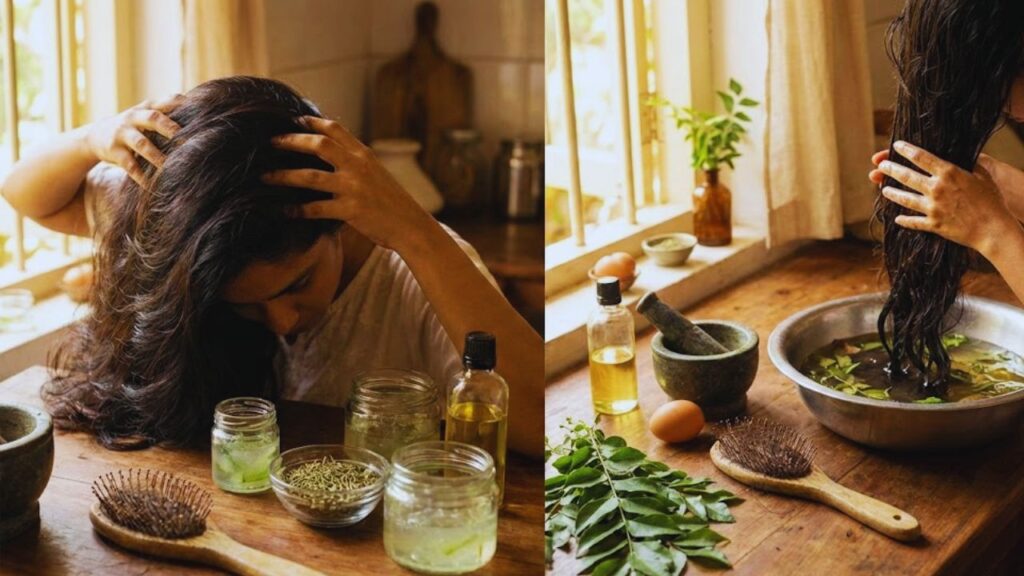
Your hair communicates quietly, reflecting late nights, skipped meals, stress, and harsh styling habits. It mirrors hormonal changes, seasonal shifts, and the passage of time. Before noticeable hair fall occurs, subtle signals often indicate a need for rest, nourishment, and gentler care. Modern routines can easily mask these cues as we over-color, heat-style, and wash hair frequently. Instead of quick fixes, a patient, nurturing approach with home remedies can support hair health naturally.

Nourishing Roots Through Oil Rituals
Oiling hair is a timeless practice that conditions and strengthens. Warm oils massaged into the scalp enhance circulation and relaxation. Coconut oil reduces protein loss, castor oil adds moisture, and almond, sesame, or olive oils provide unique benefits. Blending oils often works best. Regular scalp massages with oil support stronger roots and create a calming pause in busy routines.

The Essential Role of Scalp Massage
Scalp massage is as crucial as the oil itself. Gentle, circular motions with fingertips stimulate blood flow and nutrient delivery to hair follicles. Moving from the hairline backward for five to ten minutes several times a week can noticeably improve hair strength. Beyond the physical benefits, massage reduces tension and stress that may contribute to hair shedding over time.

Herbal Infusions for Hair Care
Herbal-infused oils offer a deeper, more intentional approach. Rosemary, hibiscus, fenugreek, and curry leaves can be warmed in oil to transfer their beneficial compounds. Rosemary improves circulation, while hibiscus and fenugreek enhance conditioning and strength. The process creates a personalized, nourishing oil that supports both hair and scalp health.
Kitchen Ingredients That Strengthen Hair
Many effective hair treatments can be found in your kitchen. Ingredients like seeds, yogurt, eggs, and aloe help reduce breakage and support scalp health. While results are gradual, these remedies encourage mindful, consistent care and reconnect hair routines with overall self-care.
Fenugreek: Tiny Seeds, Big Support
Soaked overnight and blended into a paste, fenugreek seeds are rich in proteins and natural compounds that reduce shedding and enhance hair texture. Applied once or twice weekly, they help hair feel thicker and more resilient. Moderation and attention to scalp sensitivity remain important with all natural treatments.
Aloe Vera: Soothing Scalp Care
Aloe vera calms irritated or oily scalps, balances oil production, and gently removes buildup. Applied for twenty to thirty minutes, it fosters a healthier environment for hair growth and can be combined with oils or yogurt for extra nourishment.
Protein Masks From Everyday Foods
Hair exposed to heat and sun benefits from protein support. Masks made with egg and plain yogurt strengthen hair shafts, smooth strands, and reduce breakage. Applied to damp hair and rinsed with cool water, they provide reinforcement without overloading hair, best used occasionally.

Nutrition, Stress, and Hair Health
Hair reflects overall well-being. Nutritional gaps, chronic stress, hormonal changes, and poor sleep often show up as increased shedding or thinning. Topical remedies help the scalp, but a balanced diet rich in protein, iron, zinc, and healthy fats, along with proper hydration, quietly supports long-term growth and strength.
Stress and Its Effect on Hair
Stress or illness can trigger delayed hair shedding, where hair enters a resting phase before falling out months later. Gentle movement, breathing exercises, rest, and reduced screen time help restore natural hair cycles as stress hormones decrease.
Everyday Habits That Protect Hair
Daily choices shape hair strength. Using mild shampoos, avoiding over-washing, and focusing on scalp cleansing preserves natural oils. Conditioning the lengths reduces friction, while limiting heat styling, wearing loose hairstyles, and using smooth pillowcases protect fragile strands.
| Nutrient | Role in Hair Health | Common Daily Food Options |
|---|---|---|
| Protein | Essential for forming keratin, which gives hair its strength and structure. | Lentils, pulses, eggs, fish, paneer, tofu, mixed nuts, seeds |
| Iron | Helps carry oxygen to hair roots, supporting healthy growth cycles. | Spinach, beetroot, kidney beans, lentils, pumpkin seeds |
| Biotin & B-Complex Vitamins | Promote energy production and cell renewal in hair follicles. | Whole grains, eggs, almonds, seeds, green leafy vegetables |
| Omega-3 Fatty Acids | Maintain scalp moisture and help calm inflammation around follicles. | Flaxseeds, chia seeds, walnuts, oily fish |
| Zinc & Selenium | Assist in repairing hair tissue and protecting follicles from damage. | Seeds, nuts, whole grains, milk products, legumes |
Gentle Detangling for Stronger Hair
Detangle hair slowly from ends upward with a wide-toothed comb. Adding a little oil or leave-in conditioner reduces friction and prevents unnecessary shedding. This mindful habit turns grooming into an opportunity to detect early signs of dryness or weakness.
Building a Sustainable Hair Routine
A simple weekly routine—oil massage a few times, one nourishing mask, gentle daily care, balanced nutrition, and stress management—can produce noticeable improvements. Over months, hair may show reduced shedding, improved texture, and new growth, reflecting both healthier hair and a body supported in its natural processes.
Strengthening the Connection With Your Body
Home remedies cultivate patience, attentiveness, and adaptability. Observing what works for your hair fosters a trusting relationship with your body. Using gentle rituals and familiar ingredients nurtures more than hair—it encourages a kinder, more mindful connection with oneself from root to tip.