
The timer on your phone is already ticking when you suddenly notice them. That thin, grey line running along the wall, just above the floor, like a bad eyeliner job around your living room. You weren’t planning on cleaning baseboards today. You were going to “just do a quick tidy.” Yet here you are, kneeling on the floor with a damp cloth, wondering how these things get so filthy when nobody ever actually touches them.
Then something surprising happens. As the baseboards get brighter, the rest of the room suddenly looks… easier. Faster. Like you’ve accidentally unlocked some sort of cleaning cheat code.
You stand up, look around, and realize: starting with the baseboards just changed your entire cleaning session.
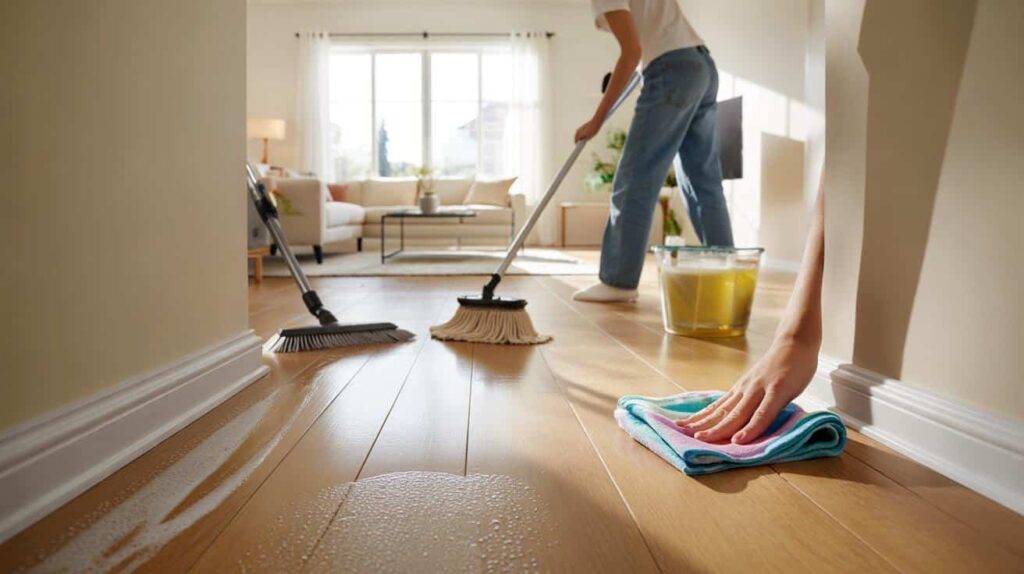
Why baseboards secretly decide how long you’ll clean
Look down for a second. Not at your phone, not at your to-do list – at the line where your wall meets your floor. That strip of painted wood is basically the outline of your room, visually speaking. Our eyes naturally follow edges, borders, frames. So when baseboards are dusty or speckled with old mop water and pet hair, the whole room reads as “dirty”, even if you’ve just vacuumed.
That’s why starting with them flips the script. You’re not just wiping wood. You’re resetting the “this place is gross” feeling your brain has been quietly amplifying.

Think of the last time you cleaned a room and felt weirdly defeated 20 minutes in. Floors done, surfaces wiped, a candle burning. Yet something looked off. You probably blamed the lighting or told yourself you’re just tired.
Now picture this: same room, same amount of dust, but you start on your knees with a microfiber cloth and a bucket of warm soapy water, tracing every wall. Ten minutes later the baseboards are bright, corners are clear, and those clumps of hair behind the door are gone. When you stand up, the floor suddenly looks like it will take half the effort. The mess feels smaller, contained. Your brain stops screaming, “This is going to take forever.”

There’s a simple logic behind this. Baseboards are at the perfect height to catch everything: dust drifting down, crumbs kicked aside, mop splashes, paw prints. They also hug every inch of the room’s perimeter. If they’re dirty, every pass with a mop or vacuum kicks new grime back into the space.
By cleaning them first, you remove the “dirt border” that constantly recontaminates your work. You’re not chasing crumbs that get dislodged from the edges over and over. That saves physical effort, but also something more precious: your mental energy.

The baseboard-first method that actually speeds you up
Here’s a simple sequence that quietly shaves minutes off your cleaning time. Start by grabbing three things: a vacuum with a brush attachment (or a dry dusting cloth), a damp microfiber cloth, and a small bucket with warm water and a drop of dish soap.
Step one: do a fast lap around the room just vacuuming or wiping the top edge and front of the baseboards. No perfection, just removing the fuzz and dust bunnies. Step two: another lap, this time with the damp cloth, doing a quick but firm wipe along the same route. Corners get one extra swipe. That’s it. You’ve just prepped the entire room.
A lot of people do this backwards. They vacuum, they mop, they even clean the windows, and only then notice the grubby line along the wall. So they bend down “just to wipe that bit” and suddenly there are dirty drips on their freshly mopped floor, plus a few new crumbs they knock loose. Now they’re spot-cleaning the floor again, annoyed, tired, and a little resentful of the whole process.
Starting with baseboards flips the emotional curve. You knock out the most awkward, annoying part first. Everything that follows feels easier, faster, way more satisfying.
*“Once I started doing baseboards first, I cut my Saturday cleaning from two hours to just over one,”* a professional cleaner in my building told me. *“It sounds backwards, but getting the low stuff done first makes the rest feel like a breeze.”*
- Vacuum or dust firstDry dust comes off cleaner and you avoid smearing grey streaks along the paint.
- Work in one direction around the roomNo zigzags. Just follow the wall like you’re tracing a line with a marker.
- Use a cloth, not paper towelsMicrofiber grips dust instead of pushing it into the corners.
- Do corners and behind doors deliberatelyThese spots hoard hair and crumbs that sabotage your “finished” floor later.
- Stand up between wallsYour knees and back will thank you, and you won’t quit halfway out of sheer discomfort.
Why this small habit changes the whole way a room feels
There’s something strangely calming about drawing a clean line around a room. The eye registers order, even when the coffee table is still messy and the sofa is full of unfolded laundry. That bright, dust-free border tells your brain, “This space is under control, we’re just in progress.”
We’ve all been there, that moment when you look around and think, “I don’t even know where to start.” Beginning at the baseboards gives you a literal, physical starting line. One clear route. One first task. And then the rest.
Let’s be honest: nobody really does this every single day. Real life is kids, deadlines, Netflix, and eating on the couch more often than we admit. Baseboards don’t need daily love. They just deserve to be first when you do a “real” clean. Even once a month in a busy household can change how long the rest of your routine takes.
Every time you start low, you avoid redoing jobs. Fewer repeat passes with the mop. Less bending down later. Fewer “oh no, I missed that” moments that drag your session out by another 20 minutes.
When you talk to people who seem mysteriously fast at cleaning, this is the pattern you hear: they don’t necessarily work harder. They just set up the room so each movement counts. Cleaning baseboards before anything else is one of those small, almost invisible tricks that separate “I’ve been cleaning all afternoon” from “I blitzed it in under an hour.”
And there’s another, softer benefit. Starting close to the ground forces you to slow down for a few minutes. You notice the little chips in the paint, the Lego under the radiator, the bit of pet fur that looks like a tiny tumbleweed. You’re not just wiping a house. You’re reconnecting with the space you actually live in, mess and all.
➡️ Salt and pepper hair: no more roots, the “High-Low” balayage is the ideal solution to enhance them according to a hairstylist

# Heating: Why the 19°C Rule is Outdated and What Experts Now Recommend
The traditional advice to keep your thermostat at 19°C has been a standard recommendation for years. However recent research and changing circumstances have led experts to reconsider this guideline. Many households still follow this rule without questioning whether it actually makes sense for their specific situation. Energy specialists now suggest that the old 19°C recommendation was based on outdated assumptions about home insulation and heating technology. Modern homes are built differently & heating systems have become more efficient. This means the one-size-fits-all approach no longer works as well as it once did. Current expert advice focuses on flexibility rather than strict temperature targets. The ideal indoor temperature depends on several factors including the age of occupants and their health conditions. Elderly people and young children typically need warmer environments than healthy adults. Someone working from home all day has different needs compared to someone who is only home in the evenings. Experts now recommend setting temperatures based on room usage rather than maintaining the same temperature throughout the house. Living rooms where families spend most of their time might be kept at 20-21°C while bedrooms can be cooler at around 16-18°C. This approach saves energy without sacrificing comfort in the spaces that matter most. The focus has shifted from arbitrary temperature numbers to actual comfort & wellbeing. Modern smart thermostats can help by learning your schedule and adjusting temperatures automatically. They can warm up rooms before you use them and reduce heating when spaces are empty. Health considerations also play a bigger role in current recommendations. Temperatures below 18°C can pose health risks particularly for vulnerable people. On the other hand overheating rooms wastes energy and can cause dry air that irritates respiratory systems. The bottom line is that the rigid 19°C rule has given way to more personalized approaches. Experts encourage people to find their own balance between comfort & energy efficiency rather than following outdated blanket advice.
➡️ How to protect young seedlings from diseases and pests in February: expert tips
# The Hotel Trick That Cleans Shower Screens & Leaves Them Like New
Keeping shower screens spotless can feel like an endless battle. Water spots and soap scum build up quickly & turn once-clear glass into a cloudy mess. Hotels somehow manage to keep their bathroom glass looking perfect despite constant use by different guests. The secret lies in their simple cleaning approach that anyone can copy at home. Hotels rely on a straightforward method that requires only basic supplies. The technique focuses on prevention as much as cleaning. Staff members tackle the glass before buildup becomes stubborn and difficult to remove. This proactive strategy means less scrubbing and better results overall. The main ingredient in this hotel trick is white vinegar. This common household item cuts through mineral deposits and soap residue without harsh chemicals. Hotels often mix equal parts vinegar and water in a spray bottle for daily maintenance. The acidic nature of vinegar dissolves the alkaline buildup that creates those frustrating white spots. To use this method properly you need to spray the solution generously across the entire shower screen. Let it sit for at least five minutes so the vinegar can break down the deposits. For tougher stains some hotels let the solution work for up to fifteen minutes. The waiting period does most of the work and eliminates the need for aggressive scrubbing. After the vinegar has done its job you can wipe the glass with a microfiber cloth or squeegee. These tools prevent scratching while removing all traces of grime. Hotels prefer squeegees because they leave no streaks & work faster than cloths. A quick top-to-bottom motion removes the cleaning solution along with all the dissolved buildup. The final step separates amateur cleaning from professional results. Hotels always rinse the glass with clean water after using vinegar. This removes any remaining residue and prevents new spots from forming. Then they immediately dry the surface with a clean cloth or squeegee. This last pass ensures the glass stays crystal clear without water marks. Regular maintenance makes the biggest difference in keeping shower screens pristine. Hotels clean their bathroom glass after every guest checkout. Home bathrooms benefit from a quick squeegee after each shower. This thirty-second habit prevents buildup before it starts & keeps the glass looking new between deep cleans. Some hotels add a small amount of dish soap to their vinegar solution for extra cleaning power. The soap helps lift oily residue that vinegar alone might miss. Just a few drops in the spray bottle provides enough degreasing action without creating excessive suds. This combination handles both mineral deposits and body oil effectively. For extremely stubborn stains that resist the vinegar treatment hotels sometimes use baking soda as a gentle abrasive. They make a paste with water & apply it to problem areas before spraying with vinegar. The chemical reaction between these two ingredients lifts even the most persistent buildup. This method works on corners and edges where grime tends to accumulate. The hotel approach also includes attention to shower door tracks & frames. These areas collect just as much buildup as the glass itself. An old toothbrush dipped in the vinegar solution reaches into tight spaces where cloths cannot go. Keeping these components clean prevents dirt from transferring back onto freshly cleaned glass. Professional cleaners know that water quality affects how quickly shower screens get dirty. Hard water contains more minerals that leave visible deposits. Hotels in areas with hard water clean their glass more frequently to stay ahead of buildup. Installing a water softener can reduce this problem at home but regular cleaning remains necessary regardless of water type. The temperature of your cleaning solution matters more than most people realize. Hotels typically use room temperature or slightly warm vinegar mixtures. Hot solutions might seem more effective but they can leave streaks as they evaporate too quickly. Cool or lukewarm liquid gives you enough working time without this drawback. Timing your cleaning routine makes the task easier and more effective. Hotels clean shower glass when the bathroom is dry rather than immediately after use. Wet surfaces dilute cleaning solutions and make them less powerful. Waiting until everything dries allows the vinegar to work at full strength. Morning cleaning after overnight drying often produces the best results. The type of cloth you choose affects your final outcome significantly. Hotels invest in quality microfiber cloths because they absorb water without leaving lint behind. Regular towels often shed fibers that stick to wet glass & create a messy appearance. A dedicated set of microfiber cloths for bathroom cleaning pays off in streak-free results. Prevention strategies reduce how often you need to deep clean your shower screen. Hotels sometimes apply a thin layer of car wax to clean dry glass. This creates a protective barrier that makes water bead up and roll off instead of leaving spots. The treatment lasts several weeks and dramatically reduces daily maintenance needs. Commercial glass cleaners work fine but hotels prefer vinegar for economic and environmental reasons. A gallon of white vinegar costs less than most specialized products and lasts much longer. The natural formula poses no health risks and requires no special ventilation. These practical advantages make vinegar the professional choice for high-volume cleaning operations. Understanding why buildup forms helps you prevent it more effectively. Soap combines with minerals in water to create an insoluble compound that sticks to glass. Body oils and shampoo residue add another layer of grime. Each shower deposits a thin film that becomes visible over time. Breaking this cycle with regular maintenance keeps your screen looking professionally cleaned. The hotel method works equally well on glass shower doors and fixed panels. Frameless designs require the same approach as traditional framed enclosures. The key lies in consistent application rather than the specific type of shower screen. Any glass surface responds to this treatment regardless of its configuration or age. Your shower screen can look as impressive as those in luxury hotels with minimal effort. The professional approach combines effective products with smart techniques & regular attention. White vinegar handles the heavy lifting while proper tools ensure a perfect finish. A few minutes of maintenance after each use prevents hours of scrubbing later. This simple system transforms a frustrating chore into a quick routine that delivers consistently excellent results.
➡️ The risk of stroke multiplies when you go to bed after this time, and even more for women
Airbus has made aviation history by successfully guiding two commercial aircraft to meet at precisely the same location in the sky without any risk of collision. The aerospace manufacturer completed this groundbreaking demonstration as part of its advanced flight testing program. The achievement represents a major step forward in developing future air traffic management systems that could handle increased aircraft density more safely and efficiently. During the test flight, both jets followed carefully calculated flight paths that brought them to an identical point in three-dimensional space. The aircraft passed through this convergence point at different times which eliminated any actual collision risk while proving the precision of the guidance technology. This successful demonstration shows how modern navigation systems and flight management technology have evolved to enable extremely accurate aircraft positioning. The test validates concepts that could eventually allow airlines to fly more direct routes and reduce separation distances between aircraft while maintaining safety standards. Aviation experts view this accomplishment as an important milestone for the industry. The technology behind this achievement could help address the growing challenge of airspace congestion as global air travel continues to expand. Airlines may eventually benefit from reduced fuel consumption and shorter flight times if these systems become standard practice. The test also highlights the potential for improved coordination between multiple aircraft operating in busy airspace. Future applications might include more efficient approach patterns at crowded airports and optimized routing through congested flight corridors. Airbus conducted the demonstration using its own test aircraft under controlled conditions with full regulatory oversight. The company plans to continue developing this technology as part of its broader effort to modernize air traffic management for the next generation of commercial aviation.
➡️ Meteorologists warn early February signals suggest the Arctic is losing stability faster than expected
➡️ 9 things you should still be doing at 70 if you want people to say one day, “I hope I’m like that when I’m older”
| Key point | Detail | Value for the reader |
|---|---|---|
| Start with baseboards | Clean the room’s perimeter before floors and surfaces | Cuts rework and shortens total cleaning time |
| Create a simple routine | Dry dust, then quick wipe, one lap around the room | Makes cleaning feel structured and less overwhelming |
| Think visual impact | Clean edges make the whole room look cleaner, faster | Boosts motivation and satisfaction with less effort |
FAQ:
- Question 1How often should I really clean my baseboards?
- Answer 1For most homes, once a month is plenty. High-traffic areas like hallways or kitchens might need a quick wipe every two weeks, but bedrooms and less-used rooms can stretch longer. Focus on consistency, not perfection.
- Question 2What’s the fastest way to clean baseboards without kneeling forever?
- Answer 2Use a microfiber cloth wrapped around a flat mop or a Swiffer-style tool. Lightly dampen it and run it along the top and front of the baseboards. You’ll stay standing and still get 80% of the result in a fraction of the time.
- Question 3Should I dust or vacuum the baseboards first?
- Answer 3Always start dry: either vacuum with a brush attachment or use a dry microfiber duster. Once the loose dust is gone, go over them with a damp cloth. This avoids streaks and clumps.
- Question 4What’s the best product to use on painted baseboards?
- Answer 4Warm water with a drop of dish soap is usually enough. For glossy paint, you can add a tiny bit of vinegar. Skip harsh chemicals or abrasive pads that can dull or scratch the finish.
- Question 5Does this method really save time, or is it just about looks?
- Answer 5It genuinely saves time. By removing dust and dirt from the edges first, you stop that grime from spreading back onto freshly cleaned floors. You do fewer repeat passes and feel less overwhelmed, so you finish faster overall.
