
The first warm Sunday of the year, you step outside with a coffee, already picturing lunches on the patio. Then you look down. The slabs are almost black, streaked with green, sticky underfoot. The garden paths are no better, swallowed by moss and weird dark stains that weren’t there last summer. You rub a spot with your shoe. Nothing. The dirt wins.
Your brain instantly flashes to pressure washers, long afternoons scrubbing, and back pain. So you close the door and tell yourself you’ll deal with it “next weekend”.

What if that blackened patio could come back to life with almost no effort, and without spending half your day on your knees?

Why your patio turns black (and why scrubbing isn’t always the answer)
If you’ve ever wondered how your bright paving turned into something closer to a car park, the culprit is usually a mix of algae, moss, pollution and old grime. Rain splashes soil onto the slabs, shade keeps them damp, spores settle, and slowly a thin film of life builds up. It doesn’t look dramatic at first. Then one morning you realise it’s gone from “a bit tired” to “embarrassing”.

The instinct is to attack it with a stiff brush and a harsh chemical cleaner. Lots of effort, lots of foam, not always great results. There’s a lazier way.
Picture this. A small terraced house, north-facing garden, patio that hasn’t been properly cleaned in three years. The owner tries a pressure washer loaned from a neighbour. It’s loud, it splashes cold dirty water everywhere, and it takes two hours to cover half the surface. The results are patchy. Some slabs look brand new, others are still grey-green.
A week later the algae has started creeping back where the water pooled. The neighbour quietly admits the same thing happens to him every spring. The high-pressure blast feels powerful but it doesn’t always solve the problem for long. It can even roughen the stone and make it easier for grime to cling.
What works better is letting time & weather along with a few smart products do the heavy lifting. Algae and black staining are living films on the surface of your slabs rather than some mysterious curse baked into the stone. If you break that film gently and keep the surface less welcoming to regrowth the patio stays lighter for much longer.
That’s the quiet logic behind the simplest methods: low-tech gear, passive waiting, and products that keep working after you’ve gone back inside. Let’s be honest: nobody really spends all weekend polishing paving stones.
Simple methods that clean while you get on with your life
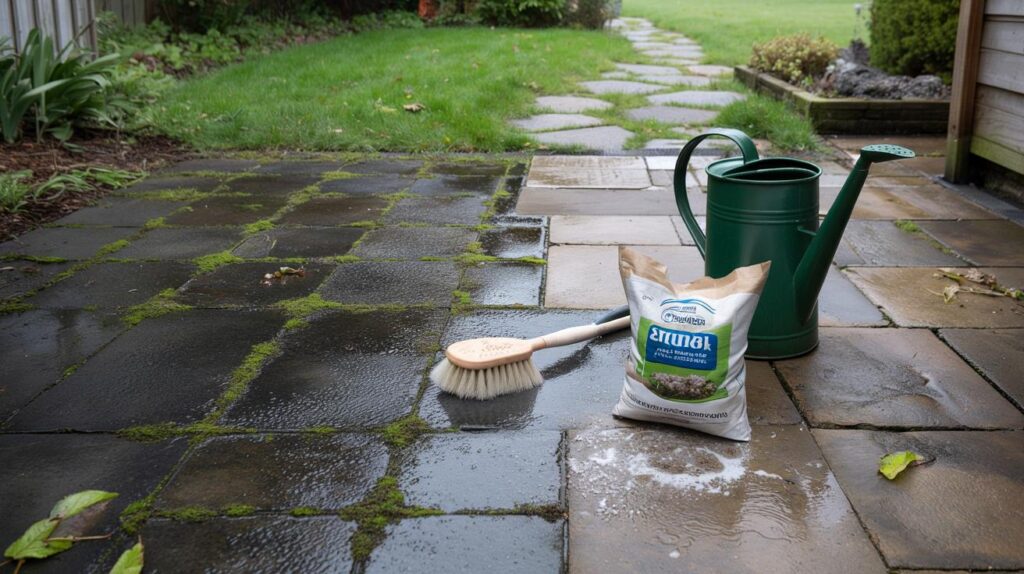
One of the simplest low-effort methods is the slow-clean soak. On a dry day you sprinkle regular household washing soda crystals or a specialized patio algae remover over the slabs and then flood the area with a watering can or hose so it dissolves & spreads into all the joints. The idea is not to scrub hard. You just sweep the liquid around gently with a soft brush like pushing water across a floor.
➡️ Meteorologists warn early February atmospheric signals point to a dangerous Arctic anomaly
➡️ How a single houseplant in the bedroom can increase deep sleep phases by 37%, according to a NASA study
➡️ A living fossil resurfaces: French divers’ rare Indonesian encounter fuels tourism dreams, conservation fears and local resentment
➡️ How to keep mice seeking shelter out of your home : the smell they hate that makes them run away
➡️ At 2,670 meters below the surface, the military makes a record breaking discovery that will reshape archaeology
➡️ China-made Loongson 12-core chip is approximately three times slower than six-core Ryzen 5 9600X — 3B6000 hampered by low clock speeds in Linux benchmarks

➡️ Never leave your bedroom door open at night: here’s why you should close it
# Inheritance: The New Law Arriving in February Reshapes Rules for Heirs
A significant change in inheritance legislation is set to take effect in February. This new law will fundamentally alter how heirs receive and manage inherited assets. The upcoming regulations introduce several key modifications to the existing framework. Property transfers between generations will follow different procedures than before. Heirs need to understand these changes well before the implementation date arrives. One major aspect of the reform concerns tax obligations. The new system adjusts how inheritance taxes are calculated & paid. Beneficiaries may face different financial responsibilities compared to current requirements. These adjustments aim to create a more streamlined process for estate settlement. The law also addresses digital assets in ways previous legislation did not. Online accounts and digital property now have clearer guidelines for transfer after death. This reflects the growing importance of digital possessions in modern estates. Documentation requirements will change under the new rules. Heirs must provide specific paperwork that differs from what was previously necessary. Estate administrators should familiarize themselves with these updated requirements to avoid delays. The reform includes provisions for dispute resolution among multiple heirs. New mechanisms will help families settle disagreements about asset distribution more efficiently. This could reduce the time & expense associated with inheritance conflicts. Certain exemptions and special cases receive updated treatment under the new law. Charitable donations from estates follow revised guidelines. Family businesses also have specific provisions that recognize their unique circumstances. Legal experts recommend that families review their estate plans before February. Existing wills and trusts may need adjustments to align with the new legal framework. Consulting with professionals now can prevent complications later. The changes reflect broader efforts to modernize inheritance law for contemporary society. As family structures and asset types evolve the legal system adapts accordingly. This reform represents a substantial step in that ongoing process.
Then you walk away. Over the next few days, the solution loosens the black film and starves algae. Rain rinses the dirt out of the tiny pores in the stone. You come back later and the colour looks two shades lighter without you doing much more than a five‑minute walk with a watering can.
A big mistake many people make is going too aggressive, too fast. They grab the strongest bleach they can find, pour it on thick, and scrub like they’re cleaning a grill. The patio looks better at first, then the joints start crumbling and plants nearby turn yellow. The slabs get rougher and harder to clean next time.
There’s also the guilt. Pets walking across harsh chemicals, kids playing where you’ve just rinsed strong cleaner into the lawn. *You don’t have to choose between living with a grimy terrace and nuking it with products that smell like a swimming pool filter room.* Gentle, repeating actions are often more effective than one dramatic “big clean”.
“People expect a pressure washer moment,” explains a groundskeeper I spoke to. “They want to see dirt blasted away in seconds. But the best patios are the ones that quietly clean themselves between rains because you’ve treated the surface, not punished it once a year.”
- Use soft tools: A medium or soft outdoor brush, not a wire brush that scars the stone.
- Think “soak, don’t scrub”: Let cleaners sit for 15–30 minutes while you do something else.
- Work with the weather: Apply products before a forecast of light rain, not during a heatwave.
- Skip daily perfection: A light treatment once or twice a season beats endless little efforts.
- Protect the green: Rinse towards drains, not straight into flower beds and vegetable patches.
From blackened to bright: a patio you actually want to walk barefoot on
There’s a quiet satisfaction in stepping onto a patio that no longer makes you think of damp basements. The slabs feel less slippery. The garden paths look like paths again, not abandoned alleys. Often, neighbours notice before you do. Someone leans over the fence and says, “Did you redo the paving?” and you smile because all you did was scatter some crystals and wait for the next shower.
The change goes beyond what you can see. A surface that stays clean and feels dry makes you want to spend more time outside. It transforms the garden from something you simply pass through into an actual living space. That matters more than buying new cushions or decorative lights.
After you notice how well these simple routines work it feels natural to do them again. You keep a bag of soda crystals or a bottle of algae remover stored in the shed. During a calm evening you quickly scatter some over the problem areas the same way you would season food & then return to your book. There is no major task involved and no guilt or sore shoulders afterward.
The reality is that most maintenance tasks can be split into small and nearly invisible actions. These small actions prevent patios garden paths and steps from returning to that sad & darkened condition that makes spending time outdoors feel like work.
You might discover your own small routines over time. Perhaps you brush leaves off the path after dinner each evening. Maybe you set aside one night each month to water the slabs with a gentle cleaning solution before rain arrives. You could take a quick photo of a stubborn stain and then snap another picture a week later to confirm that basic cleaning methods actually work even when you’re occupied with other tasks.
The next time you open the back door & look down you will not see a problem to deal with. You will see a surface that takes care of itself most of the time with your help only needed in short easy bursts. That is often all a patio needs from you.
| Key point | Detail | Value for the reader |
|---|---|---|
| Gentle soak method | Use soda crystals or patio cleaner, dissolve, spread with a soft brush, leave to work | Cuts effort, avoids back‑breaking scrubbing and harsh chemicals |
| Work with weather | Apply before light rain so nature helps rinse dirt and dead algae away | Saves time and water, improves results without extra labour |
| Regular light care | Short, seasonal treatments instead of one intense cleaning session | Keeps patios and paths bright longer, reduces regrowth and stress |
FAQ:
- Question 1Can I really clean a blackened patio without a pressure washer?Yes. Algae removers and washing soda soaks loosen most black films. A soft brush and rain do the rest, especially if you repeat it once or twice a season.
- Question 2Is bleach safe for my patio and garden?On many surfaces and near plants, strong bleach is too aggressive. It can damage pointing, stain some stones and harm soil life, so it’s better as a last resort for stubborn spots only.
- Question 3How long does it take to see results with the “soak and leave” method?You often see a change after the first rain or hose-down, within a few days. Deeply stained areas may need a second treatment over a couple of weeks.
- Question 4What’s the easiest routine to keep paths from turning black again?A quick seasonal treatment in spring and autumn, plus a light sweep to remove leaves and standing dirt, usually keeps algae from taking over.
- Question 5Will these methods work on all types of paving?They work on most stone, concrete and slabs, but always test a small, hidden area first, especially on delicate or coloured surfaces.
