
Every morning you probably take the same route. You go down the same street and pass the same bakery. You turn left at the traffic light where that dog always barks. You move through this path almost without thinking while your eyes are partly on your phone and partly on the world around you. The pavement feels familiar to you. You have the timing of the crossings memorized. Your feet know where they are going before your mind does.
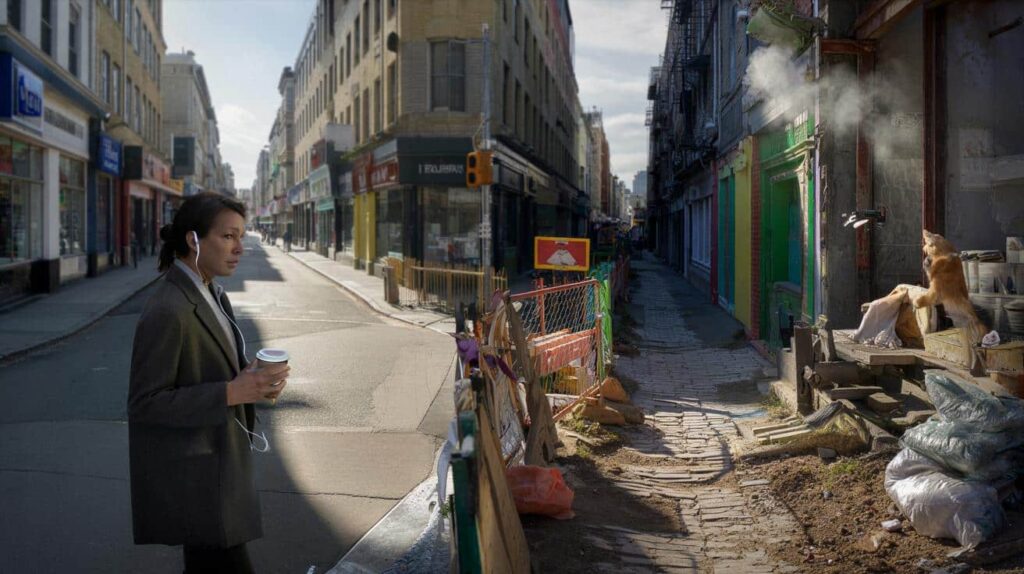
Then one day, the city decides to dig up your sidewalk. Overnight, your routine is broken. The shortcut is fenced off, the noise is louder, the smells change, and you find yourself hesitating at a corner where you usually stride through. The world is the same, yet your brain suddenly behaves like it’s somewhere new.

That tiny crack in habit tells a bigger story.

When your feet train your brain to expect the same
Walk the same route for long enough and your mind starts to relax into it. Your brain builds a quiet map of what comes next as you move from street to street. It works like a predictive text engine for reality. You know the crossing after the supermarket brings a green light and then the squeak of the tram. After that comes the stretch of empty pavement where you always speed up a little. The route becomes automatic over time. Your feet know where to go without much thought. Each landmark triggers the memory of what follows. The brain creates these patterns to make daily travel easier. This mental mapping happens without conscious effort. You simply walk and your mind fills in the details of what lies ahead on the familiar path.

You stop really “seeing” things. Your senses dial down because the brain trusts the script. Energy is saved, attention narrows, and a sort of gentle tunnel vision settles in. It feels safe, efficient, almost cozy. Without saying a word, your daily walk teaches your brain: the world is mostly predictable.
Picture Lena, who walks from her apartment to the office through the same three streets, five days a week. She leaves at 8:32, grabs coffee from the same barista, crosses at the same light while scrolling her emails. One Tuesday, a traffic accident blocks the main road. The police redirect pedestrians through a back alley Lena’s never used.
She starts walking more slowly now. Her phone goes into her pocket. The alley has the smell of wet stone & garbage from yesterday. A cat leaps down from a window and she jumps slightly in a way that would not occur on her normal path. Her coworkers talk about the stressful detour when morning comes. No one says what really happened because their minds had learned to expect the unexpected.
The brain uses a process that neuroscientists call predictive processing to constantly forecast what comes next. Instead of simply recording events as they happen the brain makes predictions about future moments and then verifies whether reality matches those predictions. When you take the same route repeatedly your brain develops an almost perfect script for that journey. This means it rarely needs to revise its expectations because everything unfolds exactly as anticipated.
That’s comforting but it has a side effect. When the route suddenly changes the gap between what should happen and what’s happening feels bigger. The brain has to work harder to recalibrate. Over time a life of identical paths and routines can subtly lower our tolerance for uncertainty. This doesn’t happen because we’re fragile but because our inner prediction machine has grown used to being right.
How to gently re-train your brain’s response to change
One simple gesture can shift the way your mind handles uncertainty: intentionally change your route once or twice a week. Not a dramatic life shake-up, just a small, chosen detour. Take the parallel street with the older houses. Cut through the park rather than the main road. Swap the busy avenue for the quieter back streets.
# Good News: Gas Stations Must Display New Mandatory Information at Pumps Starting February 12
Starting February 12 all gas stations will be required to show new mandatory information directly at their fuel pumps. This change aims to provide drivers with clearer and more transparent details about the fuel they purchase. The new regulation means that every time you pull up to fill your tank you will see additional information displayed right where you pump gas. This requirement applies to all service stations across the country without exception. The displayed information will help consumers make more informed decisions about their fuel purchases. Gas station owners have been given advance notice to prepare their pumps & ensure compliance with the new rules by the deadline. This initiative is part of broader efforts to improve transparency in the fuel industry. Authorities believe that better information at the point of sale will benefit all drivers. The regulation has been designed to be straightforward so that anyone can understand the details shown at the pump. Service stations that fail to comply with the new display requirements after February 12 may face penalties. However, most gas station operators have already begun updating their equipment to meet the deadline. The change represents a significant step forward in consumer protection & market transparency. Drivers will now have access to important fuel information without needing to ask station attendants or search for details elsewhere. Overall, this new requirement should make the refueling experience more informative for everyone who drives. The regulation takes effect on February 12 and will remain in place going forward.
The day will turn into night when the longest solar eclipse of the century takes place. Scientists are amazed by how long this extraordinary event will last. The eclipse has already been scheduled and experts continue to study what makes its duration so remarkable. Researchers have been preparing for this rare astronomical phenomenon that will darken the skies for an unusually extended period. The eclipse will offer a unique opportunity for both professional astronomers & casual observers to witness one of nature’s most spectacular displays. This celestial event stands out because of its exceptional length compared to typical solar eclipses. Scientists are particularly interested in gathering data during the extended period of darkness. The scheduled eclipse represents a once-in-a-lifetime chance to observe and document solar activity under these special conditions.
➡️ Heavy snow is officially confirmed to intensify late tonight, with forecasters warning that visibility could collapse in minutes, yet drivers still insist on planning reckless long journeys that divide opinion
# People Who Make Friends Easily Share These 4 Traits
Making friends seems effortless for some people. They walk into a room and within minutes they are chatting and laughing with strangers who quickly become acquaintances & then friends. Meanwhile others struggle to break the ice even in the most welcoming environments. What separates these natural connectors from everyone else? Research and observation reveal that people who make friends easily tend to share four key characteristics.
## They Show Genuine Interest in Others
The first trait that sets natural friend-makers apart is their authentic curiosity about other people. They ask questions and actually listen to the answers. When you talk to them you feel heard rather than simply waiting for their turn to speak. This genuine interest goes beyond surface-level politeness. These individuals remember details from previous conversations and follow up on them later. They ask about your weekend plans or how that job interview went. This attention makes others feel valued & creates a foundation for deeper connection.
## They Embrace Vulnerability
People who form friendships quickly are not afraid to show their true selves. They share their thoughts and feelings openly without putting up walls. This willingness to be vulnerable invites others to do the same. When someone admits they are nervous about a presentation or shares a funny embarrassing story they signal that it is safe for others to be authentic too. This mutual openness accelerates the bonding process that typically takes much longer when people keep their guards up.
 He is the world’s richest king, owning 17,000 homes, 38 private jets, 300 cars, and 52 luxury yachts
## They Maintain a Positive Outlook
Natural friend-makers tend to approach interactions with optimism and warmth. They smile readily and find humor in everyday situations. This positive energy is contagious and draws people toward them. This does not mean they pretend everything is perfect or ignore problems. Rather they choose to focus on possibilities instead of obstacles. They look for common ground rather than differences. This mindset creates an atmosphere where friendships can flourish.
## They Take Initiative
Perhaps most importantly people who make friends easily are willing to make the first move. They introduce themselves without waiting for someone else to break the ice. They suggest getting coffee or exchanging contact information. They follow through on plans instead of letting potential friendships fade away. Taking initiative requires courage because it involves risking rejection. However these individuals understand that most people appreciate someone else making the effort to connect. By being the one to reach out they create opportunities that would not exist otherwise. The good news is that these traits can be developed over time. You do not need to transform your entire personality to improve your ability to make friends. Start by practicing one characteristic at a time and notice how your social interactions begin to change.
➡️ Meteorologists warn early February atmospheric signals point to a dangerous Arctic anomaly
# The Truth About Closing Vents in Unused Rooms
Many homeowners believe that closing heating vents in rooms they rarely use will save money and improve efficiency. This idea seems logical at first glance. If you are not using a room then why waste energy heating it? However HVAC professionals consistently warn against this practice for several important reasons. Modern forced-air heating systems are designed to distribute air evenly throughout your entire home. The system was carefully balanced during installation to account for every room & every vent. When you close vents in certain rooms you disrupt this balance. The furnace still produces the same amount of heated air but now that air has fewer places to go. This creates increased pressure within your ductwork. The extra pressure forces your system to work harder than intended. Your furnace may run longer cycles to reach the desired temperature. The blower motor experiences additional strain. Over time this extra work can lead to premature equipment failure & costly repairs. Closed vents can also cause air to leak from your ducts. Most ductwork has small gaps or connections that were sealed adequately for normal pressure levels. When pressure increases these weak points may start leaking conditioned air into unconditioned spaces like attics or crawl spaces. You end up paying to heat areas that provide no comfort to your living space. Another problem involves your thermostat location. Most thermostats are positioned in central areas of the home. When you close vents in distant rooms the thermostat cannot accurately measure the temperature throughout your house. It only reads the temperature where it sits. This can cause your system to shut off before adequately heating the rooms with open vents or run excessively trying to compensate for closed areas. Energy savings from closing vents are typically minimal or nonexistent. Studies have shown that the increased system strain and duct leakage often cancel out any potential savings. In some cases homeowners actually spend more on energy after closing vents because their system operates less efficiently. There are better alternatives for managing comfort and efficiency in your home. If certain rooms are consistently too warm you might have a ductwork balancing issue that a professional can address. Zoning systems allow you to control temperatures in different areas independently without the problems associated with simply closing vents. These systems use multiple thermostats & dampers that work with your equipment rather than against it. Programmable or smart thermostats offer another solution. You can lower the temperature when everyone is away or sleeping and raise it during occupied hours. This approach saves energy without disrupting your system balance. Proper insulation and air sealing provide the most effective way to reduce heating costs. These improvements help your entire home retain heat better. Your system runs less frequently and maintains comfort more easily. If you have rooms that truly go unused for extended periods you might consider closing the door rather than the vent. This provides some separation while maintaining system balance. However even this approach has limitations since closed doors can create minor pressure imbalances. Regular maintenance keeps your heating system running efficiently regardless of how you use your space. Clean filters allow proper airflow. Annual professional inspections catch small problems before they become expensive repairs. A well-maintained system heats your home more effectively and uses less energy. The bottom line is that closing vents seems like a smart shortcut but usually creates more problems than it solves. Your heating system works best when used as designed. If you have concerns about efficiency or comfort in specific rooms consult with an HVAC professional. They can identify the real issues and recommend solutions that improve performance without risking damage to your equipment. Understanding how your heating system actually works helps you make better decisions about operating it. The engineering behind modern HVAC systems accounts for many factors that are not immediately obvious. Trusting that design and maintaining your equipment properly will serve you better than well-intentioned modifications that work against the system.
➡️ To stop cities from collapsing into the ground engineers flooded hollow oil reservoirs and sparked a fierce debate over who approved this global gamble
➡️ Inheritance: the new law coming into force in January that changes everything for descendants
On these “novelty walks”, walk a little more slowly at first. Let your eyes move around instead of locking on the sidewalk. Notice one sound, one smell, one face you’ve never seen. That tiny extra effort nudges your brain to update its internal map in real time. You’re basically doing low-stakes training for handling bigger, unwanted changes later.
Most people tell themselves they’ll “change things up” and then… never do. Let’s be honest: nobody really does this every single day. The comfort of the known route wins nine times out of ten, especially on tired mornings or after a long workday. The body craves energy savings, the mind craves certainty, and the routine wins.
The trick is not to fight this instinct like an enemy. You don’t need to abandon your favorite route. Keep it for the days you’re exhausted or late. Use your curiosity as a lever instead of discipline. Pick one weekly walk that is “for exploring”, almost like a mini-ritual. When you frame it as a gift to your overstressed brain, not another self-improvement task, the resistance softens.
Our brains don’t just want safety; they want manageable surprises. By swapping one familiar turn for a new one, you let your nervous system practice staying calm while reality shifts a little under your feet.
- Rotate just one corner
Keep 80% of your usual route and change a single turn. Low effort, high signal to your brain that the world can vary without danger. - Walk “without headphones” days
Once a week, skip the podcast. Listen to traffic, snippets of conversation, birds, even construction noise. You’re training raw awareness. - Use landmarks as mental anchors
On new paths, pick three things to notice: a balcony with plants, a faded sign, a specific tree. Naming them quietly to yourself reduces the sense of chaos.
Letting small routes prepare you for big changes
There’s something quietly honest about the way our feet teach our mind what to expect from life. If every path is scripted, every coffee line the same, every corner predictable, our inner settings drift toward “the world should not surprise me”. When surprise comes anyway, it feels like an insult, not just an event.
Yet the opposite extreme isn’t the goal either. Nobody wants every walk to feel like landing in a foreign city at midnight. The sweet spot lives somewhere between the safe path and the side street you’ve never tried. Those gentle detours can send your brain a different message: change is not always a threat, sometimes it’s just… another street.
Next time your usual route is blocked by construction, or rain forces you under a different set of awnings, notice your first reaction. A small spike of irritation, a jolt of anxiety, a sense of being “off schedule”. Then watch what happens after five minutes on the new path. Your breathing evens out. Your brain starts building a new script. You may catch yourself thinking: “Oh, this is actually nicer.”
We’ve all been there, that moment when a forced change quietly improves the day. The real question is whether we wait for the city to throw chaos at us, or whether we occasionally invite mild unpredictability on purpose. The daily route you follow is not just about efficiency. It’s a quiet conversation with your own capacity to bend, adapt, and try another way home.
| Key point | Detail | Value for the reader |
|---|---|---|
| Daily routes train prediction | Walking the same path repeatedly strengthens the brain’s expectation that the environment will stay the same. | Helps you see why small disruptions feel disproportionately stressful. |
| Small detours as mental training | Consciously changing one part of your route nudges the brain to update its internal map without panic. | Gives a simple tool to build flexibility and tolerance for uncertainty. |
| Sensory awareness as a buffer | Paying attention to sounds, smells, and landmarks on new paths reduces the feeling of chaos. | Offers a practical way to feel calmer and more grounded when life doesn’t follow the script. |
FAQ:
- Does walking the same route every day harm the brain?Not directly. Routine saves energy and can feel soothing. The subtle risk is that if almost everything in your day is highly predictable, your brain has fewer chances to practice dealing with change calmly.
- How often should I change my walking route?Even once or twice a week is enough to send a different signal to your nervous system. Rotate a corner, add a small detour, or walk on the opposite side of the street to start.
- Can this really help with bigger life changes?It won’t fix major anxiety on its own, but it acts like low-stakes training. When your brain regularly experiences small, safe surprises, bigger changes feel a little less overwhelming.
- What if changing routes makes me more anxious?Start tiny. Keep most of your usual path and only alter one small segment. Go at a time of day when you feel more relaxed, and pay attention to a few friendly details like trees, shops, or the sky.
- Is walking with music or podcasts a problem for this?Not necessarily. You can keep your headphones most days and pick specific “no audio” walks where you focus on the environment. Alternating both styles gives your brain variety without losing your favorite habits.
