
The sky appeared strange. That was what people in Minneapolis kept mentioning as the temperature dropped from cold to dangerous within hours and their breath froze into tiny crystals beneath the streetlights. Parents hurried their children toward cars that failed to start and bus stops cleared out more quickly than normal while weather applications displayed dark purple danger warnings across large portions of the map. High above in the atmosphere at a distance of thousands of kilometers the polar vortex was becoming unstable once more.
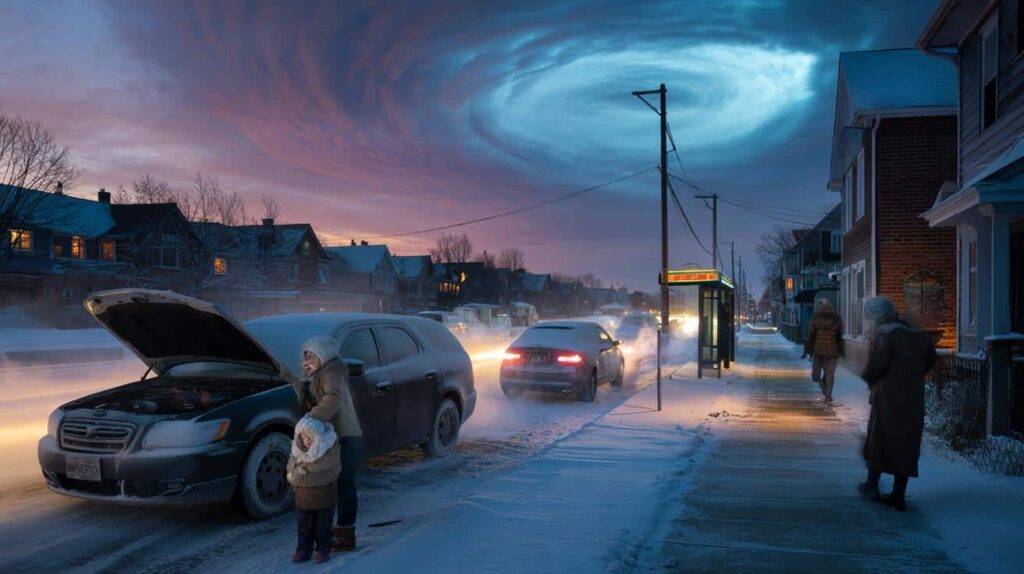
You don’t see it. You don’t hear it. But you feel it in your bones.
A new polar vortex forecast is rippling quietly through meteorological circles this week, and even the usually cautious experts are sounding a little tense. Not apocalyptic. Just… worried.
 This country could face a historic winter due to a rare mix of La Niña and the polar vortex
And the reason they’re worried should make everyone sit up.
When a silent swirl over the North Pole suddenly matters to your front door
On the latest forecast maps, the polar vortex looks like a bruised halo wrapping around the top of the planet. One side is smooth and tight, the other sagging southward like a deflated balloon. That sag is what has forecasters shifting in their chairs.
For days, atmospheric models have hinted that this spinning ring of icy air, usually locked in place over the Arctic, could wobble hard and split or stretch. When that happens, brutal cold doesn’t stay politely in the far north. It spills.
Some runs show a sharp plunge of Arctic air knifing into North America. Others drag it over Europe and parts of Asia. The exact target keeps bouncing. The message doesn’t.
Ask people in Texas about February 2021, and you’ll hear the word “polar vortex” spit out with a mix of anger and disbelief. Millions were left without power as freezing air surged far beyond what local systems were built to handle. Pipes burst in suburbs that had never worried about hard freezes. Grocery store freezers thawed while families boiled snow to flush toilets.
Back then, most of the country got just a couple days’ warning that the blast would be that bad. The polar vortex event was already underway high above. The ripple down into the weather we live in came fast.
Now, several forecast centers are quietly flagging similar setups again: a stressed vortex, strange warming in the stratosphere above it, and a jet stream starting to serpentine wildly. The kind of pattern where you go from light jacket to life‑threatening windchill in less than 72 hours.
➡️ Why so many bird lovers set a kitchen timer as soon as the first frosts arrive?
NASA plans to retire the International Space Station in 2030 & transition to commercial space stations instead. The space agency has announced its intention to end operations at the ISS after more than three decades of service. This decision marks a significant shift in how NASA approaches human spaceflight and orbital research. The International Space Station has served as a crucial platform for scientific research and international cooperation since its first modules launched in 1998. Astronauts from around the world have conducted thousands of experiments in the unique microgravity environment. The station has helped scientists understand how long-duration spaceflight affects the human body and has tested technologies needed for future deep space missions. However the aging infrastructure requires increasing maintenance and costs. NASA spends approximately four billion dollars annually to operate & maintain the station. By moving to commercial alternatives the agency hopes to reduce expenses while maintaining a presence in low Earth orbit. Several private companies are already developing commercial space stations. These facilities will offer research opportunities to government agencies and private customers. NASA has awarded contracts to multiple firms to help accelerate development of these new orbital platforms. The transition strategy allows NASA to redirect resources toward ambitious goals like returning humans to the Moon through the Artemis program and eventually sending astronauts to Mars. Commercial stations will handle routine low Earth orbit activities while NASA focuses on exploration beyond our planet. This approach follows the successful model used for cargo and crew transportation to the ISS. Private companies like SpaceX now regularly ferry astronauts and supplies to the station. NASA believes the same partnership model can work for the stations themselves. The retirement process will be carefully managed to ensure continuous human presence in space. NASA will continue supporting the ISS until commercial alternatives are operational and ready to host research activities. This measured approach protects ongoing scientific work and maintains the skills and knowledge gained from decades of station operations.
➡️ A 34 million year old world buried under Antarctic ice is uncovered and ignites a global clash over whether humans should exploit it for knowledge or protect it from any interference
➡️ It’s confirmed, after January’s snow and cold waves the first weather forecasts for February 2026 have been released
➡️ How understanding fixed versus flexible expenses changes budgeting decisions
➡️ The hidden nutritional deficiencies that cause fatigue, depression, and poor immune function
A rare early-season polar vortex shift is developing right now. Experts say its intensity is almost unprecedented for February. The polar vortex is a large area of cold air that normally stays near the North Pole. When it becomes unstable it can send frigid air southward into regions that typically experience milder winter weather. This particular event is unusual because of its timing & strength. February typically sees more stable atmospheric patterns in the Arctic region. However current observations show the vortex is weakening & splitting apart earlier than normal. Meteorologists are monitoring the situation closely because these disruptions can lead to significant weather changes across the Northern Hemisphere. When the polar vortex weakens it allows Arctic air to escape southward. This can bring severe cold snaps to areas across North America Europe & Asia. The intensity of this shift has caught the attention of climate scientists. While polar vortex disruptions happen periodically, the magnitude of this event is remarkable for so early in the season. Historical data shows that disruptions of this scale in February are extremely rare. Weather models suggest the effects could persist for several weeks. Regions that might normally be transitioning toward spring conditions could instead face prolonged periods of winter weather. This includes the potential for heavy snowfall and dangerously cold temperatures in populated areas. Scientists continue to study whether climate change is affecting the frequency or intensity of these polar vortex events. Some research suggests that Arctic warming may be contributing to more frequent disruptions, though this remains an active area of investigation. Residents in affected areas should stay informed about local weather forecasts and prepare for possible severe winter conditions in the coming weeks.
➡️ What’s really the most efficient, energy‑saving space heater? Here’s the verdict
Meteorologists are careful about words like “extreme” for a reason. They’ve been burned by hype before. They know people tune out if every cold snap is sold as a disaster. Yet behind the measured language in official bulletins, there’s a clear subtext: the ingredients for a rapid flip to severe cold are lining up.
A disrupted polar vortex can buckle the jet stream, which is basically the highway that steers storms and temperature contrasts around the world. When that highway loops south, Arctic air rides along. When it stalls, the cold parks in place.
The result is strange weather maps where one area deals with heavy snow while a nearby region experiences unusually warm winter temperatures. This creates an uncomfortable sense that weather patterns no longer behave according to their usual predictable rules.
What you can actually do before the maps turn dark purple
There is a short period between noticing a cold weather forecast and hearing news reporters tell everyone to stay inside. This is when basic preparation matters most. Begin with the easiest step and assume you could face two or three days of extreme cold along with possible power outages or frozen pipes. Stock your home with enough water and non-perishable food for several days. Keep flashlights and batteries in an accessible location. Charge your phone and any backup power banks before the cold arrives. Fill your car’s gas tank because fuel pumps need electricity to operate. Check your heating system before temperatures drop. Replace furnace filters and ensure vents are not blocked by furniture or curtains. Locate your main water shutoff valve in case pipes burst. Open cabinet doors under sinks to let warm air circulate around pipes during freezing weather. Gather extra blankets and warm clothing in one place. Layer your clothing instead of relying on one heavy coat. Wear a hat indoors if needed since significant heat escapes through your head. Keep your body moving to generate warmth. Prepare a small area of your home that you can heat easily if your main system fails. Choose a room with few windows and doors. Seal gaps around windows with towels or tape. Never use a gas stove or outdoor grill for indoor heating because of carbon monoxide danger. Know the signs of hypothermia and frostbite. Hypothermia symptoms include shivering & confusion and slurred speech. Frostbite appears as numbness and white or grayish skin. Get medical help immediately if you notice these symptoms. Check on neighbors who live alone or have health conditions. Share resources if someone lacks adequate heating or supplies. Community support becomes essential during severe weather events.
Walk your home like a skeptical guest. Are there drafts around windows? An exposed pipe under a sink on an outside wall? A door that never quite closes right? These are the spots that become emergencies when temperatures plunge fast.
A roll of weatherstripping, some pipe insulation foam, a door sweep—none of this is Instagram-worthy. But each one can buy your house a few crucial degrees if a real Arctic blast settles in.
We all experienced that moment when you suddenly understand the storm has arrived while you are still searching online for information about dangerous temperatures for your plumbing. The mental shift from thinking the weather predictions are always too dramatic to wondering why you did not take them seriously is tiring. Most people go through this same pattern every winter. You hear about an approaching storm & think it probably will not be as bad as the news suggests. Then the temperature drops faster than expected & you find yourself unprepared. Your pipes are at risk and you have not taken any protective measures. This situation happens because we tend to believe that extreme weather will not affect us personally. We remember past storms that turned out to be mild and assume the next one will be the same. Weather forecasters do sometimes overestimate storm severity but when they are right the consequences can be serious. The problem with pipes is that damage happens quickly once temperatures fall below freezing. Water expands when it freezes and this creates pressure inside your pipes. If that pressure builds up enough the pipe will crack or burst. By the time you notice something is wrong the damage has already occurred. Prevention is much easier than dealing with burst pipes. Simple steps like letting faucets drip slightly or opening cabinet doors to allow warm air circulation can make a real difference. Insulating exposed pipes in crawl spaces or attics provides protection during cold snaps. The key is taking action before the storm arrives rather than scrambling during the emergency. Check the forecast a few days ahead and prepare when you still have time. Keep your home heated to a reasonable temperature even if you want to save on energy costs. The expense of running your heater is far less than repairing water damage from frozen pipes. they’ve
The trap is thinking preparation is for other people—the rural homeowners, the doomsday preppers, the folks with generators the size of small cars. Most people are juggling work, kids, and the fifth school email of the week. Let’s be honest: nobody really does this every single day.
So think small and specific. One extra warm blanket per person. A stash of shelf‑stable food you’d actually eat. A cheap backup battery for your phone. Cold snaps expose inequality fast; if you’re in a good spot, consider who on your street might not be.
“When we look at the forecast data we can see stress developing in the polar vortex” a senior atmospheric scientist told me. He asked not to be named so he could speak freely. “The computer models don’t agree on which areas will be hit hardest but they show that conditions could change to extreme cold very fast. People don’t need to panic but they shouldn’t ignore this either.”
- Seal the leaks
Check windows, doors, and any obvious drafts. Even towels at the base of doors can cut the chill if temperatures tank. - Protect the pipes
Open cabinet doors under sinks on exterior walls, let faucets drip in deep cold, and insulate any exposed plumbing you can see. - Layer your warmth
Think in systems: base layers, mid‑layers, outer shell. Same for bedding—sheet, blanket, heavier cover. One thick layer is rarely enough. - Sort a power‑out plan
Flashlights with fresh batteries, a safe alternative heat source if you have one, and a way to keep your phone alive matter more than fancy gear. - Check on someone
Older neighbors, friends in drafty apartments, people new to the region may not understand how fast things can escalate.
Living with a future where “normal winter” is harder to recognize
The troubling part of the new polar vortex forecast goes beyond just one severe cold period. We seem to be entering a time when extreme weather changes have become normal instead of rare. Heavy snowfall can arrive one week and then disappear completely the next. Ice covers roads in areas that never prepared for freezing conditions. Power systems struggle to cope with both summer heat waves & winter cold snaps. This pattern suggests our climate is shifting toward more unpredictable and dramatic weather events. Communities that once experienced stable seasonal patterns now face sudden temperature drops and unexpected storms. Infrastructure built for moderate conditions cannot handle these rapid changes. The challenge extends beyond individual weather events to include the constant adjustment required from both systems and people. Weather forecasters now track these polar vortex movements more carefully because their effects reach farther south than before. When the vortex weakens or splits it sends arctic air into regions unaccustomed to such cold. This creates problems for transportation networks & energy supplies. Cities find themselves dealing with weather emergencies they rarely encountered in previous decades. The economic impact grows as businesses & governments spend more on emergency responses & infrastructure updates. Farmers face uncertainty about growing seasons. Transportation companies deal with unexpected delays. Utility providers must maintain excess capacity for extreme conditions in both directions. People living through these changes notice the difference in their daily lives. Winter clothing stays in closets longer because warm spells interrupt cold periods. Heating bills become less predictable. Garden plants that once thrived now struggle with temperature swings. The reliable patterns that guided planning for generations no longer hold true. Scientists point to these volatile conditions as evidence of broader atmospheric changes. The jet stream behaves differently and weather systems move in new ways. What once seemed like isolated incidents now form a clear pattern of instability that affects entire continents.
Climate scientists are still arguing over how much a warming planet is tangling with the polar vortex. Some see evidence that a weaker, more disrupted vortex could be happening more often as Arctic sea ice shrinks and the temperature contrast between pole and equator shifts. Others are more cautious. The only thing everyone agrees on: our baseline expectations are out of date.
The current forecast carries a subtle warning. Weather patterns that used to be unusual are now becoming more common. Regular people have to adjust to these changes quickly without much preparation.
Maybe the most useful response is not fear but a kind of practical curiosity. We can notice the signals earlier and talk about them with neighbors. We can nudge local officials about warming centers or grid resilience before the next Arctic plunge hits. Weather used to be small talk. Now it is becoming one of the clearest ways we feel the world changing under our feet.
| Key point | Detail | Value for the reader |
|---|---|---|
| Polar vortex shifts fast | Forecast models show that a stressed vortex can suddenly send Arctic air south within days. | Helps you understand why cold snaps sometimes feel like they come out of nowhere. |
| Small prep steps matter | Simple moves—insulating pipes, sealing drafts, having basic supplies—can soften the impact of extreme cold. | Gives you low-cost, realistic actions you can take before conditions turn harsh. |
| Weather patterns are evolving | Scientists are watching more frequent jet stream kinks and unusual winter extremes. | Encourages you to rethink what “normal winter” means and plan beyond past experience. |
FAQ:
- Question 1What exactly is the polar vortex everyone keeps talking about?
- Answer 1The polar vortex is a large area of low pressure and cold air high up in the atmosphere over the poles. When it’s stable, the cold stays mostly locked near the Arctic. When it weakens or wobbles, chunks of that cold can spill south into North America, Europe, or Asia.
- Question 2Does a disrupted polar vortex mean a “snowmageddon” is guaranteed?
- Answer 2No. A disrupted vortex raises the chances of extreme cold and unusual patterns, but where the worst hits depends on how the jet stream bends. Some regions might get brutal cold and snow, others just a dip in temperatures, and some may stay relatively mild.
- Question 3How far in advance can experts really see a polar vortex event coming?
- Answer 3Signs of stress in the vortex can appear two to three weeks ahead in the upper atmosphere. The specific impacts on surface weather, like exactly which region will get the deep freeze, usually become clearer only 5–10 days before.
- Question 4Is climate change making polar vortex extremes more common?
- Answer 4Research is ongoing. Some studies suggest that a warming Arctic and shrinking sea ice may be linked to a weaker, more easily disturbed polar vortex, leading to more frequent extremes. Other scientists argue the connection is not yet proven. Most agree our old assumptions about stable winters are being tested.
- Question 5What’s the single most useful step I can take before a possible Arctic blast?
- Answer 5If you do just one thing, focus on warmth and shelter: check your home for drafts, gather layers of clothing and blankets, and think through where you’d go or who you’d call if the heat went out. From there, you can build out food, power, and neighbor check-ins.
