
The first fat flakes started falling just after the late shift ended. In the supermarket parking lot, people walked faster than usual, one arm pushing a cart, the other hand fumbling for car keys as their phones buzzed with new weather alerts. The sky had that strange orange glow you only see when streetlights bounce off low clouds. It felt like the whole city was inhaling and holding its breath.
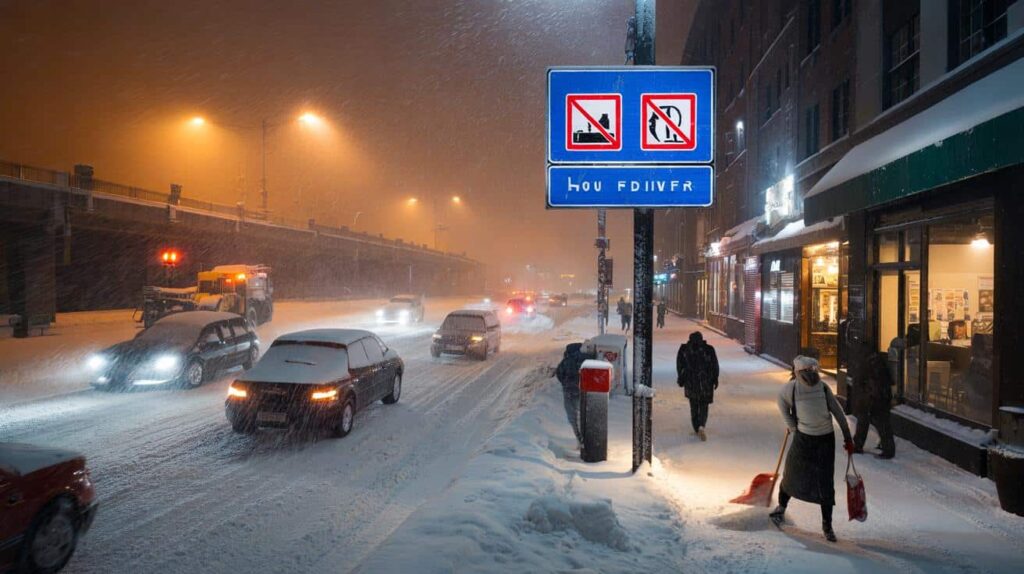
On the radio, a calm voice from the transport department asked drivers to stay off the roads. A few doors down, a bar owner was dragging salt bags to his entrance, whispering that closing “just isn’t an option” after the last few hard months. Around town, bosses wrote “business as usual” emails while plows sat waiting at depot gates.

The snow hasn’t even started in earnest.
But the contradiction already has.
 A polar vortex disruption is on the way, and its magnitude is almost unheard of in February
Snowstorm warnings vs. ‘business as usual’ emails
By early evening the weather radar showed white covering the entire region. Meteorologists described heavy bands and rapid accumulation. Officials kept repeating one simple message about staying off the roads unless absolutely necessary. Their words were clear and direct.

A few miles away, corporate HR departments were hitting send on another kind of message. Staff newsletters insisting offices would remain open. Retail chains promising normal hours. A gym announcing “no excuses” workout classes at 6 a.m., storm or not. Two realities forming at the same time, on the same screens.
Downtown, Marta, a nurse at a private clinic, stared at her phone in the staff room. The city’s emergency alert told her to stay home unless travel was essential. Her clinic’s group chat said all appointments were still on and “attendance is expected.” She lived 35 minutes away, on a hill that turns into an ice rink when the snow piles up.
She remembered last winter, when her car slid sideways into a guardrail on the same route. Nobody from management called to check on her, just an automatic email asking her to fill her shift next weekend to “compensate.” Still, this evening, she laid out her scrubs again, just in case the guilt got stronger than the fear.
The clash comes from two different logics colliding on the same streets. Public authorities are judged on safety: fewer crashes, fewer 911 calls, fewer people stranded in the cold. Businesses are judged on continuity: open doors, working tills, orders shipped out on time. One side can afford to say “stay home” loudly. The other hears the silent tick of rent, salaries, and loans.
So when a big storm approaches, the messaging splits. The traffic department puts out travel maps and red warning banners. Marketing teams schedule posts promising hot coffee, open stores, and “we’re here for you” slogans. The snow, falling quietly in the middle of all this, doesn’t care either way.
Driving in a storm when everyone tells you something different
On nights like this, the most practical thing you can do starts a few hours before the first heavy band hits. You look at your commitments for tomorrow and sort them into three piles in your head: what truly can’t wait, what could be done from home, and what is honestly optional. Work, appointments, gym, errands, social plans. One by one.
# Psychology Shows Why Emotional Processing Speed Varies Greatly Between Individuals
The way people process emotions differs significantly from one person to another. Some individuals can quickly identify and understand their feelings while others need more time to make sense of what they are experiencing emotionally. Psychology has been investigating these differences to understand why emotional processing speed is not the same for everyone. Research in cognitive psychology and neuroscience reveals that several factors contribute to how fast someone can recognize and respond to emotional information. The brain processes emotions through complex networks that involve multiple regions working together. The speed at which these networks operate depends on both biological factors and learned experiences. One major factor affecting emotional processing speed is individual differences in brain structure & function. The amygdala plays a central role in detecting emotional stimuli and generating emotional responses. People with more reactive amygdalas tend to process emotional information more quickly but may also experience stronger emotional reactions. The prefrontal cortex helps regulate emotions and provides context for emotional experiences. The connection strength between these brain regions influences how efficiently someone can process their feelings. Personality traits also shape emotional processing speed. People who score high on emotional intelligence typically process emotions more rapidly because they have developed better skills for recognizing and understanding feelings. Those with higher levels of neuroticism may process negative emotions more quickly due to increased sensitivity to potential threats. Conversely individuals with more stable emotional patterns might take longer to process emotions because they experience less intense emotional fluctuations. Early life experiences significantly impact how people develop their emotional processing abilities. Children who grow up in environments where emotions are openly discussed and validated tend to develop faster emotional processing skills. They learn to identify & label their feelings accurately from an early age. In contrast those raised in environments where emotions were dismissed or punished may develop slower processing speeds because they learned to suppress or ignore their emotional responses. Cultural background influences emotional processing as well. Different cultures have varying norms about emotional expression & awareness. Some cultures encourage open emotional expression and detailed emotional vocabulary which can enhance processing speed. Other cultures emphasize emotional restraint and may not provide as many words to describe subtle emotional states. These cultural differences shape how quickly individuals can identify & articulate their emotional experiences. Attention and cognitive load affect emotional processing speed in the moment. When people are stressed or overwhelmed with information their ability to process emotions slows down. The brain has limited resources and must allocate attention between different tasks. During high-stress periods emotional processing often takes a back seat to more immediate concerns. This explains why people sometimes realize how they felt about a situation only after the moment has passed. Practice and training can improve emotional processing speed over time. Therapeutic approaches like mindfulness meditation and cognitive behavioral therapy help people become more aware of their emotions as they arise. Regular practice with identifying and labeling emotions strengthens the neural pathways involved in emotional processing. People who engage in these practices often report being able to recognize their feelings more quickly and respond to them more effectively. The complexity of the emotion itself matters too. Basic emotions like happiness or fear are generally processed faster than more complex emotions like jealousy or nostalgia. Simple emotions involve more straightforward neural pathways while complex emotions require integration of multiple types of information including memories & social context. This additional processing naturally takes more time. Individual differences in alexithymia also explain variations in emotional processing speed. Alexithymia refers to difficulty identifying and describing emotions. People with high levels of alexithymia struggle to process their emotional experiences quickly because they lack the internal framework for understanding feelings. They may know something feels wrong but cannot pinpoint what emotion they are experiencing. Working memory capacity influences how efficiently someone can process emotional information. People with stronger working memory can hold multiple pieces of emotional information in mind simultaneously and make connections between them more rapidly. Those with more limited working memory capacity may need to process emotional information more sequentially which takes additional time. Trauma history can significantly slow emotional processing speed. People who have experienced trauma may develop protective mechanisms that delay emotional awareness. This delay serves as a buffer against overwhelming feelings but can make it harder to process emotions in real time. Trauma survivors often need therapeutic support to gradually increase their emotional processing capacity. The relationship between thinking style and emotional processing speed is also important. People who tend toward analytical thinking may process emotions more slowly because they want to understand the logical reasons behind their feelings. Those with more intuitive thinking styles might process emotions faster because they trust their immediate emotional responses without needing extensive analysis. Sleep quality and physical health impact emotional processing abilities as well. Poor sleep disrupts the brain regions involved in emotional regulation and makes processing emotions more difficult. Physical illness or chronic pain can also slow emotional processing because the body’s resources are directed toward managing physical symptoms. Understanding these variations in emotional processing speed has practical implications. In relationships recognizing that partners may process emotions at different rates can reduce conflict and improve communication. In educational settings teachers who understand these differences can better support students with varying emotional needs. In workplace environments awareness of processing speed differences can improve team dynamics and conflict resolution. Mental health professionals use this knowledge to tailor therapeutic approaches. For clients who process emotions quickly therapists might focus on slowing down and examining emotions more carefully. For those who process slowly therapy might emphasize building emotional awareness skills & creating safe spaces to explore feelings without pressure. The research continues to evolve as scientists develop better tools for measuring emotional processing. Neuroimaging studies provide increasingly detailed pictures of how different brains handle emotional information. This growing understanding helps explain why emotional experiences vary so much between individuals and offers pathways for supporting people in developing their emotional processing abilities according to their unique needs and circumstances.
➡️ Uninhabitable by 2100″: the countries facing a future of extreme rainfall
➡️ Goodbye olive oil new research crowns a dirt cheap fat as healthier and sparks outrage among Mediterranean diet believers
➡️ Goodbye Balayage : The New Technique That Eliminates Grey Hair for Good

➡️ Never leave your bedroom door open at night even if you think it is safer open the shocking truth that firefighters and sleep experts do not want you to ignore
A psychologist warns about a dangerous illusion. The happiest phase of life begins only when a person finally dares to admit this uncomfortable truth to themselves. Many people spend years chasing an idea of happiness that does not match reality. They believe that joy comes from external achievements or the approval of others. This creates a cycle of disappointment because the satisfaction never lasts long. The uncomfortable truth is that happiness does not come from outside sources. It comes from accepting who you really are and what you genuinely need. This means letting go of the image you think you should present to the world. Most people avoid this realization because it feels threatening. Admitting that you have been living according to someone else’s expectations can be painful. It means acknowledging that some of your choices were not truly your own. The psychologist explains that this denial creates constant stress. You feel like something is missing but cannot identify what it is. You keep searching in the wrong places because you refuse to look inward. The turning point comes when you stop pretending. You acknowledge your real desires instead of the ones you think you should have. You accept your limitations instead of fighting against them. You recognize your true values instead of adopting what others consider important. This admission does not happen overnight. It requires honest self-reflection and the courage to face uncomfortable feelings. Many people resist this process because it means giving up familiar patterns even when those patterns cause suffering. Once you make this shift everything changes. You stop seeking validation from external sources. You make decisions based on what truly matters to you. You build relationships that reflect your authentic self rather than a constructed image. The happiest phase of life begins at this point because you finally stop fighting against yourself. You use your energy to create a life that fits who you are instead of trying to fit into a life that was never right for you. This does not mean life becomes perfect or free from challenges. It means you face difficulties from a place of honesty rather than denial. You handle problems more effectively because you understand your real needs & boundaries. The dangerous illusion is believing that you can find lasting happiness while living a life that contradicts your true nature. This illusion keeps people trapped in cycles of temporary satisfaction followed by emptiness. Breaking free from this illusion requires accepting that you cannot please everyone. It means understanding that some people will disapprove of your authentic choices. It involves recognizing that external success does not guarantee internal peace. The psychologist emphasizes that this truth applies to everyone regardless of age or circumstances. Whether you are young or old successful or struggling, the principle remains the same. Genuine happiness comes from alignment between your inner reality and your outer life. Many people wait for the perfect moment to make this change. They tell themselves they will be honest about their needs after they achieve certain goals or after specific conditions are met. This waiting becomes another form of avoidance. The reality is that there is no perfect time. The longer you delay this admission the more years you spend living a life that does not truly belong to you. Each day of denial adds to the accumulated stress & dissatisfaction. Taking this step does not require dramatic changes all at once. It starts with small acts of honesty. You might say no to something you previously agreed to out of obligation. You might pursue an interest you always dismissed as impractical. You might end a relationship that only exists because of habit. These small changes build momentum. As you experience the relief that comes from living more authentically you gain confidence to make bigger adjustments. The process becomes self-reinforcing because authenticity feels better than pretense. The happiest phase of life is not about having more or achieving more. It is about the peace that comes from finally being yourself without apology or explanation. It is about using your limited time & energy on what genuinely matters to you. This truth is uncomfortable because it places responsibility squarely on your shoulders. You cannot blame circumstances or other people for your unhappiness once you recognize that you have been avoiding your own truth. This accountability can feel heavy at first. However, this same accountability also brings freedom. If you are responsible for your own happiness then you also have the power to create it. You are not dependent on external factors that you cannot control. The psychologist’s warning is clear. The dangerous illusion is not just a minor mistake. It is a fundamental misunderstanding that can consume your entire life if left unexamined. Many people reach the end of their lives with regret because they never dared to live according to their own truth. The good news is that it is never too late to start. Regardless of how long you have been living according to this illusion you can choose to see things differently starting now. The happiest phase of your life can begin today if you are willing to face this uncomfortable truth.
➡️ Brown tips on your houseplants: the real cause of this problem and how to fix it
➡️ Sunlight will be cut off completely the date of the century’s longest eclipse has just been revealed
Then, you prepare as if you might stay home. Charge the laptop. Move key files online. Fill the gas tank in case you actually have to go. Clear a spot by the door with boots, gloves, and a scraper so you’re not digging through closets at 6 a.m. when the plow just buried your car. A small plan tonight steals power away from chaos tomorrow.
Many people read every alert, nod at every warning, and still end up on the road. Not because they love driving in whiteout conditions, but because pressure comes from all sides. A manager hints that “everyone else is coming.” A client texts “quick favor, can you swing by?” A restaurant posts on social media that their loyal regulars “always show up.”
We’ve all been there, that moment when you look out the window at a street turning white and say, “Maybe it’s not so bad yet.” That’s the trap. Visibility drops faster than your brain adjusts. Black ice hides under what looks like powder. Let’s be honest: nobody really runs a full safety checklist every single day. Most of us improvise as we go. The storm punishes improvisation.
“Last year’s blizzard cost us almost a week’s revenue,” says Jake, who runs a small café near the industrial park. “If I close, I feel irresponsible as a business owner. If I stay open and a staff member crashes on the way in, how am I supposed to live with that?”
His tension is shared by thousands of small business owners caught between spreadsheets and human faces. Some try to split the difference, opening late or closing early, quietly encouraging staff who live far away to stay put. Others lean on informal arrangements, asking for volunteers who can walk or take the bus.
For anyone who does end up on the road, a basic checklist can shift the odds:
- Check live traffic maps for closures and slowdowns before leaving.
- Clear all windows, mirrors, and lights completely, not just a peephole in the windshield.
- Drive in the right lane, slow and steady, with gentle braking and wide following distance.
- Keep a simple emergency kit: blanket, water, phone charger, small shovel, flashlight.
- Tell someone your route and expected arrival time, then stick to it.
These steps won’t turn a blizzard into a sunny commute. They simply buy you a little margin when the road decides to change under your tires.
Living with the storm’s mixed messages
The strange thing about a big snow night is how quiet it can feel from your window and how loud it sounds in your head. On one side, you hear the voice of the mayor or the transport chief, urging people to stay home, speaking in the name of the collective. On the other, you hear your boss, your bank account, your customers, talking in the language of survival and opportunity.
Caught in between, you build your own private weather policy, one decision at a time. Maybe this is the year you talk with your employer ahead of time about remote work during warnings, rather than at 6 a.m. when everyone is panicking. Maybe it’s the night you finally accept that one yoga class or one sale or one meeting is not worth a ditch full of snow and a tow truck. *Sometimes the bravest thing you can do in a storm is nothing at all.*
| Key point | Detail | Value for the reader |
|---|---|---|
| Heed official warnings | Authorities base alerts on crash data, radar, and hospital capacity | Helps you cut through mixed messages and focus on genuine risk |
| Negotiate flexibility early | Discuss storm policies with employers and clients before winter peaks | Reduces last‑minute pressure to drive in unsafe conditions |
| Prepare for both staying home and going out | Remote options ready, car stocked, route checked in advance | Gives you freedom to choose safety without losing control of your day |
FAQ:
- Question 1Can my employer force me to come in when authorities say stay off the roads?
- Question 2What’s the safest speed to drive in heavy snow?
- Question 3Is it better to cancel appointments the night before or wait until the morning?
- Question 4What should I keep in my car during winter storms?
- Question 5Do businesses get penalized for closing during a snow emergency?
