
By six in the evening, my shoes felt like they belonged to someone else.
My ankles ballooned over the edges, my socks left deep red grooves, and walking to the kitchen suddenly felt like crossing a small desert.
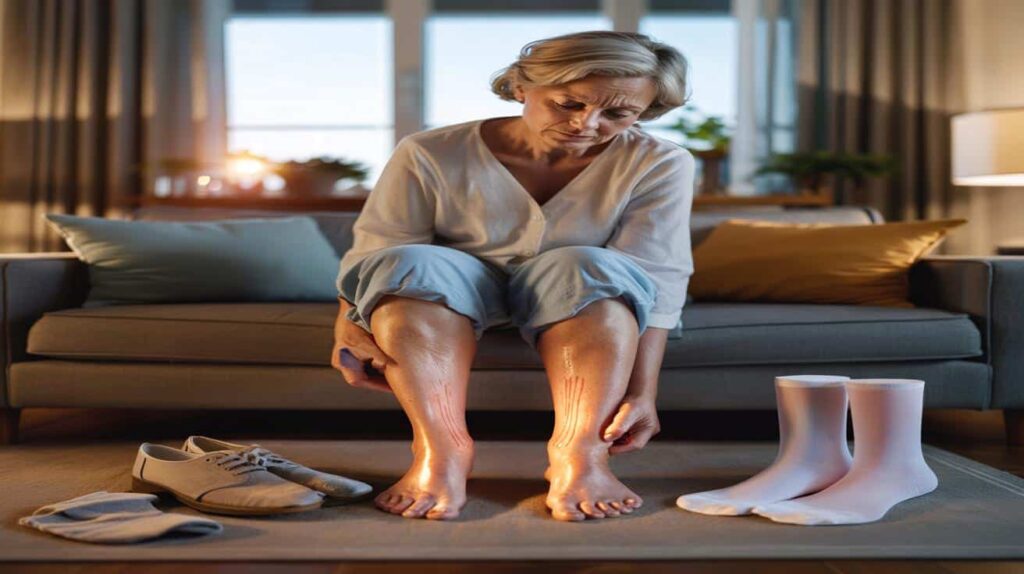
I told myself it was age. Too much salt. A long day on my feet.
I slipped into slippers, lifted my legs on a cushion, and scrolled on my phone until the swelling quietly went down.

And then, every night, the same scene.
Same puffiness, same heaviness, same little voice saying, “This isn’t normal.”

I muted that voice for months.
Until the day my ankle swelling turned out to be a circulation alarm I’d been declining like a spam call.

When swollen ankles stop being “just age”
The first thing I noticed was the timeline.
In the morning, my ankles looked like they always had. Slim enough, skin a bit drier than before 60, but nothing unusual.
By late afternoon, they started to thicken.
By dinner, my skin felt tight, my shoes were a battle, and my legs were heavy, as if someone had quietly filled them with wet sand.
I told myself this was just what getting older looks like.
A slow, soft slide into “Well, that’s life.”
Still, a part of me watched the clock and my ankles at the same time.
One evening, after a family lunch, my daughter stopped mid-sentence and stared at my feet.
“Mom, your ankles,” she said, her voice suddenly serious.
They were huge.
Not a bit puffy — swollen to the point where my skin looked shiny, my veins almost vanished.
I laughed it off, blamed the salty roast and the long time at the table.
She didn’t laugh.
She pulled out her phone and started reading aloud: venous insufficiency, heart issues, kidney problems, lymphatic troubles.
Her eyes met mine, and I saw it — real fear, not Google drama.
That night, I slept badly.
The next morning, I made an appointment with my doctor.
At the consultation, I half expected him to say, “It’s nothing.”
He didn’t.
He pressed his thumb into my ankle. The mark stayed, like a little fingerprint in dough.
He called it “pitting edema” and started asking questions: breathlessness, chest pressure, nighttime trips to the bathroom, weight gain, varicose veins, medication, salt, hours spent sitting.
Then came the word I had ducked for years: circulation.
My veins weren’t sending blood back up properly. The valves were tired, the walls less elastic, gravity suddenly had the upper hand.
Swollen ankles were not just a cosmetic nuisance.
They were a visible sign that my blood flow was struggling, and that my heart and veins were working harder than they should.
A small, silent SOS at the end of each day.
Small daily moves that change the story
The plan my doctor suggested didn’t start with pills.
It started with movement — the kind that looks too simple to matter.
Every two hours, I had to get up and walk for five minutes.
Around the living room, down the hallway, even just marching in place while the kettle boiled.
I added ankle circles, heel raises, and toe taps whenever I sat watching TV.
He called them my “leg pumps”.
Anything that got my calf muscles squeezing was helping blood go back up to the heart, instead of pooling by my ankles.
It felt ridiculously basic, almost childish.

Yet within a week, the evening swelling was less dramatic.
Not gone, but clearly dialed down.
The second big change was my relationship with sitting.
We’ve all been there, that moment when you sit “just for five minutes” and somehow two hours disappear.
Long sessions in front of the TV or computer were suddenly my worst enemy.
Not because of laziness, but because my veins were left alone fighting gravity without help from my muscles.
So I broke my day into mini-chunks.
I set alarms on my phone, drank more water so I’d need to get up, and moved the remote a little too far away so I had to stand to grab it.
Let’s be honest: nobody really does this every single day.
But the days I did it?
My socks dug in less, and my ankles didn’t rage against my shoes at 7 p.m.
My doctor also talked about what not to do, and that stung a bit.
He warned me about crossing my legs for hours, tight elastic socks, and sitting on high stools with my feet dangling.
Then he wrote three things on a sheet of paper and pushed it toward me:
“You’re not being dramatic. Swelling is a message. Your job is to listen earlier, not later.”
I pinned that sentence on the fridge, next to a simple checklist:
- Elevate legs for 15–20 minutes at the end of the day, feet higher than the heart.
- Wear medical-grade compression stockings, properly fitted, not random ones bought online.
- Talk to a doctor fast if swelling suddenly worsens, appears on one leg only, or comes with pain or shortness of breath.
That list felt like a little box of calm in the middle of my mild panic.
*Not a cure, but a way to stop pretending this was “just age” and nothing more.*
Listening to what your body is really saying
Swollen ankles after 60 can feel like one more small annoyance in a long list of them.
The temptation is always to shrug and adapt: bigger shoes, baggier pants, a footstool in front of the couch.
Yet those round, heavy ankles are often the most visible part of a story happening deeper inside.
They can whisper about tired veins, a heart under pressure, kidneys that are overwhelmed, or side effects from a medication taken for years without a second thought.
The hardest part isn’t getting tests or wearing compression stockings.
It’s admitting that a sign you’ve been excusing for months might actually be serious enough to deserve a real look.
That’s not weakness. That’s adult courage.
Maybe you recognize yourself in these evening ankles, the tight socks, the marks on your skin that linger a bit too long.
Maybe it’s your mother, your partner, a neighbor you see at the mailbox every night in slippers.
Talking about it out loud changes something.
A simple “My ankles swell a lot by night, does that happen to you too?” can open doors — to experiences, to advice, sometimes to a long-delayed appointment that needed to happen.
Our bodies rarely shout at first. They start with a small signal.
Sometimes that signal is sitting quietly at the bottom of your legs, waiting for you to notice.
| Key point | Detail | Value for the reader |
|---|---|---|
| Evening ankle swelling is a warning sign | Regular end-of-day swelling can reflect venous insufficiency or other circulation problems | Encourages readers to stop normalizing symptoms that may signal deeper issues |
| Small movements help blood flow | Short walks, ankle circles, and calf “pumps” throughout the day support venous return | Offers practical, doable actions that reduce discomfort and support vein health |
| Seek medical advice for changes | Sudden, painful, or asymmetric swelling, or swelling with breathlessness, needs quick evaluation | Gives clear red flags so readers know when to consult a professional without delay |
FAQ:
- Are swollen ankles always a sign of poor circulation?Not always. Swelling can come from venous insufficiency, heart or kidney issues, side effects of medication, heat, long sitting, or simply standing all day. The key is frequency, timing, and whether other symptoms are present.
- When should I worry about my swollen ankles?Be concerned if the swelling appears suddenly, affects only one leg, is painful or red, or comes with chest discomfort, coughing, or shortness of breath. That combination can be urgent and needs medical attention quickly.
- Can lifestyle changes really reduce ankle swelling after 60?Yes, often quite a lot. Regular walking, leg elevation, compression stockings, hydration, and less salt can significantly lessen daily swelling, especially when veins are the main issue.
- Do I need compression stockings forever once I start?Not necessarily. Some people wear them during long trips or on workdays only, others daily. Your doctor or phlebologist can suggest how often you need them based on tests and the severity of your circulation problem.
- Is ankle swelling just part of getting older?Age makes veins and circulation more vulnerable, but constant or marked swelling shouldn’t be written off as “normal aging.” It’s a sign worth understanding, not ignoring, because it often responds well to treatment and habit changes.
