
The first time I heard the soft whoosh, I thought something was wrong. No loud hum, no clacking turntable, no angry rattling bowl. Just a low pulse of light, a quiet fan, and the smell of real food drifting across a tiny city kitchen at 7:42 p.m.
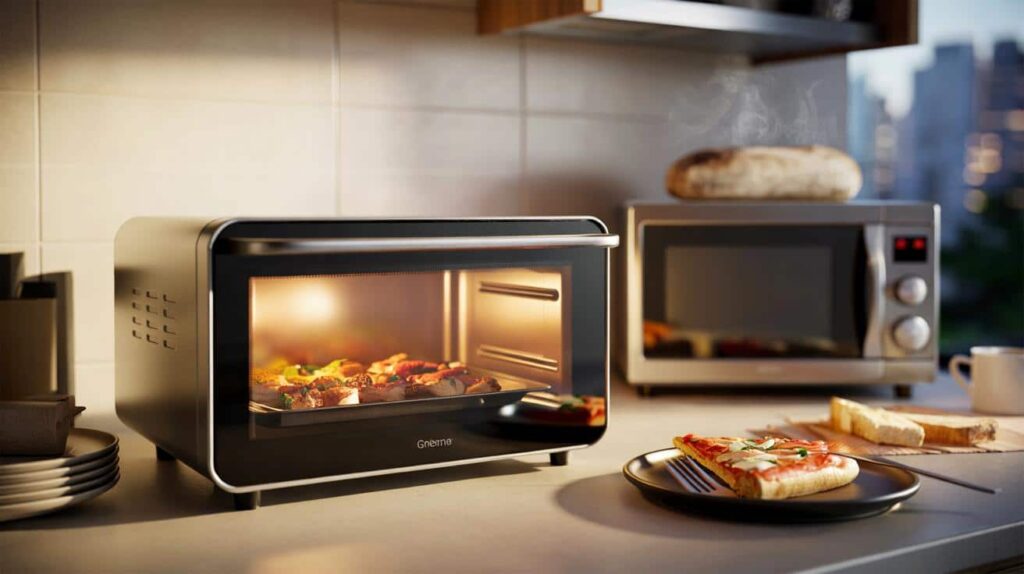
On the counter where a stained microwave used to sit, a sleek, glass-fronted box glowed gold. Inside, a tray of roasted vegetables went from fridge-cold to caramelized in under six minutes. No rubbery edges. No cold core. No mystery steam.

The owner, a freelance designer, shrugged like this was now totally normal. “I haven’t used a microwave in three months,” she said, sliding a crisp-skinned salmon fillet onto a plate.

Then she added, almost casually: “I think this thing has killed it for good.”

The quiet rise of the microwave’s biggest rival
Call it a combi-oven, a smart air fryer, or a countertop rapid cooker. The name changes from brand to brand, but the principle is the same: a compact device that combines heated air, controlled steam and precise sensors to do what the microwave always promised, only better.
Where the microwave bombards water molecules, this new generation of ovens works with air flow, temperature mapping and, in some cases, tiny bursts of steam. The result looks less like a reheated leftover and more like something that just came out of a restaurant kitchen.
For anyone stuck between frozen dinners and delivery apps, that’s not a small revolution.
You see it first in small apartments. The kind where the oven doubles as storage and the microwave is king by default.
A 24-year-old student in London told me she bought one of these smart combi devices “just to try TikTok recipes faster.” Two months later, she was batch-roasting vegetables on Sundays, reheating pizza that stayed crisp, and cooking chicken thighs from raw in 15 minutes.
She sent me a photo of a lasagna slice she’d revived on a weeknight: golden on top, bubbling at the edges, still holding its structure on the fork. She wrote only three words under the image: “Microwave is dead.”
What makes this wave different from the last gadget craze is not just speed. It’s control. These devices don’t just blast heat; they track it, redirect it, and adapt. Many use internal probes or infrared sensors to read the food itself rather than the timer alone.
That shift changes the emotional contract in the kitchen. Instead of “hope this doesn’t explode and stay cold in the middle,” you get “this will be hot, even, and probably taste better than yesterday.”
For tech companies, the microwave was always a blunt tool. This new breed is more like a smartphone of heat: smarter chips, guided apps, step-by-step programs, a sense that the machine is actually paying attention.
How this new device actually replaces the microwave in daily life
The “replacement” doesn’t happen in a dramatic trash-the-microwave moment. It starts with one simple switch: reheating leftovers.
People begin by sliding their cold pasta, curry, or stir-fry into the new oven instead of the microwave. Most presets run for 5–10 minutes, using hot air and sometimes a touch of steam. The food comes out evenly hot, with texture intact. Pasta stays silky, fries re-crisp, rice doesn’t turn into dry clumps.
Once reheating is won over, small habits fall like dominoes: frozen bread gets revived on the rack, coffee cake is warmed slice by slice, yesterday’s roast chicken becomes this morning’s breakfast.
The turning point for many is pizza. That one slice that used to be soggy or rock-like in a microwave becomes the test case.
A software developer in Toronto told me he stopped using his microwave the day he reheated takeout pizza in his smart oven. Four minutes at high fan heat, preset “recrisp,” and the crust snapped when he folded it. The cheese melted again without pooling, the edges browned. “I realized I never wanted to microwave bread or cheese again,” he said.
 Hairstyles after 50: this cut that was very trendy in the 60s is coming back into fashion in 2026
Soon he was reheating everything in the same box: ramen, meal-prep bowls, even fridge-cold croissants he bought in bulk and revived one by one. The microwave door stayed closed for weeks. He only noticed when it started to gather dust.
The logic is simple and brutal. A device that can:
heat food almost as fast
keep texture intact
cook from raw to done
and slot into the same countertop space
has a strong chance of winning.
Microwaves were designed in an era when frozen TV dinners and instant oatmeal were the main use cases. Today’s kitchens juggle meal prep, frozen bakery items, leftovers from restaurants, and quick after-work proteins. The microwave’s one-speed-fits-all energy starts to look clumsy next to a machine that can remember your settings, detect when the center is hot, and automatically switch from crisping to keeping warm.
Let’s be honest: nobody really does this every single day with a classic oven.
The small daily moves that make the switch possible
The breakthrough isn’t the spec sheet, it’s the routine. People who fully replace their microwave tend to start by assigning the new oven three “jobs”: reheating dinner, reviving bread, and cooking one easy protein like chicken or tofu.
That’s it. No elaborate recipes, no twelve-step programs. Just a quiet agreement: this box is for making yesterday’s food taste like today’s food again.
Once that’s automatic—leftovers go here, bread goes here—the microwave turns into a backup for exactly two things: boiling water fast and softening butter. Most users I talked to simply let the old box fade out instead of unplugging it overnight.
There’s also the messy human part: time, dishes, and mental load. We’ve all been there, that moment when you stare at a cold plate, too tired to cook, and the microwave looks like the only option between you and an empty stomach.
That’s where these smart ovens quietly win. Slide in the whole plate, tap a preset, walk away. No need to cover everything, stir halfway, rotate the dish to avoid that weird lava perimeter and icy core. The food comes out closer to how it looked when you were proud enough to cook it the first time.
People talk about feeling less guilty throwing leftovers away, simply because they taste good again.
A Paris-based food photographer summed it up this way: “The difference is that I trust it. With the microwave, I was always negotiating. ‘Thirty seconds more? Stir again? Cover it?’ With this, I press a button and it respects the food I already made.”
- Start with one ritual
Pick a daily moment—like reheating lunch—and commit to using the new device only for that. Let your hands build the habit before your brain overthinks it. - Keep the presets simple
Use two or three programs at first: leftovers, pizza/bread, and a basic roast. Ignore the complicated stuff until those three feel natural. - Give it prime counter space
If the new oven is tucked away and the microwave is front and center, you’ll always default to the old habit. Put the challenger in the “easy reach” zone. - Use real plates, not plastic containers
These ovens handle ceramics and metal trays better than plastic tubs. The food looks better, feels more like a real meal, and cleans up faster than you’d think. - Allow overlap time
You don’t have to throw the microwave out on day one. Let both devices coexist for a month. Watch which one you reach for without thinking. That’s your real answer.
Beyond the microwave: what this says about the way we cook now
Once you start noticing these devices, you see them everywhere: on TikTok kitchen tours, in tiny co-living spaces, on the counters of young parents who swear they “don’t have time to cook” yet somehow roast a tray of vegetables three nights a week.
The microwave doesn’t disappear in a cloud of nostalgia. It simply gets outperformed by something that speaks more clearly to how we live now: cramped kitchens, odd schedules, more delivery leftovers than frozen dinners, and a quiet wish that home food could feel a little less like compromise.
What’s striking is how fast people build emotional loyalty to the new box. They talk about “trust,” about “respect for ingredients,” about not being embarrassed to serve reheated food to friends. *A small shift in heat, air, and timing ends up changing how people feel about their own cooking.*
Will the microwave vanish completely? Probably not. It’s cheap, tough, and familiar. Yet there’s a sense that a certain era—rubbery pizza, stone-cold centers, and exploding tomato sauce—is slowly closing. If a single compact device can warm, crisp, steam and roast in the footprint of a shoebox, the old hum of the microwave might soon sound more like history than habit.
| Key point | Detail | Value for the reader |
|---|---|---|
| Smart ovens as microwave rivals | New countertop devices combine hot air, steam and sensors to reheat and cook evenly | Helps you see why these gadgets can genuinely replace your microwave |
| Start with one daily ritual | Use the new device for leftovers, bread or pizza before anything else | Makes the transition realistic instead of overwhelming |
| Shift from speed to trust | Precise heating and better texture reduce guesswork and frustration | Turns quick meals into something you’re actually proud to serve |
FAQ:
- Question 1Can these new ovens really heat food as fast as a microwave?
- Answer 1They’re usually a bit slower on pure time-to-hot, but the trade-off is better texture and more even heating. Most leftovers take 5–10 minutes instead of 2–3.
- Question 2Do I need special dishes or containers?
- Answer 2No. Standard oven-safe plates, glass and metal trays work best. Plastic is less useful here, which many people see as a plus.
- Question 3Are these devices hard to clean?
- Answer 3Most have non-stick interiors and removable trays. A quick wipe after roasting or reheating usually keeps them in good shape.
- Question 4Will my electricity bill go up?
- Answer 4They use more power than a microwave while running, but because they’re efficient and compact, the overall difference is often small for typical home use.
- Question 5Is it worth replacing a perfectly fine microwave?
- Answer 5If you mainly heat coffee and instant meals, maybe not. If you reheat real food, bake occasionally, or care about texture, the upgrade can feel surprisingly big in daily life.
