
Behind the scenes, French and British engineers are finalising a gigantic metal cylinder that will sit at the core of Hinkley Point C, the country’s first new nuclear power station in more than three decades – and a key test of whether nuclear can really anchor a low‑carbon grid.
A 500-tonne steel giant heads for Somerset
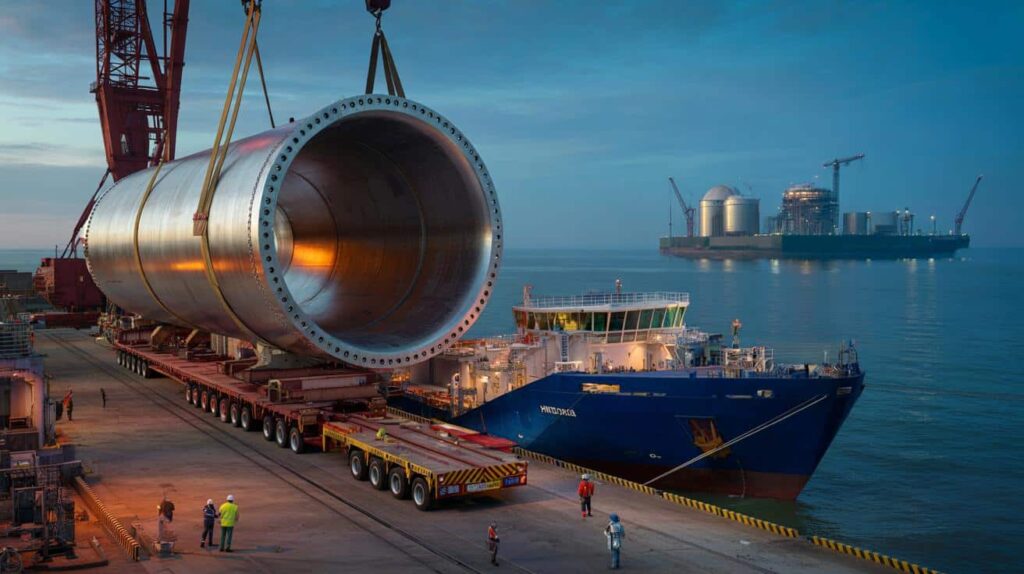
In late November 2025, French nuclear company Framatome signed off on one of the most delicate components in the Hinkley Point C project: the reactor pressure vessel for Unit 2. The finished piece is a 13‑metre-long forged steel cylinder weighing around 500 tonnes, built to hold the uranium core of an EPR (European pressurised reactor).

Manufactured at Framatome’s Saint-Marcel site near Chalon-sur-Saône, the vessel has taken years of forging, machining and testing. Workers there operate between massive hydraulic presses, ultra-precise welding tools and heavy cranes. Every step is logged, inspected and checked again, because this is the part of the plant that directly surrounds the nuclear fuel.

The new vessel is designed to operate for up to 80 years under extreme temperature, pressure and radiation without losing structural integrity.

Far from being a simple metal shell, the reactor vessel is engineered as a kind of armoured safe for the core. It must stand up to pressures of more than 150 bar and temperatures near 300°C, while remaining tough against decades of neutron bombardment. Any flaw in the steel, any microcrack or weld defect, can become a critical safety concern down the line.
As the final checks ended on 28 November 2025, the vessel was slowly lifted and secured onto a heavy transport cradle. Its next leg will take it by sea and road to the Hinkley Point C site in Somerset, on the south‑west coast of England, where the concrete containment and the dome of Unit 2 are already in place.
The second French-built vessel for Hinkley Point C
This is the second time a French-made EPR vessel has made the journey across the Channel. The vessel for Hinkley Point C Unit 1, forged at Le Creusot, reached the site in early 2023 and was installed in the reactor building at the end of 2024.
Unit 2 is following a similar path, with the civil engineering of its reactor building running in parallel. Once on site, the 500‑tonne cylinder will be lowered into the reactor pit using one of the most powerful lifting systems ever deployed on a UK construction project.
Each step of the installation sequence is tightly choreographed. The vessel goes in before much of the piping and internal structures, then gets surrounded by safety systems, control instrumentation and shielding. Any misalignment can delay the entire schedule, which is one reason these milestones are watched so closely by both EDF and the UK government.
Hinkley Point C and the UK’s nuclear rethink
For years, large nuclear projects in Europe have been synonymous with cost overruns and missed deadlines. The EPR design, used at Flamanville in France and Olkiluoto in Finland, drew heavy criticism as budgets ballooned and completion dates slipped.
Hinkley Point C is the first new nuclear station to be built in the UK since the 1990s – and is expected to cover around 7% of the country’s electricity demand once both reactors run at full power.
Despite a boom in offshore wind and a rapid expansion of solar, British policymakers have concluded that round‑the‑clock, low‑carbon capacity will still be needed in large quantities. Gas plants provide that today, but they come with volatile fuel costs and high emissions. That has pushed nuclear back into the strategic spotlight.
Hinkley Point C consists of two EPR units, each rated at about 1,630 MW. Together, they are planned to supply electricity to roughly six million homes. Construction began in 2018. The first unit’s dome was installed in 2023, marking the end of the heaviest civil works on that reactor. Current plans point to first power around 2030, with decades of continuous operation expected if the plant runs as designed.
Steam generators: the other steel colossi
Alongside the pressure vessel, Framatome has also completed the first two steam generators for Unit 2. These are enormous heat exchangers, each 25 metres tall and weighing about 520 tonnes. Their job is to transfer heat from the reactor’s primary circuit to a separate water loop that drives the turbines.
They look like oversized horizontal drums crammed with thousands of tubes. Hot, pressurised water from the reactor core flows around these tubes, heating cooler water inside them without ever mixing. That separation is one of the key safety barriers that keeps radioactive material contained.
- Reactor pressure vessel: contains the fuel and coolant at high pressure.
- Steam generators: convert hot reactor coolant into steam for the turbines.
- Containment building: concrete and steel shell that encloses the core systems.
- Control systems: monitor and regulate power, temperature and safety parameters.
The very first steam generator for Hinkley Point C reached Somerset in May 2024 and was installed in July that year. The remaining units are scheduled to arrive by 2026, aligning with system tests that must prove the entire plant can operate reliably before fuel is loaded.

The price tag and the long game
Project costs for Hinkley Point C have climbed several times since it was first approved. Current estimates place the bill between £31 billion and £34 billion, based on 2015 prices. Financial arrangements include a long‑term contract for difference, which guarantees EDF a set price per megawatt-hour, indexed to inflation.
Critics argue that the guaranteed price is high compared with recent offshore wind contracts and question whether nuclear can stay competitive as renewables and storage mature. Supporters counter that Hinkley offers firm capacity that does not depend on weather and can stabilise the grid when wind output dips and demand peaks.
EDF and its partners see Hinkley Point C as a model for future EPR projects in the UK, especially at the planned Sizewell C site on the Suffolk coast.
One strategic objective is to turn Hinkley’s hard‑won lessons into cost and schedule gains for follow‑on plants. Standardised design, repeat use of supply chains and a more experienced workforce could narrow the gap between nuclear and other clean technologies in the 2030s.
French engineering at the heart of the UK mix
Despite tensions around Brexit, nuclear energy has remained a space where France and the UK work closely. EDF, majority-owned by the French state, leads the Hinkley Point C consortium and coordinates thousands of workers on site. Framatome, another major French player, provides key nuclear components such as vessels, steam generators and control systems.
This cooperation goes beyond Hinkley. The same EPR technology features at Taishan in China and is planned for Sizewell C. Engineers in France, Britain, Finland and China swap operating experience, share data on materials ageing and refine maintenance strategies for critical components like the reactor vessel.
Where EPR reactors stand worldwide
The Hinkley vessel shipment forms part of a broader story: the gradual rollout of EPR units around the globe after a troubled start. While early projects suffered heavy delays, some are now operating at full power and feeding large amounts of low‑carbon electricity into national grids.
| Country | Site | Reactor | Status (late 2025) | Capacity (MW) | Service / target date |
|---|---|---|---|---|---|
| France | Flamanville | Flamanville 3 | Final commissioning phase | 1,630 | 2024–2026 (ramp-up) |
| Finland | Olkiluoto | Olkiluoto 3 | In operation | 1,600 | 2023 |
| China | Taishan | Taishan 1 | In operation | 1,660 | 2018 |
| China | Taishan | Taishan 2 | In operation | 1,660 | 2019 |
| United Kingdom | Hinkley Point C | HPC 1 | Under construction | 1,630 | 2030 (planned) |
| United Kingdom | Hinkley Point C | HPC 2 | Under construction | 1,630 | 2031 (planned) |
| United Kingdom | Sizewell C | SWC 1 & 2 | Authorised project | 2 × 1,630 | 2034–2035 (planned) |
What makes an EPR different?
The EPR is a so‑called generation III reactor, designed after the Chernobyl and Fukushima accidents, with more layers of safety than earlier models. It uses four independent safety trains instead of two, meaning multiple sets of pumps, valves and generators can back each other up.
The core is enclosed in a double containment system: an inner pre‑stressed concrete structure with a steel liner and an outer shell that protects against external events such as aircraft impact. The design also includes a “core catcher”, a dedicated structure meant to trap and cool molten fuel in an extreme accident, limiting the chance of a major release.
For non‑specialists, one way to picture the system is as a series of boxes inside boxes. The fuel sits in a steel vessel. That vessel is inside a thick concrete bunker. Around that bunker stand safety systems, emergency cooling and monitoring equipment designed to keep the core under control in both normal and abnormal conditions.
Risks, benefits and future scenarios
Nuclear projects like Hinkley Point C come with clear trade‑offs. On the one hand, they require huge upfront capital, tight regulation and long construction periods. On the other, once in operation, they produce steady, low‑carbon power with relatively small land footprints.
From a climate perspective, adding two large reactors can displace millions of tonnes of CO₂ each year compared with gas‑fired generation. That effect compounds over decades. If Hinkley, Sizewell and possible later plants all come online, the UK’s reliance on fossil fuels for baseload power could shrink sharply by the late 2030s.
At the same time, long‑term waste management, decommissioning and security must be managed very carefully. The reactor vessel now leaving France will outlast most of the people who built it. Its story extends far beyond the political cycles shaping today’s energy debates.
For households, the impact will show up less as a single dramatic shift and more as a quieter backdrop: a grid where lights stay on during windless evenings, where electric cars charge overnight from low‑carbon sources, and where industrial sites can plan around predictable power supplies. The 500‑tonne steel colossus heading to Somerset is one of the hidden anchors of that future system.
