For years, covering grey hair often meant choosing between harsh chemical dyes or inconsistent natural alternatives. Grey strands appear when melanin production slows in hair follicles. While ageing is the main factor, stress, genetics, smoking, poor nutrition, and certain health conditions also play a role. Initially, only a few strands appear, but over time, they spread across the scalp. Permanent or semi-permanent dyes provide instant results but rely on strong chemicals that can irritate sensitive scalps and dry out fragile hair. Even ammonia-free or gentle products alter the hair structure. Natural options like henna or indigo are appealing, but results are unpredictable and difficult to adjust.
The Cocoa Conditioner Trend Gaining Popularity
A growing number of people are turning to cocoa for a gentler grey-blending solution. Using plain, unsweetened cocoa powder in your regular conditioner adds a subtle brown tint without harsh chemicals. Cocoa contains natural pigments and plant compounds that lightly colour hair while smoothing its surface. On grey or light strands, repeated use gradually enhances coverage. For darker hair, it adds warmth and depth rather than changing the shade dramatically. Cocoa also offers antioxidants, softens hair, and provides a mild astringent effect that can help balance scalp oil production, making it ideal for ageing or delicate hair.

How to Mix Cocoa Into Your Conditioner Effectively
The cocoa method is simple and budget-friendly. Use it on freshly washed, towel-dried hair once or twice a week. Start by placing your regular conditioner into a bowl—silicone-free formulas work best for pigment adhesion. Add 2–4 tablespoons of unsweetened cocoa powder depending on hair length and thickness. Mix into a smooth paste and apply to hair sections, focusing on grey areas such as temples, crown, and parting. Comb through with a wide-tooth comb, leave for 20–30 minutes, then rinse with lukewarm water. Over time, the colour softens contrast, leaving hair looking naturally blended and shiny rather than fully dyed.
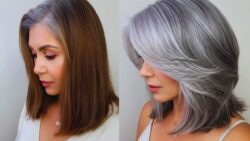 Embracing Gray Hair Choices: When Natural Silver Enhances Your Look and When Colour Makes Sense
Who Should Try Cocoa Conditioner And Who Should Avoid It
Cocoa-enhanced conditioner works best for those with scattered grey strands rather than fully white hair. It is ideal for light brunettes and blondes, where contrast is more visible, and for people with sensitive scalps who cannot tolerate chemical dyes. Dark hair will see only subtle warmth, making it a low-risk option for experimenting. The effect resembles a tinted gloss, softening greys without committing to permanent colour. Those seeking full coverage may need alternative methods, but cocoa is perfect for gradual, natural-looking enhancement.
How Cocoa Interacts With Hair Structure and Grey Strands
Grey hair tends to be coarser due to a raised cuticle, causing frizz and tangling. Conditioner smooths the cuticle, and cocoa particles settle on the hair surface rather than penetrating deeply. This slow, surface-level action ensures gradual colour build-up without harsh regrowth lines. Cocoa effectively acts as a lightly tinted shield, enhancing softness, movement, and manageability while leaving hair’s internal structure intact. Regular use can improve the overall texture and appearance of ageing or dry hair.
 10-Minute Yoga Flow: A Quick Routine Designed to Improve Flexibility and Daily Body Movement
Cocoa Compared With Other Grey Hair Methods
Many natural grey-blending solutions exist, such as coffee or black tea rinses, tinted conditioners, or salon treatments. Cocoa stands out because it is affordable, widely available, and conditioning. While results may vary based on hair porosity and texture, the low-commitment approach integrates easily into a weekly routine. Unlike chemical dyes, cocoa is reversible and gentle, making it ideal for those transitioning gradually or maintaining natural growth. Its main drawback is variability and potential dulling if residue remains, so proper rinsing is key.
Daily Tips for Maintaining Healthy Grey Hair
Maintaining grey hair health requires more than cocoa treatments. Factors like stress, smoking, sun exposure, and poor diet accelerate pigment loss. Those using cocoa often adopt gentler practices such as reducing heat styling, spacing washes, and using nourishing masks. Some colourists suggest cocoa-based masks between salon visits to refresh tone without chemicals. Overall, this method supports a gradual, natural look while respecting hair’s changing biology, promoting soft, manageable strands with improved shine and texture.
Grey Hair Results Table With Cocoa Conditioner
| Hair Type | Expected Result | Application Frequency | Notes |
|---|---|---|---|
| Mostly white or grey, fine strands | Soft beige-brown tone, improved shine | 1–2 times per week | Gradual blending, subtle effect |
| Salt-and-pepper brown hair | Grey strands blend, even overall colour | 1–2 times per week | Works best on scattered greys |
| Dark brown or black hair, few greys | Very subtle warmth, minimal visible change | 1 time per week | Acts as a tinted gloss |
| Light blonde hair | Warm brown undertone, softens contrast | 1–2 times per week | Enhances natural tones gently |