
A few quiet, precise gestures can change everything.
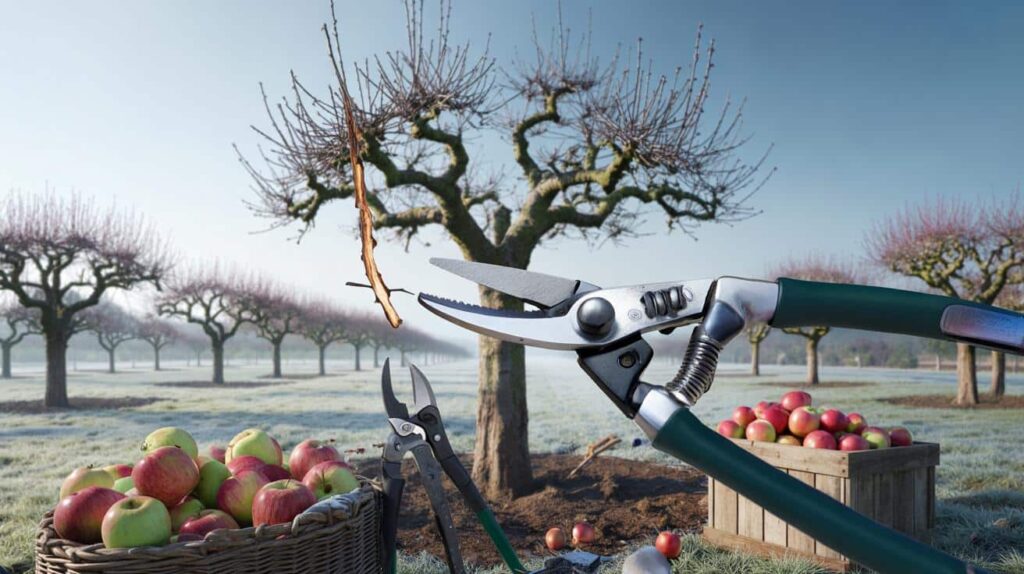
While branches look lifeless and the garden feels on pause, some growers use winter to rewire their apple trees. Done right, those small January cuts can set up heavier blossom, cleaner foliage and baskets of fruit a few months later.

Why January work on apple trees changes summer harvests
Apple trees spend mid‑winter in deep dormancy. Sap flow slows, growth pauses and the tree effectively holds its breath. That sleepy window, usually January into early February, is when strategic pruning has the biggest impact with the least stress.

When you cut during dormancy, the tree heals more calmly. Wounds dry without the pressure of rising sap, and the tree can redirect energy into promising buds as temperatures climb.

Winter pruning shapes how light, air and energy move through the tree – and that’s what ultimately fills your fruit bowl.
Good winter work does three jobs at once: it designs the structure, lets light reach every future apple, and keeps fungal disease at bay by opening the canopy. All three are linked to yield. A shaded, cramped crown might survive, but it won’t carry many apples to maturity.
Setting up: the simple kit behind “double harvests”
The gardeners who swear their crops doubled did not buy fancy fertiliser. They started with sharp, clean tools and a plan. That sounds basic, yet it is where many home orchards quietly fail.
The three tools that actually matter
- Bypass secateurs for young shoots and thinner branches
- Loppers for thicker, shoulder‑height wood you cannot cut with one hand
- Pruning saw for old, heavy or awkward branches
Blunt blades crush bark and fibres instead of slicing them. Those ragged tears heal slowly and invite infection. A few minutes with a sharpening stone before you start can decide whether a cut closes cleanly or lingers as a weak point for years.
Disinfection matters too. A quick wipe with alcohol or a dilute bleach solution before and after pruning each tree cuts the risk of spreading canker, bacterial diseases or rot from one plant to the next.
Think of clean, sharp tools as basic hygiene for your orchard – like washing hands before cooking.
The key January gestures that transform an apple tree
Standing in front of a tangled, old tree, it is tempting to snip randomly. The growers who see real gains follow a simple order each winter: remove, open, then shape.
1. Remove what is dead, weak or diseased
Start by reading the tree. Dead wood often looks dull, brittle and carries no firm buds. Diseased sections may show dark streaks, sunken patches or corky cankers. These branches siphon energy and harbour spores.
Cut them right back to healthy wood, leaving no stubs. A stub – the short “peg” left when you do not cut flush enough – tends to rot and can become a doorway for fungi.
2. Open the centre to light and air
Next, look inside the crown. Many apple trees fill their centre with tangled shoots that point inward. Those create shade and trap moisture after rain.
A well‑pruned apple tree lets sunlight flicker through the middle like a loose‑woven basket.
Remove branches that cross and rub, and those heading to the centre. Prioritise keeping strong, outward‑facing limbs. This improves pollination, drier foliage after showers and more even colouring on fruit.
3. Shape for balance, not show
Once the clutter is gone, you can think about a form. Many growers choose a goblet shape (open in the middle) or a soft pyramid with one central leader and tiers of branches.
On each main branch, shorten growth by cutting just above an outward‑facing bud. That bud will steer the new shoot away from the trunk, keeping the tree open. Work slowly; after each cut, step back and look again. You are not carving a statue, you are guiding a living framework for the next five to ten years.
| Step | What you do | Effect on harvest |
|---|---|---|
| Remove dead/diseased wood | Cut to healthy tissue | Reduces disease pressure, protects blossom |
| Thin crossing branches | Keep one, remove the other | Less rubbing damage, better light for fruit |
| Shorten vigorous shoots | Cut above outward buds | Encourages fruiting spurs, controls height |
| Clean up tools and cuts | Disinfect and tidy wounds | Faster healing, longer tree life |
Common mistakes that quietly wreck yields
Many frustrated gardeners do prune, yet still get poor crops. The problem is often not lack of effort but the wrong kind of cuts.

Cutting too hard, too fast
Removing more than about a third of the crown in one winter can shock the tree. It responds with a flush of long, vertical shoots called watersprouts. These are leafy but rarely fruitful, and they thicken the canopy again within a season.
A more gradual approach keeps the tree calmer. Spread big changes over two or three winters. That way, the balance between leaves and fruit wood stays closer to what the tree can support.
“Flush cuts” and random snipping
Cutting right against the trunk or a main branch – shaving off the small collar where the two meet – leaves a large wound with poor natural defences. These cuts seal badly, attracting decay.
Every cut should have a reason: remove disease, bring light, or support the shape you actually want.
Before each snip, ask yourself what that branch would do if left for another year. Pausing for five seconds saves years of corrective work later.
How regular pruning affects blossom and fruit load
Apple trees form fruit buds on short, stubby shoots known as spurs. These spurs like light and steady conditions. When a tree alternates between jungle growth and brutal cutting, spurs often abort, and the tree shifts into a cycle of boom‑and‑bust harvests.
Consistent, moderate pruning each winter encourages a stable number of flower buds. That steadies crops and reduces the “on year / off year” pattern many backyard growers notice. Better airflow around blossom clusters also lowers the risk of diseases such as powdery mildew and scab destroying flowers before they set fruit.
Looking after pruning wounds and the soil beneath
Every cut is, essentially, a small injury. Clean, angled cuts that do not crush bark shed rain and close more quickly. On large limbs, some gardeners like to apply a healing compound or a natural clay‑and‑ash paste to shield exposed tissue while the tree forms its own barrier.
Once the tree is shaped, attention moves downward. A light ring of mature compost or well‑rotted manure spread around the root zone supports spring growth. Avoid piling it against the trunk, which can keep bark damp and inviting to pests.
A layer of mulch – shredded branches, leaves or straw – helps keep soil moisture stable and feeds soil life as it breaks down. Strong roots feed stronger fruiting wood the season after your pruning session.
Understanding a few key terms gardeners use
When reading pruning guides, a couple of expressions come up often. Knowing them makes winter work less mysterious.
Fruit spur: a short, knobbly side shoot that carries flower buds and, later, apples. You want to keep these in well‑lit parts of the tree.
Watersprout: a long, thin, usually vertical shoot that grows fast after heavy pruning. These rarely fruit and are usually thinned out or shortened.
Alternate bearing: a pattern where a tree has one very heavy crop, exhausts itself, then produces a light crop the following year. Regular pruning and occasional fruit thinning help flatten that rollercoaster.
Realistic scenarios: from neglected tangle to productive tree
Imagine an old garden tree that has not been touched for five years. It is tall, dark in the middle and throws a few apples high up, well out of reach. Trying to fix everything in one January would strip too much wood.
A better plan is staged:
- Year one: remove dead and diseased wood, thin the worst tangles, keep height reductions modest.
- Year two: lower the crown a little more, open the centre further, start encouraging a goblet shape.
- Year three: refine structure and focus on building fruit spurs on well‑placed branches.
By the third or fourth summer, that same tree often carries more apples at reachable height than it did at its wild, towering peak. The gains come less from magic products and more from consistency and timing.
For smaller urban gardens, similar winter care can be combined with training methods such as espaliers or cordons along a fence. The principles stay the same: clean tools, gentle shaping, light in the centre and cuts made while the tree rests. The reward is not just heavier harvests, but fruit that is easier to pick, better coloured and often healthier on the inside as well as the outside.
