
Researchers in Sweden have sifted through millions of medical records and found a small but measurable rise in childhood leukaemia among children delivered by planned caesarean section, especially when there was no urgent medical need for the operation.
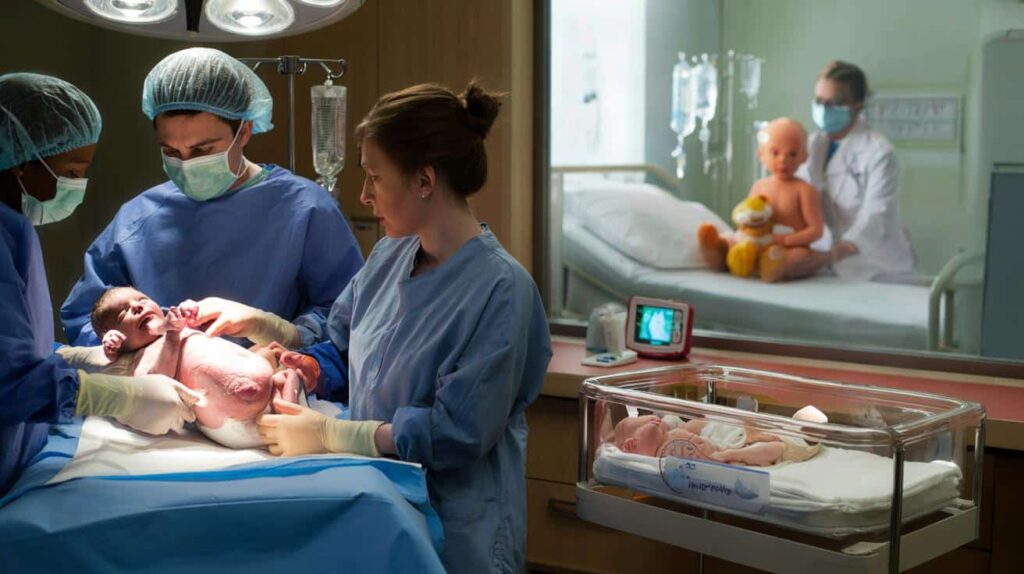
What the Swedish study actually found
The new research, led by the Karolinska Institutet and published in the International Journal of Cancer in July 2025, drew on data from more than 2.4 million births in Sweden.

Using national birth and cancer registries, the team tracked children over time and focused on acute lymphoblastic leukaemia (ALL), the most common type of cancer in childhood.

Children born by planned caesarean had a modestly higher risk of developing acute lymphoblastic leukaemia compared with those born vaginally or by emergency caesarean.

One key strength of the work is that it separates two very different situations:
- Planned caesarean: surgery booked in advance, usually before labour starts
- Emergency caesarean: surgery decided during labour because of complications
The increased risk showed up only in the group born by planned caesarean section. Emergency operations, often performed to protect mother or baby, did not show the same association.
Even then, the risk for any individual child remains low. ALL is rare: Sweden sees only around 50 to 70 new cases a year nationwide. For B‑cell ALL, the most frequent subtype, the study estimated that planned caesarean birth was linked to about a 29% relative increase in risk.
In practical terms, that equates to roughly one extra case of leukaemia for every 100,000 planned caesarean births each year.
On a population level, though, where nearly one in six Swedish babies is now born by caesarean, that small shift starts to matter for public health planners and obstetric policy.
How robust is the evidence?
To reduce the chance that something else was driving the pattern, the team excluded babies with known genetic conditions that already raise leukaemia risk. They also adjusted their analysis for several factors that can shape a child’s health trajectory:
- Parents’ level of education
- Gestational age at birth
- Birth weight
- Birth order (first-born or later)
- Maternal smoking during pregnancy
The researchers also checked whether planned caesarean was linked to other childhood cancers. They did not see extra cases of brain tumours or lymphomas, which supports the idea that the association may be specific to ALL rather than a vague, general cancer signal.
Not every sub‑analysis reached the conventional statistical threshold, something the authors acknowledge. Childhood cancers are rare, so even in very large cohorts, some numbers stay small. Yet several earlier studies in other countries have hinted in the same direction, and that consistency across research groups is giving this Swedish work extra weight.
Possible biological reasons behind the link
The microbiome and missed first contacts
Scientists increasingly suspect that what happens in the first hours and days after birth shapes the immune system for years. One leading theory in this case centres on the microbiome – the vast community of microbes that live in and on the human body.
During a vaginal birth, a baby is coated and colonised by the mother’s vaginal and gut bacteria. Even during an emergency caesarean, the baby has usually spent time in the birth canal and been exposed to some of these microbes.
With a planned caesarean before labour starts, that early transfer of maternal bacteria is largely disrupted, and hospital bacteria step in instead.
This different microbial “seeding” may subtly alter how the infant immune system learns to distinguish friend from foe. Researchers suspect that a less balanced early microbiome could change immune regulation and leave certain cells more prone to the kind of errors that eventually lead to cancers such as ALL.
Stress hormones that never surge
Another line of thought deals with stress – not psychological stress, but the controlled physical stress of labour. Contractions and passage through the birth canal trigger a sharp rise in hormones like cortisol and adrenaline in the baby.

Those hormones help prepare the lungs for breathing, regulate blood sugar and may help “kick‑start” parts of the immune and metabolic systems. A baby lifted from the womb via a calm, scheduled caesarean skips much of that hormonal surge.
Scientists think missing that carefully timed stress signal could subtly reroute how some immune cells develop. The Swedish study does not prove this mechanism, but it fits with other work showing links between planned caesarean and higher rates of asthma, allergy and type 1 diabetes.
Why planned caesareans are under fresh scrutiny
No one is suggesting that medically necessary caesareans should be restricted. When a baby is in distress, or a mother has a complication such as placenta praevia or severe pre‑eclampsia, surgery can be life‑saving.
The question raised by this study is not about life‑saving operations, but about caesareans done mainly for timing, comfort or fear of labour.
In many high‑income countries, including the UK, US and Sweden, rates of planned caesarean have climbed steadily over the past two decades. Reasons range from maternal age and previous caesarean scars to scheduling convenience, defensive medicine and cultural perceptions that surgery is the “safer” choice.
The Swedish findings suggest that long‑term risks may have been underestimated in conversations between doctors and parents. Even a small extra cancer risk matters when applied to large numbers of children and when added to known associations with respiratory problems, allergies and metabolic disease.
What this means for parents weighing birth options
For pregnant women who have been advised to have a caesarean for clear medical reasons, this study is unlikely to change the calculation. The immediate risks of avoiding surgery in those situations far outweigh a tiny shift in future cancer risk.
Where it may matter more is when a planned caesarean is being considered for non‑medical reasons. In those cases, a more detailed discussion of both short‑term and long‑term outcomes might help parents make a choice that aligns with their values and risk tolerance.
| Scenario | Typical medical view |
|---|---|
| Placenta blocking birth canal | Planned caesarean strongly recommended |
| Previous complicated caesarean scar | Often advised to have repeat caesarean |
| Maternal request without medical issue | Shared decision; study suggests careful risk‑benefit talk |
Some maternity units are already trialling ways to restore elements of vaginal birth biology for babies delivered by caesarean, such as “vaginal seeding” (swabbing the baby with maternal vaginal fluids) or early skin‑to‑skin contact and breastfeeding. These approaches remain controversial and are not yet backed by strong evidence for cancer prevention, but they reflect a growing focus on those first microbial encounters.
Key terms worth unpacking
Acute lymphoblastic leukaemia (ALL): A cancer of the white blood cells, usually starting in the bone marrow. In children it often progresses quickly but has relatively good survival rates with modern treatment.
Relative risk versus absolute risk: A 29% increase in relative risk sounds large, yet if the original chance is tiny, the absolute change is small. Moving from, say, 3 cases to around 4 cases per 100,000 children is a rise, but the odds for any single child remain very low.
Microbiome: The bacteria, fungi and viruses that live on and inside us. Far from being only germs, many of these microbes help train the immune system, protect against infections and influence metabolism.
What could happen next in research and practice
The Swedish team hopes their work will trigger international studies to test whether the same pattern appears in countries with different healthcare systems and caesarean policies. If the association holds, future research could focus on whether specific practices around planned caesarean – such as timing, antibiotic use or immediate post‑birth care – influence the risk curve.
In clinical practice, maternity services may gradually move towards tighter criteria for scheduling non‑urgent caesareans, clearer counselling about long‑term outcomes, and more support for women who want to attempt vaginal birth after a previous caesarean when it is safe to do so.
For now, the main takeaway for expecting parents is that mode of delivery is not just about the day of birth. It can nudge a child’s immune system onto slightly different paths, and those early nudges can, in rare cases, tilt the odds of serious disease years down the line.
