
The mat feels cool beneath your forearms as your toes dig in and your legs quietly strain. Your breathing evens out & becomes steady and controlled. Somewhere between the tightness in your abdomen and the focus in your mind a familiar question surfaces: how long should this be held? Ten seconds? Thirty? A full two minutes that stretches endlessly? Planks are often treated as a simple exercise with a universal answer but in reality they are a living conversation between your body and gravity that changes with time. What feels effortless at 18 becomes demanding at 48 and at 68 requires thoughtful care. At every stage of life your core foundation supports the spine and protects the back while allowing smooth & confident movement. Finding the right hold time means understanding your body exactly as it is today.
The Subtle Power Within Your Core
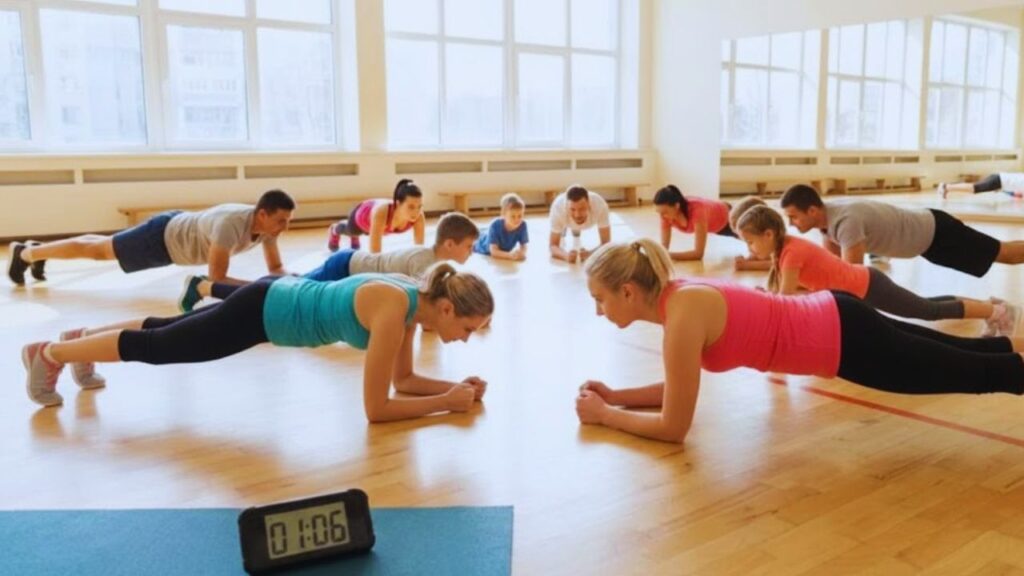
Most workouts make themselves obvious—loud footsteps, weights clanging, sharp exhales filling the room. Planks are different. You position your body in a straight line: shoulders over elbows or wrists, heels reaching back, neck relaxed. On the surface, nothing seems to move.

Inside, however, a quiet storm is at work. The transverse abdominis tightens like a natural corset, the multifidus stabilizes the spine, the diaphragm coordinates breath with effort, and the pelvic floor steadies everything from below. These deep muscles respond best to calm, precise effort performed consistently. Quality always matters more than duration—a clean twenty-second plank often outperforms a tense, shaky minute.

Busting the Two-Minute Plank Myth
Fitness culture loves extremes: two-minute holds, five-minute challenges, viral clips of trembling bodies. The assumption? Longer is better.
The reality is simpler. Beyond a certain point, extending a plank mostly builds discomfort tolerance rather than real strength. Coaches and research show that short, controlled holds, repeated regularly, develop core strength and protect the spine more effectively than occasional endurance tests. Long planks aren’t harmful, but benefits drop as fatigue grows and alignment quietly falters. The focus shifts naturally from surviving to supporting.
Age, Gravity, and Core Performance
Over time, the body changes. Recovery slows, tissues lose elasticity, and balance demands more attention. A plank that once felt easy now requires deliberate effort. This is not decline—it’s natural biology.
Flexible ranges work best. The ideal hold stops just before form begins to falter. The table below provides guidelines for healthy adults without major injuries:
– Teens (13–19 years): 20–40 seconds, 2–4 sets, 2–4 days/week
– Adults (20s–30s): 30–60 seconds, 2–4 sets, 3–5 days/week
– Midlife (40s): 20–45 seconds, 2–4 sets, 3–4 days/week
– Older Adults (50s): 15–40 seconds, 2–3 sets, 2–4 days/week
– Seniors (60s–70s+): 10–30 seconds, 2–3 sets, 2–4 days/week

Your 20s and 30s: Strength With Flexibility
Early adulthood often feels forgiving. Recovery is fast, tissues are resilient, and strength develops easily. Holding a plank for 30–60 seconds with proper form can be very effective.
The main risk is subtle form breakdowns: hips dipping, shoulders creeping up, or the lower back protesting quietly. Multiple shorter holds usually yield better results than one long, strenuous attempt.
Your 40s: Mindful Strength
By the 40s, feedback becomes clearer. Old injuries may flare and stiffness appears sooner. Strength remains, but it demands respect.
Most people find 20–45 seconds per hold effective. Some days allow longer efforts; others require restraint. Focus shifts to sustainable strength, supporting posture, spine health, and everyday movement.
Your 50s, 60s, and Beyond: Smart, Resilient Strength
Later decades bring changes: muscle mass may decline and recovery slows, but adaptation is still possible. Planks remain valuable, even when modified.
Short holds of 10–30 seconds with perfect alignment are highly effective. Knee planks or incline variations are not compromises—they protect joints while keeping the core engaged.
Recognizing the Stop Signals
Your body always communicates when a plank becomes risky. Sagging lower back, shoulders tightening, held breath, or facial tension are signs to stop.
Stopping at the first sign of form loss is not failure—it is skilled training. Over time, this builds efficiency instead of collapse.
Making Planks a Daily Habit
Planks don’t require drama. They can fit seamlessly into daily routines—a brief hold before coffee, another after work, one before bed. Small, consistent efforts accumulate quietly.
The true reward isn’t a record-breaking time. It’s standing taller, moving with confidence, and supporting your body through daily tasks. Hold only as long as your form remains perfect. Rest. Repeat. That’s where lasting core strength lives.
