
The neighbour’s curtains barely moved, just a pale line in the early light. Yet behind that thin fabric, a pair of eyes had been watching the same scene for days: a thick black cable snaking across the shared yard, plugged into a battered extension box on the wall. At night, the neighbour on the ground floor kept their lights blazing, TV on, electric heater humming, even though their own meter had been cut off weeks ago.
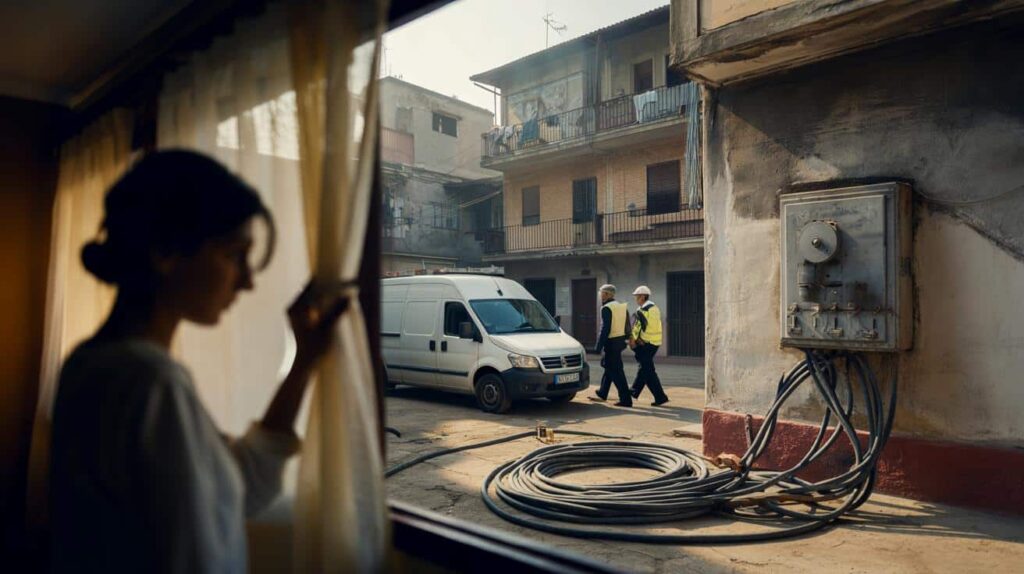
On Tuesday, the upstairs neighbour finally picked up the phone and reported the illegal hookup.

On Wednesday morning, the inspectors’ white van pulled up at 8:32 a.m. sharp.

The speed of it all left the whole building a little stunned.

The call that changed the atmosphere of the building
It started with a tiny spark of guilt. The neighbour who called the utility company says she hesitated between three different numbers before actually pressing “call”. She wasn’t a “snitch”, she insisted, she wasn’t trying to cause drama. She was just tired of the flickering lights, the strange humming in the walls, the sense that something was off every time she plugged in her own kettle.
She gave the operator the address, described the cable that didn’t match any official installation, and mentioned the smell of hot plastic in the stairwell two nights earlier.
Then the person on the line said a phrase she didn’t expect: “We’ll send inspectors tomorrow.”
The next morning, the inspectors’ arrival split the building into silent camps. One neighbour peered from their door with their keys still in hand. Another slipped past the inspectors, pretending to scroll on their phone, pretending not to hear the firm knock on the ground-floor door. The resident with the illegal hookup opened slowly, already knowing what this was about.
From the yard, you could see the cable clearly: thick, dirty, taped in two places, running from one balcony to another like a dead snake. One inspector took pictures. The other traced the line with his hand, following it to the shared meter box.
Ten minutes later, the illegal connection was cut.
The entire scene lasted less than an hour, but the conversation it started will probably last for months. Some in the building whispered that the caller had gone “too far”, that neighbours should talk before they involve inspectors. Others said the opposite: that **electricity is not a game**, and that people die in fires started by exactly this kind of hookup.
Behind the technical words – “meter tampering”, “unmetered usage”, “dangerous installation” – there was another tension. What do you do when solidarity collides with safety and the law. The neighbour who called didn’t feel like a hero when the van drove away, just strangely exposed.
How an illegal hookup really works behind the wall
From outside, an illegal electrical hookup often looks almost harmless. One extra cable here, a junction box there, a plug that never seems to leave the socket. Inside the walls though, it can be chaos. Cables not designed for heavy loads. Joints wrapped in tape instead of proper connectors. Lines running too close to wood or insulation that dries out in the heat.
Electricians who see these setups talk about them with the same expression they use for leaking gas: quiet, invisible risk. It only takes one overloaded evening, one extra heater, one cheap extension strip, for things to go very wrong.
In the building where the inspectors came the next day, the story started-months before with an unpaid bill. The ground-floor resident had lost their job, fallen behind, and eventually, the power was cut off. At first, they shuffled between friends, charging their phone in the hallway, boiling water on a camping stove.
Then one night, a “handy” acquaintance offered a solution. “Just for a while,” he said, stripping a live wire and looping it into the common supply. No contract. No protections. The lights came back on, the fridge hummed again, and life pretended to be normal.
The cable that crossed the yard was only the visible part of the story.
From a legal point of view, what happened next was simple. Tampering with an electrical meter is a criminal offence in many countries, a mix of theft and endangerment. The supplier can file a complaint, charge for backdated consumption, and in some cases pursue fines or even prison sentences.

From a human point of view, it’s messier. The person with the illegal hookup often feels cornered, ashamed, and at the same time strangely entitled – “I need to live, don’t I?” The neighbour who reports it, on the other hand, walks a thin line between being the person who protects the building and the one who “called the cops”. *This is where the story stops being just about wires and starts being about how we live together.*
What to do when you suspect an illegal connection next door
When something feels wrong with the electricity around you, the first instinct is usually to ignore it. Strange buzzing in the corridor, occasional dips in light intensity, a suspicious cable running where no cable should be. Yet the safest move is often the quietest one: gather facts.
Walk through shared areas and observe calmly. Is there a cable that seems to cross properties. Does a neighbour with a cut meter still use high-power appliances at all hours. Are there scorch marks near outlets or breaker boxes. Write down dates and times. Take a discreet photo of anything obviously unsafe, like bare wires or improvised junctions near water.
Then comes the part that many people dread: acting. Some choose to knock on the neighbour’s door first and talk. Others go straight to the building manager or the utility company’s hotline. Both choices have their logic, and both carry emotional weight.
One plain-truth sentence here: **nobody really wants to be the person who “reported” someone living three metres away from them**. Fear of conflict is real. Fear of retaliation is real too. If you decide to move forward, choose a calm moment, protect your privacy (no need to ring alone late at night), and always prioritise physical safety over awkwardness.
Utility companies themselves tend to encourage anonymous or low-exposure reporting, precisely because of neighbour tensions. Many have dedicated numbers or online forms for suspected fraud and dangerous connections. They rarely ask you to confront anyone directly.
“People imagine we send in a squad to punish their neighbour,” says one inspector who’s been doing this work for 12 years. “Most days, we’re just trying to stop a fire before it starts and reconnect people the legal way. The tragedy is when we arrive a week too late.”
- Observe firstNotice unusual cables, overheating outlets, or impossibly low bills compared to usage.
- Protect yourselfDo not touch suspicious wiring, do not try to “test” anything with your own tools.
- Document calmlyKeep dates, short notes, and if safe, a photo taken from common areas.
- Use official channelsContact your building manager, landlord, or the utility company’s fraud/safety line.
- Stay humanRemember there might be financial distress behind the hookup, even as you defend safety.
After the inspectors leave: living together again
When the inspectors’ van pulled away from that building, the yard felt strangely loud. Neighbours suddenly found reasons to go out: walking the dog, hanging laundry, pretending to check the mailbox twice. The ground-floor resident stayed behind their closed curtains, lights off now, with a kettle that no longer boiled.
The upstairs neighbour who had made the call didn’t feel victorious. She felt like the building had been cracked open, its quiet compromises exposed. We’ve all been there, that moment when you choose between staying silent and risking the peace, and neither option feels clean.
Days later, conversations started again in fragments. On the stairs. Near the bins. “Did you see the cable. It was crazy.” “I heard they could have fined him thousands.” “They should have helped him pay instead.” Each sentence carried a piece of the bigger story we rarely tell out loud: how rising bills, bad insulation, and fragile jobs push people into risky shortcuts.
Illegal hookups are the most visible symptom. Behind them, there’s a chain of smaller renunciations – ignoring the creaking breaker, postponing an electrician visit, pretending that one more extension strip can’t hurt.
Maybe that’s the quiet lesson from this neighbour who picked up the phone and saw inspectors arrive the very next day. Our buildings are not just stacks of private lives sealed behind doors. They’re networks, literally wired together. One person’s desperate cable can set another person’s bedroom on fire. One person’s decision to speak can prevent a tragedy that never makes the news.
The next time you notice a wire where no wire should be, you’ll probably think back to this story. Not as a moral lesson, but as a simple question hanging in the air: what kind of neighbour do you want to be when safety and solidarity collide.
| Key point | Detail | Value for the reader |
|---|---|---|
| Spotting risks early | Visual signs like extra cables, flickering lights, or hot outlets can signal an illegal hookup. |
