
The first frost arrived overnight, quiet and almost shy, like it wasn’t sure it was welcome yet. By morning, car windshields glowed white under the streetlights and the air had that sharp, metallic taste that makes you breathe a little deeper. On the radio, the DJ joked about “winter finally waking up,” but the meteorologist’s voice that followed sounded nothing like a joke.
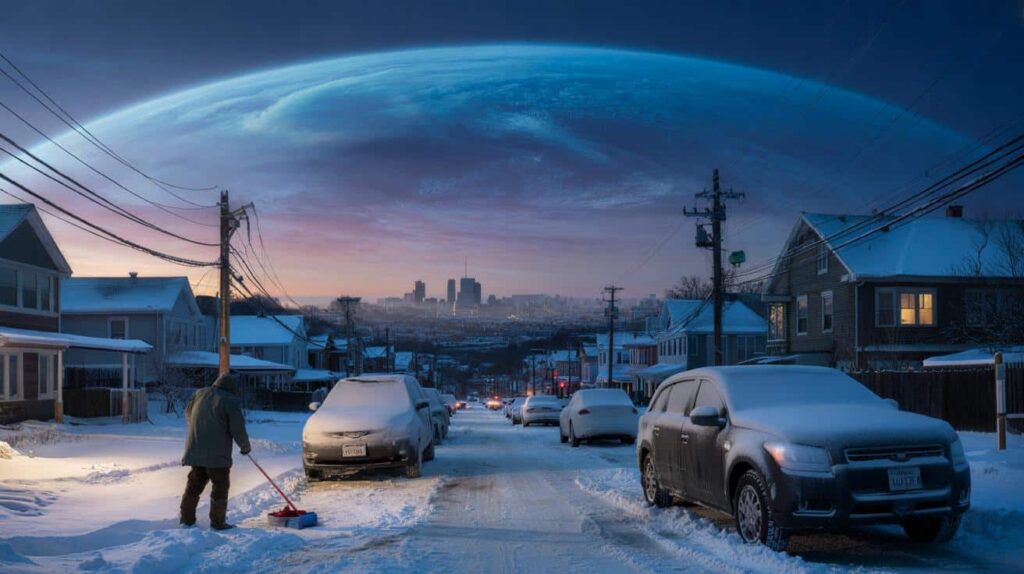
She talked about La Niña building in the Pacific, about the polar vortex dipping farther south than usual, about jet streams twisting like a loose fire hose. The words blurred past as people rushed kids into cars and cranked up heaters that hadn’t been tested in months.

Some winters slide in quietly and slide back out.
 Meteorologists warn Arctic conditions are deteriorating ahead of February in unprecedented ways
This one, experts say, might not be that kind of winter.

La Niña, the polar vortex, and why this winter looks different
On the weather maps, it looks almost beautiful. Great ribbons of blue and purple sweeping down from the Arctic, curling over a colder-than-normal Pacific, arrows tracing wind patterns that will decide who freezes and who floods. Under those colors, though, a different picture is taking shape: a country bracing for a historic winter as **La Niña and the polar vortex line up almost perfectly**.
Meteorologists have been watching this setup build for months. La Niña is already cooling the central and eastern Pacific, nudging the jet stream north in the West and bending it south in the East. At the same time, high over the North Pole, the polar vortex – that swirling ring of icy air – is showing signs it could wobble and spill cold southward.
When those two forces sync, the outcome can be brutal.
In the United States, the pattern is already becoming the talk of weather offices from Seattle to Boston. Think back to the winter of 2013–2014, when the phrase “polar vortex” went viral as cities like Chicago and Minneapolis froze under record-breaking cold. Thermometers plunged, schools closed, and news anchors tossed cups of boiling water into the air to watch them turn instantly to snow.
Now, some forecasters quietly say this winter could rival those memories – or even push them. La Niña often means colder, stormier conditions across the northern tier of states and parts of the Midwest, while the South can swing between sudden warmth and violent storms. Mix in an unstable polar vortex, and you get a season of sharp contrasts: sudden blizzards, ice storms that snap power lines, and wild temperature swings that crack roads and tempers alike.
For people on the ground, it’s less about charts and more about daily life being turned on its head.
The science, though, is surprisingly straightforward. La Niña shifts the Pacific’s heat balance, tugging the jet stream like a rope. That shift tends to load the atmosphere with sharper temperature gradients – boundaries between cold and warm air that storms love to feed on. At the same time, the polar vortex can weaken when the stratosphere above it suddenly warms, like a lid being jostled.
When that lid bumps out of place, lobes of Arctic air can spill south into the continental United States, locking in frigid conditions for days or even weeks. *You end up with a kind of atmospheric crossfire: cold pressing down, currents of moisture pushing in, and the country stuck in the middle.*
Every winter has its quirks. This one has a genuine chance to rewrite some record books.

How to live through a “historic” winter without losing your mind
The first practical step isn’t glamorous at all: treat this forecast like a long-distance race, not a one-day storm. That means checking your home like you’d check a car before a road trip. Are the windows drafty? Are gutters clear enough to handle heavy, wet snow? Does the furnace actually light on the first try, or does it cough and hesitate like an old smoker?
A simple walk-through can prevent a lot of ugly surprises when the first real Arctic blast hits. Test flashlights, replace dying batteries, find that space heater before you need it at two in the morning. Stock up on a few basics – canned food, drinking water, pet supplies – not in panic, but in quiet, methodical preparation.
Nobody posts TikToks about tightening pipe insulation. Yet that’s the sort of boring move that saves thousands in damage when temperatures suddenly dive.
There’s also the emotional side of a hard winter, the part that rarely appears on the forecast map. Long stretches of cold and grey grind people down. Commutes take longer, kids bounce off walls, and the constant low-level stress of “Will the roads be okay tomorrow?” wears thin. We’ve all been there, that moment when the snow that looked magical in December just looks exhausting in February.
The trap is pretending every warning is hype and then scrambling when one turns out to be real. Let’s be honest: nobody really checks storm alerts every single day or refills the emergency kit as often as they’re supposed to. So pick one or two small habits you can actually keep: charging devices overnight when a cold snap is coming, or topping off the car’s fuel tank before a major storm.
Little routines bring a sense of control when the weather doesn’t care about your plans.
“People remember the one big blizzard,” says a veteran meteorologist from the Midwest. “What really gets them are the three ‘normal’ storms in a row that pile up trouble – icy roads, power cuts, frozen pipes, missed shifts. This winter has the pattern for exactly that kind of grind.”
- Prepare the house, not just the pantry
Seal drafts, protect pipes, check smoke and carbon monoxide detectors before heaters run nonstop. - Think in “72-hour windows”
Have enough food, meds, and warmth to ride out at least three days without leaving home comfortably. - Plan for power, not just snow
Have backup ways to stay warm and informed if an ice storm knocks out electricity. - Protect your routine
Arrange remote work options, carpool backups, or childcare plans before the worst weeks hit. - Watch the pattern, not just the app
Daily forecasts change, but an aligning La Niña and polar vortex mean the overall risk stays elevated all season.
A winter that tests more than thermometers
This kind of season has a way of exposing everything that’s already fragile. Aging power grids, underfunded road crews, families living one paycheck away from trouble – all of them feel the sting of extra snow days and unexpected cold snaps more than anyone reading detailed climate blogs. While some count snow days like bonus holidays, others count them in lost wages, burst pipes, or kids home from school with nowhere warm to go.
A historic winter, if it unfolds as the models suggest, won’t just be a weather story. It will be a story about how a country copes when the sky decides to push every system a little past its limit.
There’s still uncertainty, of course. Maybe the polar vortex holds firm, maybe La Niña underperforms, maybe the season limps along instead of roars. Yet the signals are clear enough that meteorologists are speaking up earlier and louder than usual.
The question now is less “Will it snow?” and more “How ready are we if this winter really does live up to its name?”
| Key point | Detail | Value for the reader |
|---|---|---|
| La Niña + polar vortex alignment | Cooler Pacific and a wobbly Arctic circulation can combine to send repeated cold waves across large parts of the country. | Helps you understand why this winter may be harsher than usual, beyond simple “bad luck.” |
| Practical home preparation | Furnace checks, insulation, emergency supplies, and power-backup plans reduce the risk of costly damage and stress. | Turns an alarming forecast into a clear checklist of actions you can actually take. |
| Mental and social resilience | Small routines, realistic expectations, and community support soften the impact of long, grinding cold spells. | Protects your mood, your schedule, and your relationships when winter drags on. |
FAQ:
- Will every part of the country experience a “historic” winter?
No. Patterns linked to La Niña and the polar vortex usually hit some regions harder than others. Northern states and parts of the interior often see more intense cold and snow, while some southern areas may get milder spells mixed with strong storms.- Does a strong polar vortex always mean extreme cold?
Not exactly. A strong, stable polar vortex tends to keep the deepest cold locked near the Arctic. The bigger trouble comes when it weakens or wobbles, letting pieces of frigid air slide south into populated areas.- How long can a polar-vortex cold snap last?
It varies. Some outbreaks last just a few days, others can lock in for a week or more if blocking patterns in the atmosphere keep the cold in place. The concern this winter is the potential for several such events across the season.- Is climate change connected to these extreme winters?
Scientists are still debating some details, but many studies suggest that a warming Arctic can disrupt traditional jet stream patterns and the polar vortex, increasing the odds of wild swings – record heat in some places, severe cold in others.- What’s the most useful thing to do now?
Use the early warnings as a head start. Check heating systems, winterize your home and car, set up a simple 72-hour kit, and talk with family, neighbors, or coworkers about backup plans. A few hours of preparation now can make a big difference if this winter lives up to the forecast.
