
NASA is moving closer to a historic achievement that could reshape space exploration for the United States and the entire world. For the first time in over fifty years the agency is getting ready for a mission that would send humans beyond low Earth orbit and return them to the Moon. This project represents years of testing along with political support & technological advances designed to bring back deep-space travel. As enthusiasm grows throughout the US many view this as more than just a mission but rather a pivotal moment that links today’s generations with an age of exploration not witnessed since the Apollo era.
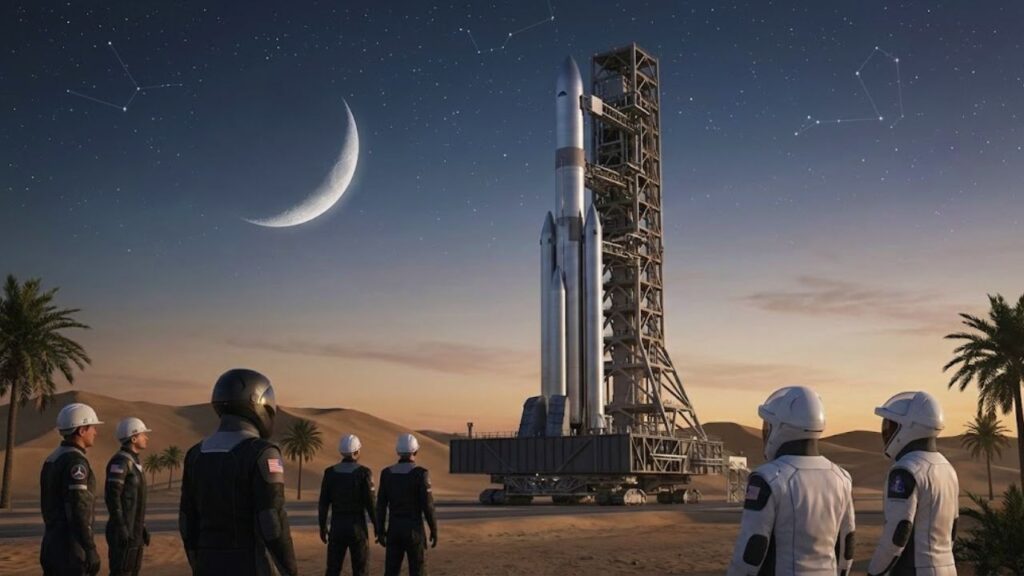
NASA advances toward historic lunar return
After many years of preparation NASA is moving forward with plans to send astronauts back to the moon for the first time since the 1970s. Engineers are completing the systems needed for traveling in deep space and astronauts are training hard for missions that will last a long time. This program is different from earlier ones because it focuses on better safety features & making lunar exploration something that can continue over time. The project is also evaluating new spacecraft that are built to make multiple trips to the moon. For the United States this represents an important achievement that combines the ambitious goals of the past with modern technology to help humans travel safely beyond Earth in ways they have not done for more than fifty years.

Why NASA’s mission matters after 50 years
This upcoming mission is more than a symbolic return to the Moon because it represents a strategic shift in how NASA approaches exploration. The agency focuses on international collaboration to share knowledge and reduce risks. Scientists want to unlock new lunar science while policymakers highlight the value of national space leadership. The mission also acts as a proving ground for future Mars plans by using the Moon as a testing site. For the US it signals renewed commitment to exploration that goes beyond nostalgia.

Technology driving NASA’s next giant leap
Behind the scenes advanced technology drives NASA’s work toward this historic achievement. Heavy-lift rockets can transport enormous payloads while sophisticated life support systems are built for deep space travel. Each component represents decades of technological advancement. Engineers use automated navigation tools and stronger materials to withstand extreme conditions. These innovations support lunar missions & establish the foundation for future exploration objectives. This effort keeps the United States leading in space technology development.

What this moment means for the future
A New Chapter in Space Exploration NASA is getting closer to reaching this important goal & the effects are starting to show. This mission might motivate young people to become scientists and engineers while helping the public believe in space programs again. It also makes international cooperation stronger & speeds up scientific research beyond our planet. For the United States this effort connects what we accomplished before with what we want to achieve next. It shows the world that exploring space is still a key part of how humans move forward.
| Mission | Objective | Status |
|---|---|---|
| Apollo 17 | Last human Moon landing | Completed (1972) |
| Artemis I | Uncrewed test flight | Completed |
| Artemis II | Crewed lunar flyby | Planned |
| Artemis III | Human lunar landing | In preparation |