
Yet a hidden threat quietly builds alongside the feast.
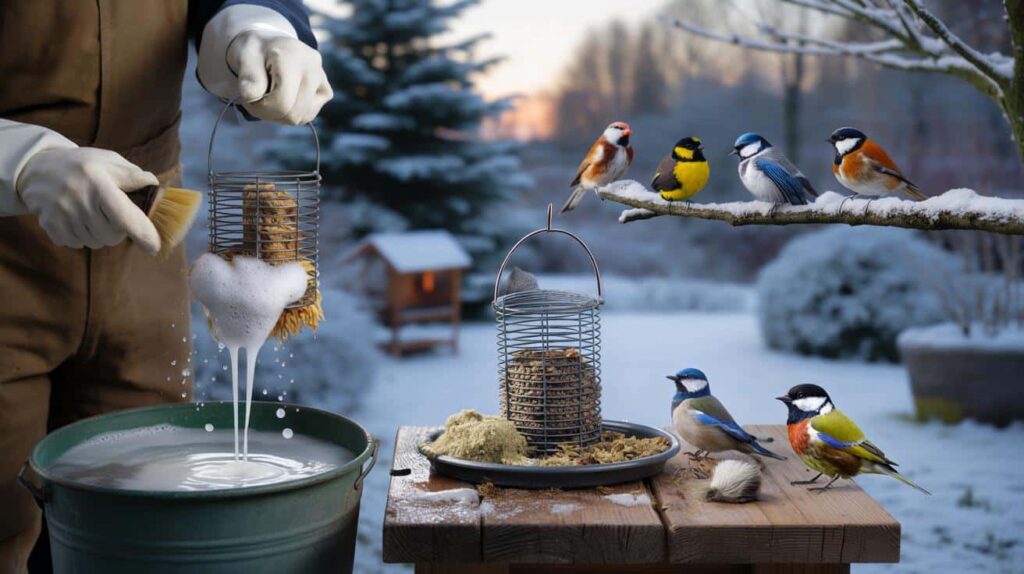
Across Europe and North America, people proudly top up bird feeders when frost bites. That generosity really can help small birds survive long, freezing nights. But while most of the attention goes on what to offer them, a far more basic question is often ignored: what condition is the feeder in?

When a five-star bird restaurant becomes a health hazard
In nature, food is scattered. Finches, tits and robins travel from hedge to hedge, rarely gathering in big numbers at a single spot. The modern garden feeder changes that overnight.

A single pole in the lawn, loaded with sunflower hearts and fat balls, can pull in dozens of birds, sometimes hundreds, from the surrounding streets and fields. That creates an artificial crowd that would hardly ever exist in the wild.

By concentrating food in one place, we also concentrate droppings, saliva, parasites and pathogens in one place.
Picture a cafe where the same table is used all day, by dozens of customers, and never wiped down. Crumbs build up. Spills dry sticky on the surface. Now imagine that the menu is eaten with bare mouths rather than cutlery, and nobody washes their hands. That, in microbiological terms, is what an unclean feeder looks like for birds.
The dirty mix of wet food, droppings and mouldy husks
Winter weather only makes this worse. Rain and snow soak seed trays. Uneaten food at the bottom of tube feeders sits in damp conditions for days. Shells, droppings and bits of regurgitated seed mix into a thick sludge.
That sludge is a perfect breeding ground for bacteria and microscopic fungi such as Aspergillus, which can cause serious respiratory infections in birds. A goldfinch pecking at apparently “cheap extra seed” on the tray may in fact be inhaling fungal spores.
What looks like harmless leftovers on a feeder often acts as a live culture dish for disease.
Many backyard bird lovers will happily debate the merits of sunflower chips versus nyjer seed. Far fewer think about the state of the plastic, wood or metal that holds those treats. Yet that “tableware” can decide whether a winter feeding station sustains wildlife or quietly wipes out a local flock.
Silent killers: salmonella, trichomoniasis and other feeder-borne diseases
Wildlife rescue centres across the UK, France and the US now brace for a familiar pattern each winter: a wave of small songbirds, weak, puffed-up and barely responsive, often linked to dirty feeding sites.
Two culprits come up again and again: salmonellosis, caused by salmonella bacteria, and trichomoniasis, a parasitic infection that hits finches especially hard.
How to spot a sick bird at your feeder
Cold weather alone cannot explain some of the behaviours people report. Birds suffering from these infections often look fluffed up, but not simply to trap warm air.
- They sit hunched for long periods, even in obvious danger.
- They react slowly, or not at all, when a human approaches.
- Their eyes may appear half closed or crusty.
- They may struggle to swallow, drool or repeatedly drop seed from their beaks.
With trichomoniasis, the parasite attacks the mouth and throat. A greenfinch that keeps picking up seed and letting it fall, or seems to choke while trying to eat, is not just clumsy: it is likely unable to pass food down an inflamed, partially blocked throat.
One visibly ill bird at a feeder is a warning sign that the whole setup needs a serious clean – and possibly a pause.
Why disease spreads so fast at feeders
These infections jump between birds in several ways. Salmonella can be present in droppings, contaminating perches, seed and water. Trichomonas parasites often spread via saliva and regurgitated food.
At a feeder, birds share the same ports, trays and perches within minutes of each other. A sick bird that drools or regurgitates seed into the tray effectively doses the entire stock with parasites. Every bird that arrives later gets a mouthful.
In a hedgerow, that bird might only briefly touch a few berries before moving on. At the feeder, its germs linger on plastic tubes and in seed reservoirs for days. That shift from scattered to concentrated contact is where outbreaks begin.

The vital habit almost everyone forgets: cleaning the feeder
The good news is that you do not need specialist gear or expensive disinfectants to reduce this risk dramatically. You do need a regular cleaning routine, not just good intentions and a big bag of seed.
Adding fresh food on top of a dirty surface turns kindness into a health risk for the very birds you want to help.
Why topping up a dirty feeder is the worst mistake
Many people simply pour more seed into a feeder when they see it running low. Old food remains at the bottom, mixed with droppings and moisture. New seed is quickly contaminated.
An empty but filthy feeder can be more dangerous than no feeder at all, because it actively attracts birds while offering them a concentrated source of pathogens.
Step-by-step guide to a safer winter feeding station
A simple, repeatable cleaning routine can transform your bird table from infection hotspot to genuine lifeline. Here is a practical protocol used by many conservation groups:
| Step | What to do | Why it matters |
|---|---|---|
| 1 | Wear gloves before handling feeders and old seed. | Protects you from salmonella and other germs. |
| 2 | Empty feeders completely, including old seed and debris. | Removes the main reservoir of bacteria and mould. |
| 3 | Scrub all surfaces with hot, soapy water. | Breaks up droppings and dried-on organic matter. |
| 4 | Rinse, then apply a solution of one part white vinegar to two parts water. | Acts as a mild, bird-safe disinfectant when properly rinsed. |
| 5 | Leave to soak or sit for about 15 minutes. | Gives the solution time to work on microbes. |
| 6 | Rinse thoroughly with clean water. | Prevents any residue from irritating birds’ skin or mouths. |
| 7 | Dry completely before refilling. | Stops new moulds from forming in damp corners. |
A stiff brush helps reach corners, while an old toothbrush works well on tiny grooves and seams where grime hides. Aim to clean high-traffic feeders at least once a week in the colder months, and immediately if you notice sick birds.
Do not forget the “hotel”: nesting boxes need attention too
Feeders are the dining room. Nest boxes are the bedrooms. Both influence bird health long after winter has passed.
By late winter, many species start scouting for nest sites. A box left untouched since last spring may still contain an old nest packed with dried faeces, feathers and carcasses of chicks that did not make it.
Old nests act like mattress storage for parasites: fleas, mites and lice wait out the cold there, ready to swarm new occupants.
How and when to clean nest boxes
The safest time is late autumn or mid-winter, outside the breeding season and on a dry day. Open the box, remove the entire old nest and any dead birds, wearing gloves and a mask if you can.
Scrape off caked material, then brush the inside with hot soapy water. A light spray of the same vinegar solution used on feeders can help, followed by a good rinse and long dry. Some organisations advise leaving a small layer of wood shavings at the bottom, which birds can rearrange in spring.
Practical scenarios: when to pause feeding and how to rethink your setup
One difficult decision many bird lovers face is whether to stop feeding altogether when disease appears. Conservation bodies say that if you see several sick or dead birds around your garden, you should:
- Remove all feeders and bird baths.
- Clean them thoroughly as described above.
- Keep them down for at least two weeks, sometimes longer.
This pause breaks the chain of infection by scattering birds back into the landscape, where they do not crowd together so easily. During that period, natural food sources like seed heads, berries and ivy still offer some support, especially if your garden has been planted with wildlife in mind.
Spacing out your feeders can also help. Several small stations placed apart reduce crowding compared with one central mega-feeder. Choosing designs that shed rain and are easy to take apart and scrub makes the weekly routine less of a chore.
A few terms worth knowing and habits that work together
Two phrases appear often in scientific briefings on garden birds. “Host density” refers to how many animals share the same space: the higher the density at a feeder, the easier it is for disease to pass around. “Fomite” describes any contaminated surface that passes infection without direct contact between animals. A dirty perch on a feeder is a classic example.
Good hygiene, smart feeder placement and wildlife-friendly planting reinforce each other. Plants like teasels, sunflowers and native hedgerows provide natural food that does not cluster birds so tightly. Clean feeders then act as a top-up, not the only source of calories in a barren space. Together, those measures give birds a better shot at surviving the winter without paying a lethal price for our kindness.
