
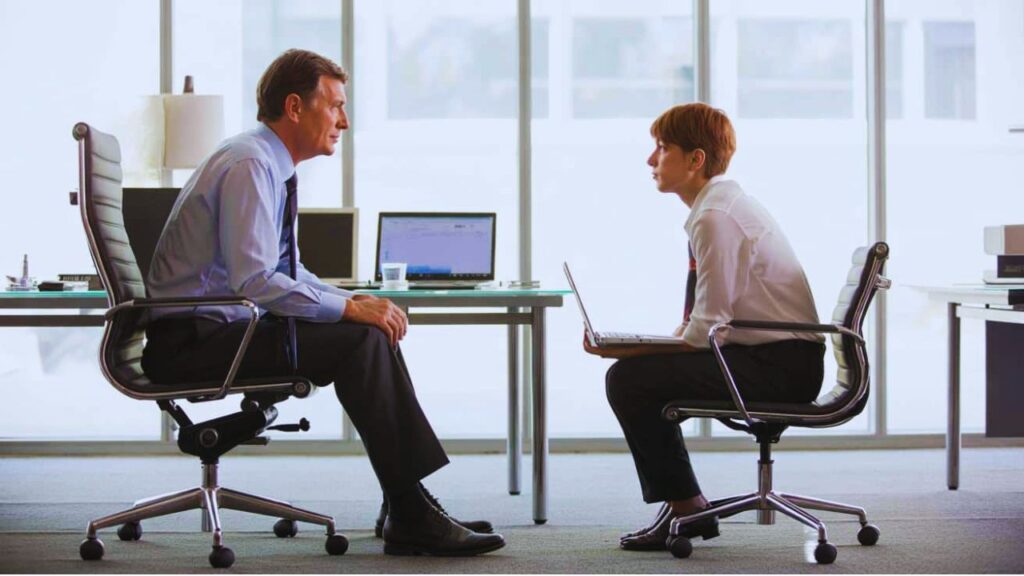
A junior employee perches on the edge of a low chair across the desk. Their knees sit higher than their hips, the laptop feels unstable, the body slightly tense. The words are correct, the points are well prepared — yet it’s immediately obvious who holds control in the room. The manager leans back, swivels casually, glances out the window mid-sentence. No one is rude. No voice is raised. Still, one person leaves the room deflated, while the other leaves reassured. The furniture never moved, but the power clearly did.
How Seating Quietly Scripts Power Dynamics
Look around any office, café, or meeting room. Some chairs are higher, centrally placed, close to doors or focal points. Others are tucked into corners, half-turned, pressed against walls. These positions are not neutral. They shape how visible, safe, and entitled you feel when you speak. Height, angle, and distance act like silent instructions. Sitting lower can subtly make you more accommodating. Facing someone straight across a desk can turn a discussion into an interrogation. Sitting slightly at an angle often softens the interaction. You may think you’re talking about work or plans, but your body is negotiating control before words land.

What Room Layout Does to Your Nervous System
Before posture or eye contact matters, your nervous system scans the room. Am I cornered? Can I move freely? Is my back exposed? These signals affect your breathing, tone, and confidence before you say anything at all. Picture a job interview. The candidate arrives early and sees three chairs: one low and soft by the door, one standard chair off to the side, and one dominant seat behind the desk. Most people choose the side chair — a quiet compromise between authority and submission. When the interviewer enters and stays standing, even briefly, the vertical difference reinforces who is evaluating whom.

How a Small Angle Shift Changes the Mood
Think of a late-night conversation between friends at a kitchen table. Sitting directly across feels heavier. Sliding chairs slightly to the side, angling bodies toward each other, changes the emotional tone. The issue stays the same, but the physical message shifts from confrontation to collaboration. Facing someone head-on triggers a mild confrontation response: tighter shoulders, sharper tone, elevated alertness. Rotating your chair just 20–30 degrees often calms the body. The conversation feels safer, more cooperative.
 Meteorologists warn early February could mark the beginning of an Arctic destabilization event
Small Position Changes That Increase Your Sense of Power
Arriving early and choosing your seat is a quiet advantage. Look for a chair where your feet rest flat, hips sit slightly above your knees, and your back has support. This position stabilizes your breathing and strengthens your voice. Instead of sitting perfectly square across from someone, angle your chair slightly. If you’re in a café or open space, choose a seat where your back isn’t constantly exposed to movement. Physical comfort translates directly into calm presence, which others often read as confidence.

What to Do When You’re Stuck With a Bad Seat
Sometimes you have no choice — the only open chair is low and pushed into a corner. In these moments, freezing makes things worse. Slide your chair slightly forward, plant both feet firmly, and place your notebook closer to the center of the table. These small space claims signal engagement to your nervous system.
Sitting Where Your Voice Can Actually Land
Over time, you begin to sense which seats make you feel grounded and which ones shrink your presence. You stop being controlled by the layout and become a quiet director of your own presence. You don’t need dramatic changes. One chair closer, a slight angle, a bit more space — and the balance of the conversation begins to shift.
| Key Factor | Description | Benefit for You |
|---|---|---|
| Seat Height | Hips slightly higher than knees, eye level aligned | Stabilizes voice and creates a sense of equality |
| Chair Angle | Slight diagonal instead of direct face-to-face | Reduces tension and supports open conversation |
| Room Position | Back supported, not trapped in a corner | Increases feelings of safety and control |
