
Dawn off Gibraltar looks almost fake. The sea is flat as glass, soft pink light on the swell, a couple from Sweden humming along to a tinny Bluetooth speaker as their 40‑foot sloop slides toward the Atlantic. Then the first jolt hits. A deep, bone-level thud, as if the keel just slammed into a concrete wall that isn’t there. The music cuts. Another hit, harder. The steering wheel spins uselessly in the skipper’s hands. From the cockpit, they see the black-and-white flash of a dorsal fin under the surface, then two more. The boat shudders as the rudder is bitten clean through.
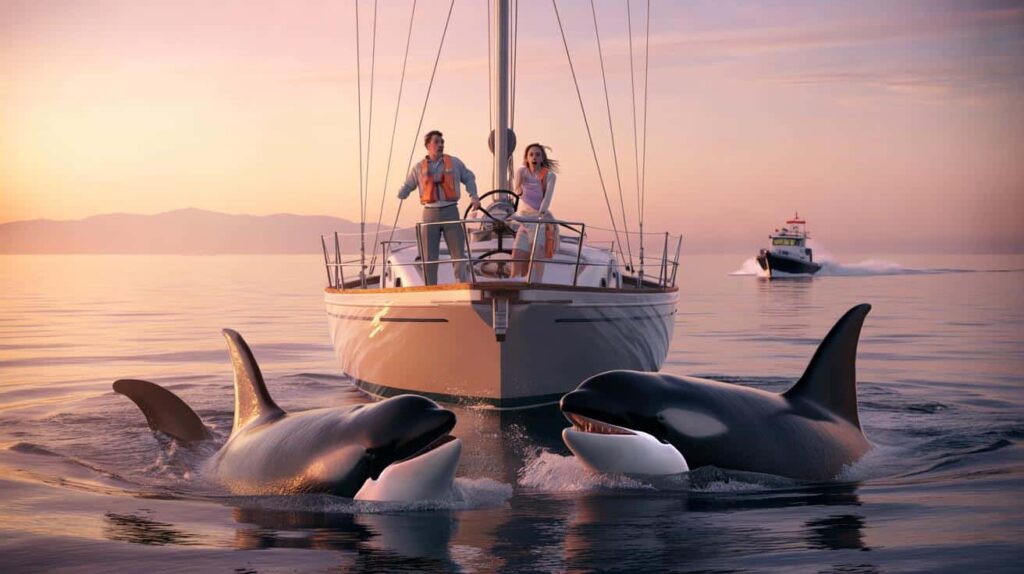
For long minutes all anyone can do is grip the rails and listen to the creak of fiberglass and the eerie exhalation of blowholes. Pretty quickly, the old story of the “friendly killer whale” feels very, very outdated.

Orcas have changed the rules of the sea
Talk to sailors who cross between Spain, Portugal and Morocco these days and you’ll hear the same sentence on repeat: “I’m more afraid of orcas than storms.” The numbers support that gut feeling. Since 2020, recorded encounters between orcas and small sailing boats have surged in the Strait of Gibraltar and along the Iberian Atlantic coast. We’re not talking about curious bumps. In dozens of cases, rudders are snapped, hulls are damaged, yachts are left drifting and have to be towed or abandoned.

The ocean’s poster child has become a statistical menace, at least in one crowded corner of the map.

Ask marine biologists and they’ll tell you, slightly dazed, that they’ve never seen anything quite like this. One widely shared theory points to a specific matriarch nicknamed “White Gladis”, possibly injured by a boat years ago. Since then, a subpopulation of Iberian orcas seems to have adopted a new behavior: targeting the rudders of sailing yachts. In 2023 alone, Spanish authorities counted more than 200 reported interactions. At least three boats sank outright after repeated strikes.
Videos taken from cockpits show something chilling: coordinated animals methodically disabling a vessel, then losing interest once it’s helpless.
Scientists prefer the word “interaction” over “attack”, arguing there’s no sign the animals want to hurt humans. Insurance companies and skippers use a different vocabulary when they watch their floating home tilt and fill with water. Somewhere between those two stories lies the uncomfortable truth. Orcas are intelligent, social predators who clearly learn from each other. Boats are now a target in their cultural repertoire. The question nobody can dodge anymore is simple: when a protected species repeatedly destroys private property at sea, who has to change course?
Stuck between a conservation icon and a cracked hull
Around marinas from La Línea to Lagos, you can feel the low‑grade anxiety. Cruiser WhatsApp groups buzz with fresh GPS coordinates of yesterday’s orca “event”, downloaded avoidance charts, improvised “safe corridors”. Skippers talk about crossing the “orca zone” at night, engines on, as close to shore as draft allows. Some wrap their rudders in steel plates or lash fenders along the stern like medieval armor. Others delay long‑planned voyages for another year, praying the fad will pass.
On the docks, nobody jokes about Free Willy anymore.
Take the British family whose 12‑meter sailboat was rammed off Barbate last autumn. They were on a sabbatical, homeschooling two kids on board, Instagram full of sunsets and dolphins. Within minutes of the first hit, the wheel spun loose, the rudder shaft twisted, water seeping in around the bearings. The father raised a Mayday, the mother stuffed bedding into the leak, the kids sat silently in lifejackets clutching their tablets. Rescue arrived before the boat went under, but they watched their dream home disappear beneath the waves from the deck of a Spanish patrol vessel.
Weeks later, sitting in a rented flat, they admitted they still flinch at the sound of a door banging.
From the shore, it’s tempting to reduce all this to simple karma: humans have hammered the oceans for decades, now a top predator is pushing back. Reality is messier. The Iberian orca population is critically endangered, fewer than 40 individuals left, hammered by ship traffic, polluted waters and shrinking bluefin tuna stocks. Conservation laws give them near-untouchable status. Agencies issue non‑lethal protocols: slow down, disengage autopilot, avoid sudden noise, don’t retaliate. Yet each season, more fiberglass is crushed, more Coast Guard resources are diverted, more skippers quietly ask a forbidden question.
 New medical breakthrough: Danish researchers finally identify why some children escape allergies
At what point does protection start to feel like abandonment to those actually out at sea?
What sailors do now when black fins appear
For those still transiting the hotspot, a kind of unofficial rulebook is taking shape. The first move is almost counterintuitive: stop fighting. When orcas approach, many crews now drop sails, cut speed and hand‑steer, trying to reduce turbulence and noise around the stern. Engines stay on idle, not roaring. Some skippers slide into neutral and simply let the boat drift. The idea is almost like judo. Don’t escalate. Don’t flash panic. Present as little resistance as possible while the animals inspect — and sometimes chew — the rudder.
It feels passive. But among those who’ve tried both panic and calm, calm wins.
There’s a bitter learning curve here. People naturally want to bang pots, blast music, or throw things overboard to chase the animals away. Spanish and Portuguese authorities now explicitly discourage that. Startling an orca risks triggering play into aggression or drawing the whole pod closer. Flares and fireworks can injure them and land you in legal trouble. We’ve all been there, that moment when fear makes you grab the loudest, brightest tool you have. At sea, that instinct can backfire badly.
Let’s be honest: nobody really follows the protocol perfectly in the middle of a crunching hull and shrieking autopilot alarm.
*Still, crews who’ve been through it often say the same thing: staying low, speaking softly, accepting you’re not in control, makes a difference to your own head if not to the whales.*
“People imagine heroics,” says Marta López, a marine coordinator in Tarifa who debriefs shaken sailors at the dock. “But most of the time, the best thing you can do is breathe, call the Coast Guard, log your position, and wait for the animals to lose interest. You’re sharing space with an apex predator that doesn’t follow our rules. That’s humbling, not cinematic.”
- Call local maritime authorities early and calmly, giving your exact position and boat type.
- Reduce speed, take manual control, and prepare safety gear without yelling orders.
- Record details for scientists later: time, number of animals, behavior, damage.
- Secure loose objects and have a clear plan if you must abandon ship.
- Afterward, debrief the crew, including kids, instead of pretending nothing happened.
When a symbol starts biting back
Walk along the waterfront in Cádiz or Algeciras and you’ll notice something subtle. The same creature that smiles from eco‑tours and conservation posters is now a whispered dread over beers at the yacht club. **Marine authorities are being squeezed between that contradiction**. On one side, orcas are the charismatic ambassadors that help unlock funding and public empathy for a stressed ocean. On the other, a subset of those animals is literally crippling navigation in one of the world’s busiest chokepoints. There is no neat policy for “protected species that learn destructive habits”.
Some sailors call for relocation. Some for deterrent sonar. A few, quietly, for lethal force. Scientists bristle at all three, warning that punishing highly social animals could spread trauma and confusion through already fragile pods. **Conservation groups fear that a single dramatic video of an orca being harmed would undo decades of fragile public trust**. Caught in the middle, maritime agencies publish careful flowcharts and bland advisories while rescue logs fill with very real distress calls.
The plain truth is that we’re watching a live experiment in coexistence, playing out in choppy water with people’s homes on the line. These orcas are telling us something about stress, about noise, about how wild intelligence adapts to our presence. Whether we respond by doubling down on protection, by re‑routing human traffic, or by quietly hardening boats until the problem shifts elsewhere, says a lot about which story we want to keep telling ourselves. Are orcas still the beloved “wolves of the sea”? Or are they becoming the mirror we’ve been trying not to look into?
| Key point | Detail | Value for the reader |
|---|---|---|
| Rising orca–boat incidents | Sharp increase in rudder-focused interactions off Iberia since 2020 | Helps sailors and readers gauge real risk, not just headlines |
| Response on the water | Shift toward slow, calm, non‑aggressive tactics and early Mayday calls | Offers concrete behavior to adopt or discuss with skippers |
| Ethical and legal tension | Protected, endangered orcas vs. property loss and safety fears | Invites deeper thinking about how we share crowded seas with predators |
FAQ:
- Are orcas really “attacking” boats, or is that an exaggeration?Most researchers describe these events as “interactions” or “encounters” because the animals rarely harm people directly. That said, the damage to rudders and hulls is very real, and crews experience them as attacks when their home starts flooding.
- Have people been injured or killed in these incidents?So far, there are no confirmed cases of Iberian orcas injuring humans during boat encounters. The risk comes from losing steering, flooding, or abandoning ship in rough conditions, not from the animals themselves.
- Why do orcas go for the rudder specifically?Rudders move, vibrate and create turbulence, which likely draws the animals’ curiosity. Once one orca in a social group fixates on that component, others can copy the behavior, turning it into a learned pattern rather than random play.
- Is it legal to use deterrents or defend your boat?Orcas in this region are strictly protected. Deliberately harming them, using explosives or firearms, can lead to serious penalties. Authorities currently recommend non‑harmful responses: slowing down, avoiding noise, and calling for assistance.
- Will the orca “attacks” spread to other regions?Right now, the persistent rudder‑focused incidents are concentrated around the Strait of Gibraltar and western Iberia. Orcas elsewhere interact with boats differently. Still, their capacity for social learning means scientists are watching closely for copycat behaviors.
