
Scientists, wildlife managers and local communities now face a disease that spreads slowly, kills surely, and lingers in the landscape long after each animal is gone.
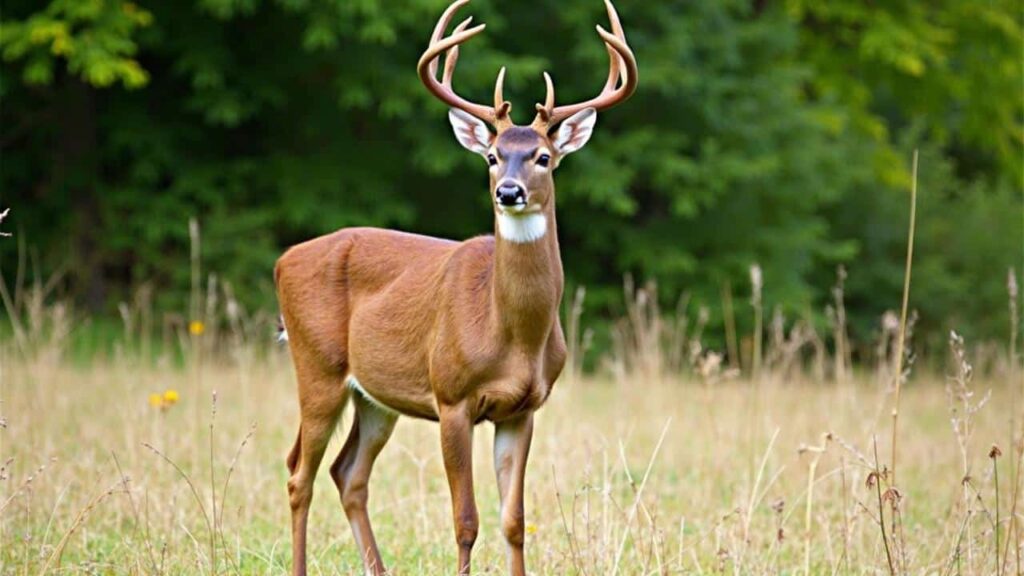
An invisible epidemic spreads across a continent
For decades, chronic wasting disease, or CWD, sat at the fringes of scientific concern. First identified in captive deer in Colorado in the late 1960s, it was treated as a local oddity rather than a looming crisis. That perception has vanished.

CWD is a neurodegenerative disease triggered not by a virus or a bacterium, but by prions: misfolded proteins that force normal proteins in the brain to twist into the same damaging shape. The result is a slow, inevitable decline. Once symptoms appear, the animal always dies.
 Neither boiled nor raw : the best way to cook broccoli to preserve maximum antioxidant vitamins
Chronic wasting disease marries three dangerous qualities: silent spread, environmental persistence and a 100% fatal outcome in infected deer.

Transmission is alarmingly simple. Deer and elk catch it through close contact, saliva, urine, faeces or contaminated carcasses. Prions shed by sick animals do not break down easily. They bind to soil particles, plants and organic debris, and stay infectious for years.
What began as a handful of cases in the American West now spans much of the continent. More than 30 US states and several Canadian provinces have reported infected deer, elk or moose. New detections appear in places that, only a few years earlier, believed themselves safely beyond the disease front.
Human behaviour accelerates the spread. Long-distance transport of carcasses and trophies, intensive deer farming, and crowded feeding sites have helped the disease step over state and national borders. From North America it has already reached South Korea via imported animals and has been detected in wild or semi-wild reindeer and moose in parts of Scandinavia.
From “zombie deer” headlines to a national policy headache
Tabloid headlines have branded CWD the “zombie deer disease”, a label that irritates many biologists but hints at the visible horror. Infected animals grow thin, lose their fear of humans, drool, stumble and appear confused. They may wander in circles or stand listlessly, oblivious to danger.
Behind these striking scenes lies a slower and more troubling reality. Deer can carry prions for many months, sometimes years, before showing any signs of illness. During that time, they shed infectious material into their surroundings. By the time a land manager notices obvious cases, the local environment can already be heavily contaminated.
Visible “zombie” deer are just the tip of an epidemic that lurks largely out of sight.
National parks and hunting grounds are under particular pressure. Yellowstone, one of the most closely watched ecosystems in the United States, sits in the spotlight. Winter feeding programmes, which cluster elk and deer on concentrated food sources, keep animals alive through harsh seasons but also bring them nose-to-nose, exactly the conditions prions exploit.
Some experts argue that policy has lagged behind the science. Artificial feeding continues in some areas. Predator numbers, especially wolves and large bears, remain low or controlled for social and political reasons. Fewer predators mean more weak, sick animals survive longer, spreading prions further than they otherwise might.
Hunters, farmers and rural economies on the line
For many rural communities, deer are not just wildlife; they are a crucial source of food and income. Hunting tourism, licence fees, venison sales and deer farming feed an industry worth billions of dollars across North America.
As CWD spreads, that business model looks increasingly fragile. Authorities in several states advise hunters not to eat meat from animals that appear sick and to have their venison tested in high-risk zones. Some areas now ban the movement of whole carcasses or limit the use of mineral licks and bait piles that congregate deer.
- Restrictions on moving carcasses across state or provincial lines
- Mandatory or voluntary testing in known CWD areas
- Discouraging or banning artificial feeding and baiting
- Targeted culling in heavily infected hotspots
Compliance is uneven. Testing takes time and money, and some hunters mistrust official messaging. In poorer regions, families continue to eat untested venison because it is the meat they can afford and have always relied on. For deer farmers, a confirmed case can mean mass culls, business closure and deep financial loss.
Could the deer disease jump to humans?
The question that hangs over CWD is blunt: can it infect people? No confirmed human cases exist so far. That is the reassuring part. The less comforting part is that prion diseases have a history of crossing species barriers after long, quiet incubations.
 Everyone throws it in the trash, but for your plants, it’s pure gold and nobody cares about it
Scientists cannot yet say that CWD will infect humans, and they cannot say that it never will.
The memory of “mad cow disease” in the 1990s still shapes public health thinking. In that crisis, a cattle prion disease eventually produced a fatal brain disorder in people who had eaten contaminated beef. The time lag between the start of the cattle epidemic and the human toll was measured in years.
Laboratory studies on CWD provide mixed signals. Some experimental work suggests that human prion protein is relatively resistant to conversion by CWD prions. Other experiments using humanised mice or primates hint that, with enough exposure or particular prion strains, infection might be possible. That uncertainty drives cautious advice to hunters to avoid meat from sick animals and to wear gloves while field dressing carcasses.
Ripple effects on forests, predators and plants
Even if CWD never infects a single human, the ecological consequences could be profound. Deer are ecosystem engineers. By browsing leaves, shoots and saplings, they shape the structure of forests and grasslands. Their carcasses feed scavengers, from eagles to bears to insects.
If the disease reduces deer numbers significantly in some regions, young trees may survive at higher rates, changing the mix of species that dominate the landscape. Shrubs that once struggled under heavy browsing pressure could expand, altering habitat for nesting birds and small mammals. In contrast, predators and scavengers that rely heavily on deer might struggle or shift their diet to livestock and pets, stoking conflict with people.
| Potential change | Likely consequence |
|---|---|
| Fewer deer in infected areas | Denser undergrowth, shifts in forest composition |
| More carcasses in the short term | Boost for scavenger populations near outbreak sites |
| Lower predator numbers from human control | Weaker natural removal of sick or weak deer |
| Contaminated soils and plants | Long-lasting “hotspots” of infection for new herds |
CWD also challenges how we think about environmental contamination. Unlike chemical pollutants that may dilute or degrade, prions can remain active in soil for years. Earthworms, plants and soil particles can carry them, potentially exposing new animals long after the original carcass has disappeared.
Managing a disease that will not go away
Wildlife managers face a difficult reality: there is no cure, no vaccine ready for field use, and virtually no way to “clean” a contaminated forest. Strategies focus on slowing spread and reducing the load of prions in the environment.
Some scientists argue for allowing predator populations to rebound, especially wolves and large carnivores that often pick off weaker animals first. Others push for an end to artificial feeding and baiting of deer, practices popular with hunters but linked with higher transmission.
Practical control of CWD means changing how people interact with deer as much as how deer interact with each other.
Testing programmes, hunter education and tighter rules on animal transport all feature in proposed national frameworks. Yet implementation differs widely from state to state and province to province. Without coordination, infected animals can slip through gaps in the map, seeding fresh outbreaks.
Key concepts and what they mean on the ground
The term “prion” can sound abstract, but its consequences are tangible. A prion is simply a protein folded into the wrong shape. That misfolding makes it sticky and persistent. Once it gets into the brain of a deer, it triggers a chain reaction, turning healthy proteins into more prions until the tissue is riddled with damage.
Another term now common in scientific discussion around CWD is “reservoir”. In this context, a reservoir is not a lake, but any place or population in which infectious agents can survive and from which they can spread. An infected captive deer farm can act as a reservoir. So can a hillside where multiple carcasses decomposed and released prions into the soil.
Scenario planning gives a sense of what might lie ahead. In a mild scenario, strict control of animal movements, better testing and reduced feeding keep CWD clustered in known hotspots. Deer numbers fall slightly in those regions but remain healthy elsewhere. In a harsher scenario, control stays patchy, prions spread into new areas, and large parts of the continent host chronically infected herds with lower survival and skewed age structures.
For hunters and outdoor enthusiasts, basic precautions already recommended by health agencies make a difference: avoiding obviously sick animals, wearing gloves when handling carcasses, and following local guidance on testing and carcass disposal. For policymakers, the stakes are broader. Choices about predator management, land use and agricultural trade will shape how deeply this strange, protein-based epidemic cuts into the fabric of North American ecosystems over the coming decades.
