
By the end of this century climate scientists warn that parts of the world may become impossible to live in due to constant rainfall & flooding. Countries already struggling with low-lying geography & dense populations face the greatest risk. Bangladesh in particular is often cited in climate models as a place where extreme rain patterns could reshape daily life. Rising seas and overwhelmed rivers and nonstop monsoon cycles are pushing infrastructure and communities to their limits. This raises serious questions about long-term safety and migration and survival.
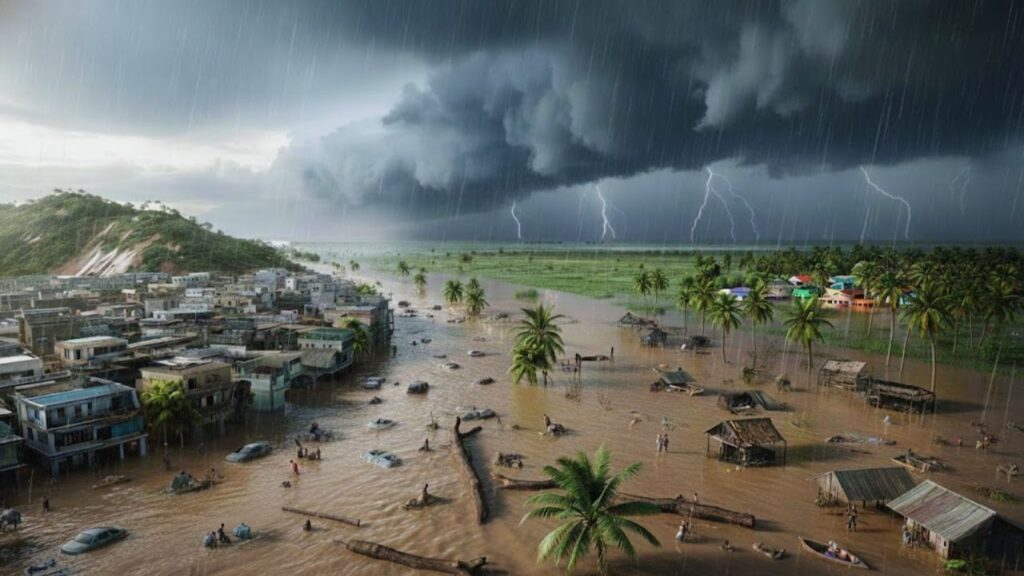
Countries Facing Extreme Rainfall Risks by 2100
Scientists examining future climate patterns regularly identify countries facing continuous monsoon seasons, vulnerable shorelines, & cities built along rivers. Bangladesh is particularly notable because its geography is formed by enormous river networks that flood each year during certain seasons. When rainfall becomes heavier, these floods will likely persist for extended periods and cover larger areas which will disrupt food production and damage homes. Other parts of South & Southeast Asia encounter comparable risks, but the high concentration of people living in these areas intensifies the consequences. Researchers identify expanding floodplains, inadequate urban drainage systems and coastal flooding areas as interconnected hazards that may gradually make daily life more difficult and unpredictable.
 “0.01 Second”: South Korean Tech Disintegrates Plastic Without Polluting and It Sounds Unreal
Why Extreme Rains Could Make Countries Uninhabitable
When rainfall changes from seasonal patterns to continuous precipitation the consequences extend beyond short-term flooding. In Bangladesh, extended periods of water saturation weaken building structures, eliminate agricultural yields and pollute water supplies used for drinking. Repeated disasters gradually reduce the ability of communities to recover and create lasting problems with infrastructure and persistent waterlogging. The presence of standing water increases health dangers by spreading diseases while employment opportunities in farming and transportation sectors vanish. Climate scientists indicate that the depletion of soil nutrients & the displacement of populations may transform some areas into locations where people cannot maintain safe living conditions.
 China Unearths a 2,200-Year-Old Imperial Road and It’s Shaking Up Everything We Know About Highways
How Bangladesh and Similar Countries Are Preparing
Governments and communities are taking action despite the dangers. Bangladesh has built flood shelters and raised roadways while setting up early-warning systems to prepare for worsening weather. Their adaptation strategies include building climate-resistant homes & managing rivers better. They are also redesigning cities to cope with heavier rainfall. However experts warn that these efforts can only go so far if emissions keep rising. The best defenses might not be enough without worldwide cooperation to address increasingly severe rainfall & declining living conditions over time.

What the Science Suggests Going Forward
Climate models do not forecast a sudden vanishing of habitable areas but they indicate a gradual reduction in safe living zones. The outlook for Bangladesh and similar at-risk nations hinges on the speed at which global warming gets controlled & how well local adaptation measures expand. Researchers stress the importance of planning based on risk assessment along with regional relocation approaches and global climate financing as critical instruments. The coming decades will probably decide whether intense rainfall turns into a controllable problem or a critical threshold that changes where millions of people can reside.