
Across clinics in Europe and North America, veterinary dentists are reporting the same pattern: cheerful dogs, wagging tails, and mouths full of teeth that have been quietly ground down by an object most owners see as a cheap, fun classic – the humble tennis ball.
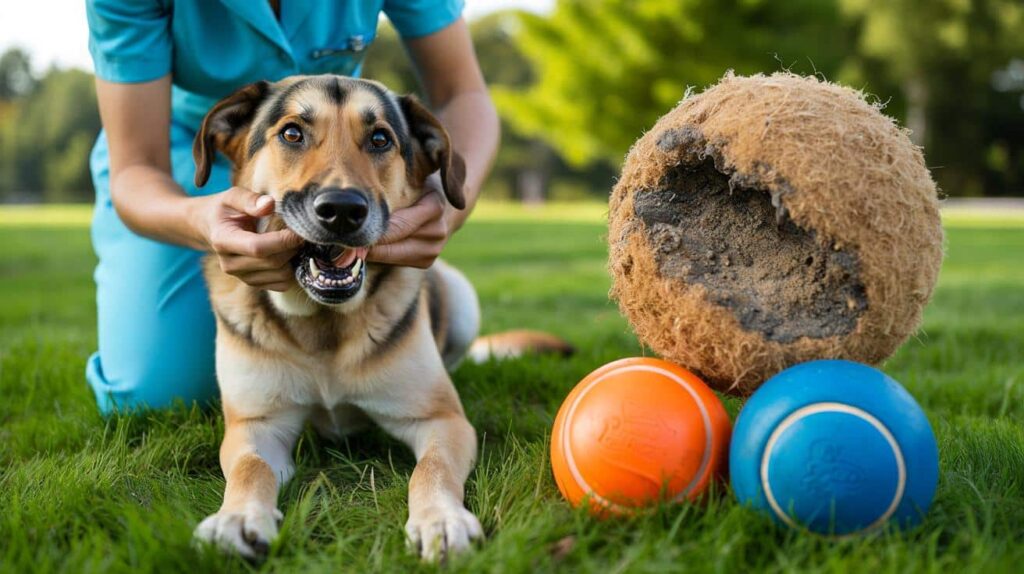
The innocent-looking toy that hides a rough secret
Tennis balls tick every box for dog owners in a hurry. They are cheap, easy to spot in long grass, light enough to fling far, and sold in every supermarket and sports shop. Many families simply grab an old ball from the garage, assuming that if it survives a powerful serve, it will survive a Labrador.

That logic misses one key fact: tennis balls are engineered for courts and rackets, not for teeth and gums. Their outer layer is designed to withstand friction with hard surfaces. Put that same material between a strong jaw and a gritty park path, and you create a completely different kind of friction – inside a dog’s mouth.

The fuzzy coat of a tennis ball works like Velcro for dirt, sand and tiny stones, then turns into sandpaper once the dog starts chewing.

The felt covering traps particles from soil, gravel and dust. In wet weather, that effect ramps up. Mud sticks to the fibres, then dries. Saliva binds it all together. From the outside the ball may still look fine, but to a vet, it has effectively become a compact, abrasive pad repeatedly rubbed against the same teeth.
How tennis ball felt can sand down a dog’s teeth
When a dog clamps down on a tennis ball, the same teeth take the brunt every time: the canines and the premolars further back. These are the “workhorse” teeth that hold, crush and carry. If a dog then spends long minutes calmly chewing the ball between throws, those teeth get constant, gritty contact.
Veterinary dentists compare this to using fine sandpaper on enamel. The damage builds slowly. There is no dramatic snap or crack to trigger panic. Instead, the smooth, protective outer layer of the tooth thins with each session. Once gone, enamel does not grow back.
The real threat is not broken teeth, but teeth that have been quietly filed flat over months or years of play.
As enamel wears away, the softer dentine beneath is exposed. At first, this might only show up as a change in shape: sharp canines take on a blunted, “shaved” look. With time, the wear can reach the inner core of the tooth, known as the pulp, where nerves and blood vessels sit. That is when pain and infection start to creep in.
What vets are actually seeing in clinics
Many vets report the same tell-tale signs in dedicated fetch addicts:
- Canine teeth that look shortened and flat instead of long and pointed
- A brown or darker dot in the centre of the worn surface
- Dogs dropping toys sooner, or chewing on one side only
- Reluctance to pick up harder toys or dry food
That brown dot is particularly worrying. It often suggests the pulp is close to the surface or already exposed. By this stage, the tooth is sensitive to temperature, pressure and even air. Yet many dogs keep playing, simply because their instinct to chase and carry overrides their discomfort.
Why dogs suffer in silence with dental pain
Unlike humans, dogs rarely whine about toothache. They may still greet you with enthusiasm and race after a ball, even when their mouth hurts. The changes are subtle: eating a little slower, favouring softer chews, or turning their head while gnawing.
Owners often assume “he’s just getting older” or “she’s less into fetch now”. Vets, looking inside the mouth, see another story: enamel gone, dentine exposed, and sometimes pulp already infected. At that point, treatment can mean root canal work or extracting teeth.
By the time a dog clearly refuses a favourite ball, the damage to its teeth can be extensive and permanent.
Safer alternatives: what to throw instead of a tennis ball
The good news is that owners do not need to stop playing fetch. The key is to switch the type of ball. Products designed specifically for dogs are made from materials that slide across enamel instead of scraping it.

| Type of ball | Surface | Dental impact |
|---|---|---|
| Standard tennis ball | Felt, traps grit | High abrasion risk |
| “Dog tennis” ball with soft felt | Less abrasive, still fibrous | Lower risk, still not ideal chewer toy |
| Solid rubber ball | Smooth, non-fibrous | Low abrasion, better for teeth |
| Thermoplastic ball | Slick, often textured but not fuzzy | Designed to be gentle on enamel |
Look for balls made from natural rubber or thermoplastic rubber with a smooth exterior. Many still float, bounce unpredictably and squeak, giving dogs the same thrill without the grinding effect. The crucial detail is the lack of fuzzy felt that can load up with grit.
Setting simple rules for fetch sessions
A few habits can cut risk even further:
- Limit chewing time: use the ball for throwing, not as a constant comfort chew.
- Rotate toys: give the jaw and the same set of teeth a break from repetitive friction.
- Check toys often: discard any ball with deep grooves, cracks or a rough surface.
- Carry spares: swap a dirty, gritty ball for a clean one mid-walk.
How to spot early signs of “tennis ball teeth” at home
You do not need specialist training to catch early wear. A quick weekly look can make a difference. Choose a calm moment, gently lift your dog’s lip and compare the shape of the canines on each side. They should look long and tapered, not squared off.
Check the surface of the larger teeth just behind the canines. If they are flat, with a smooth, pale patch where edges used to be, mention it at your next vet visit. Any visible dark dot or line in the middle of that worn area deserves prompt attention.
Regular home checks and yearly dental exams can catch wear from tennis balls before it reaches the painful stage.
Why enamel loss matters more than many owners think
Enamel acts like armour. Once it is gone, teeth are far more vulnerable to everyday forces. Chewing kibble, tug games or picking up sticks can become uncomfortable. Dogs might compensate by swallowing food less chewed, which can affect digestion, or by chewing on one side, which puts uneven stress on the jaw.
In advanced cases, bacteria work their way through the exposed dentine into the pulp. That can lead to abscesses, facial swelling and systemic infection. Treatment then shifts from simple management to dentistry under anaesthetic, with all the costs and risks that go with it.
Practical examples: different dogs, different risks
Not every dog faces the same level of danger from tennis balls. A laid-back spaniel that fetches twice, then wanders off, may experience much slower wear than a ball-obsessed collie that chews non-stop by the hour.
Strong-jawed breeds such as German shepherds, Labradors, staffies and Malinois can apply considerable pressure on a single ball. Combine that force with gritty felt, and abrasion accelerates. Puppies that grow up with constant access to tennis balls can start showing noticeable flattening while still young adults.
For households with multiple dogs and a bucket of old tennis balls by the door, a simple switch to durable rubber balls can drastically change their long-term dental outlook.
Related risks and better play routines
Tennis balls pose other, less obvious hazards. If the outer layer splits, some dogs will peel and swallow chunks of felt or rubber, which can irritate the gut or, in extreme cases, cause obstruction. Balls that are too small for a large dog can lodge at the back of the throat, blocking the airway.
Choosing size-appropriate, robust rubber balls reduces these dangers. Pair that with a mix of games – short fetch sessions, scent work, tug with safe ropes, training exercises – and the pressure on the same teeth and joints eases. Variety not only protects enamel, it keeps dogs mentally sharper and less fixated on a single toy.
For owners who still like the bright colour and bounce of a tennis ball, many pet brands now offer “tennis-style” rubber balls that fit standard ball launchers. They look familiar in the park, but the smooth surface and dog-safe materials remove the hidden sanding effect on teeth.
